Rijiju Hails Retiring NCM Secretary Alka Upadhyaya's 36-Year Career
Synopsis
Union Minister Kiren Rijiju has paid tribute to retiring IAS officer Alka Upadhyaya on her superannuation after nearly 36 years of service, recognising her leadership as Secretary of the National Commission for Minorities in advancing minority welfare policy and stakeholder consultations.
Key Takeaways
Alka Upadhyaya, IAS retired from public service after a career of nearly 36 years .
She served as Secretary of the National Commission for Minorities , a statutory body set up under the NCM Act, 1992 .
Minister Kiren Rijiju credited her with 'visionary leadership' in stakeholder consultations and policy dialogue on minority empowerment.
The National Commission for Minorities was constituted in 1993 and works in coordination with the Ministry of Minority Affairs .
Her departure creates a senior vacancy at the NCM, with the successor appointment expected to draw scrutiny from minority welfare stakeholders.
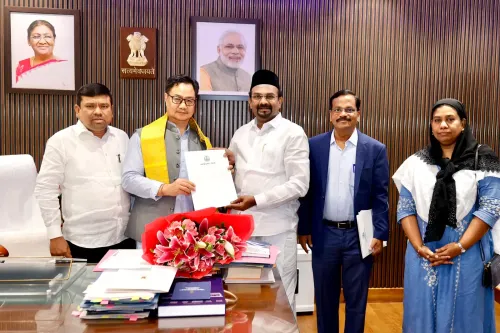
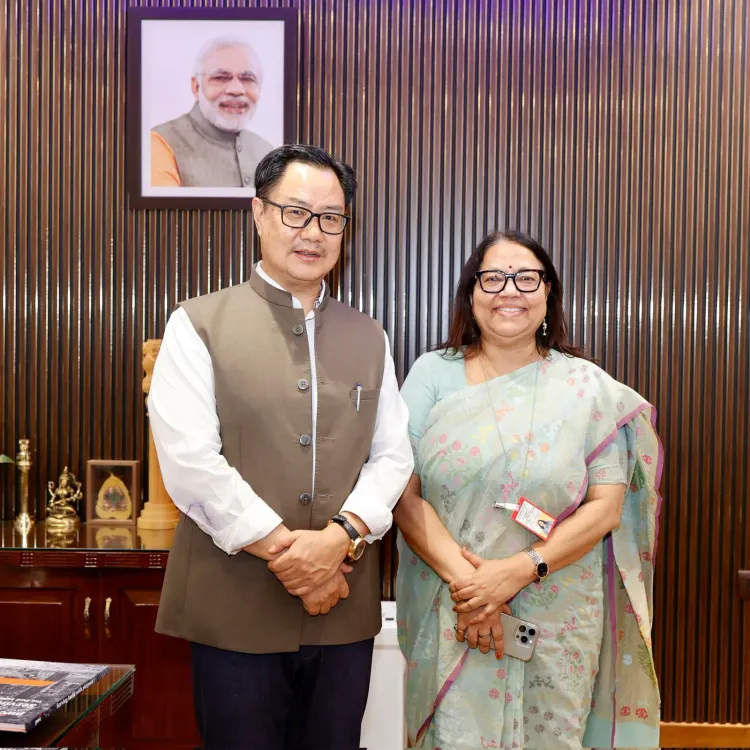
Union Parliamentary Affairs and Minority Affairs Minister Kiren Rijiju on Friday, 29 May 2026 extended farewell wishes to Smt. Alka Upadhyaya, IAS, on her superannuation after a career spanning nearly 36 years in public service, highlighting her contributions as Secretary of the National Commission for Minorities.
Context
In his post, Minister Rijiju described Upadhyaya as having provided 'visionary leadership in advancing studies, stakeholder consultations and policy dialogue on the contributions and empowerment of minority communities' during her tenure at the National Commission for Minorities (NCM). He wished her 'good health, happiness and success in all future endeavours.'
The tribute marks the close of a long administrative career for a senior IAS officer who occupied one of the most consequential positions within the minority affairs architecture of the Indian government.
Policy Backdrop
The National Commission for Minorities is a statutory body constituted in 1993 under the National Commission for Minorities Act, 1992, mandated to safeguard the constitutional rights of notified minority communities across India. As Secretary, Upadhyaya functioned as the senior-most civil servant within the Commission, steering its administrative and policy functions.
The Commission operates in close coordination with the Ministry of Minority Affairs, which Rijiju currently heads. Over the years, the NCM has been central to implementing frameworks such as the Prime Minister's 15-Point Programme, launched in 2006, aimed at improving educational, economic, and infrastructural access for minority communities.
Rijiju's acknowledgment of Upadhyaya's focus on 'stakeholder consultations and policy dialogue' reflects the sustained emphasis the Ministry has placed on consultative governance in minority welfare administration.
Stakeholders and Impact
The Secretary's role at the NCM directly affects the administrative pipeline through which minority communities access welfare schemes, legal protections, and policy representation. Upadhyaya's nearly 36-year career in the IAS placed her at the intersection of governance and inclusive development across multiple postings.
Her departure leaves a senior vacancy at the Commission at a time when parliamentary scrutiny of minority welfare implementation remains active. Civil society organisations and minority community representatives who engaged with the NCM under her tenure are likely to watch the transition closely.
What's Next
The immediate question for the Ministry of Minority Affairs is the appointment of a successor to the Secretary position at the National Commission for Minorities. Any such appointment is likely to attract attention from minority welfare advocates and parliamentary committees reviewing the NCM's functioning.
The transition also comes at a period when the Ministry is expected to continue its policy dialogue on minority empowerment — a process that Upadhyaya helped shape during her tenure. How the incoming Secretary builds on that consultative framework will be a key indicator of continuity in minority affairs governance.
Point of View
But it carries policy significance given the NCM Secretary's role in shaping minority welfare consultations at a time when the Ministry of Minority Affairs is under sustained parliamentary watch. The emphasis on 'stakeholder consultations and policy dialogue' in the tribute signals the Ministry's preferred governance posture — consultative rather than directive — on minority issues. The vacancy at the NCM now becomes a quiet but consequential appointment, as the incoming Secretary will set the tone for the Commission's engagement with communities and committees alike. This transition is worth tracking as a barometer of the government's administrative priorities in minority affairs heading into the next legislative session.
NationPress
26 Sept 2026
Frequently Asked Questions
Who is Alka Upadhyaya IAS?
Alka Upadhyaya is a retired IAS officer with nearly 36 years of public service who served as Secretary of the National Commission for Minorities , where she led policy dialogue and stakeholder consultations on minority empowerment.
What is the National Commission for Minorities?
The National Commission for Minorities is a statutory body constituted in 1993 under the National Commission for Minorities Act, 1992 , mandated to protect and promote the constitutional rights of notified minority communities in India .
Why did Kiren Rijiju post about Alka Upadhyaya?
As Union Minister of Minority Affairs , Kiren Rijiju posted tribute wishes to Alka Upadhyaya on her superannuation, acknowledging her nearly 36-year career and her contributions as Secretary of the National Commission for Minorities .
What does the NCM Secretary do?
The Secretary of the National Commission for Minorities is the senior-most civil servant within the Commission, overseeing its administrative functions, policy studies, and stakeholder consultations related to minority welfare in India .
Who will be the next NCM Secretary after Alka Upadhyaya?
The next appointment to the Secretary position at the National Commission for Minorities has not been announced publicly as of May 2026 . The appointment is expected to attract attention from minority welfare advocates and parliamentary committees.