Rijiju fires at Kapil Sibal over post-2014 legal stance
Synopsis
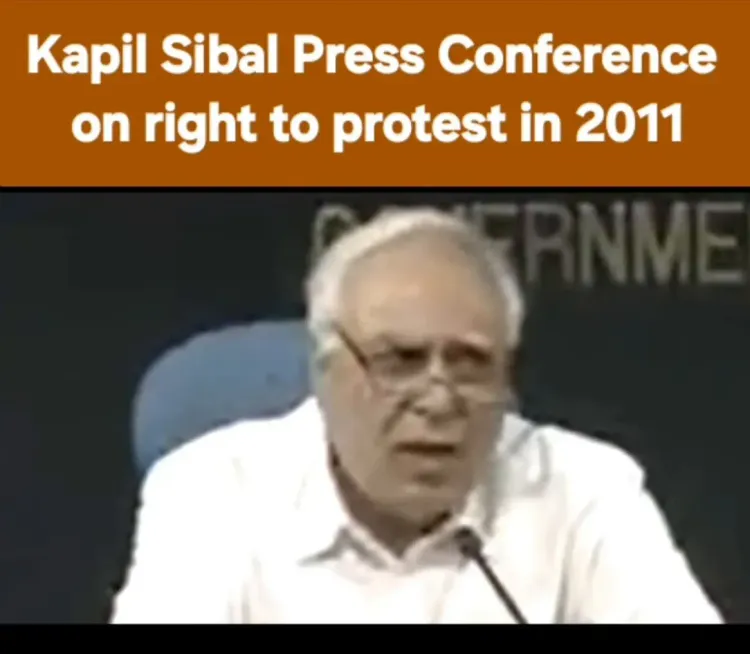
Union Parliamentary Affairs Minister Kiren Rijiju publicly challenged Kapil Sibal on October 30, asking whether the senior Congress leader-advocate operates by a different constitutional standard since 2014 — a pointed escalation of BJP-Congress rhetoric ahead of the winter Parliament session.
Key Takeaways
Kiren Rijiju posted a sharp challenge to Kapil Sibal on October 30, 2026 , questioning his constitutional consistency before and after 2014 .
Rijiju asked whether Sibal has 'created a separate Constitution for himself and Congress Party after 2014.' Sibal is a Supreme Court senior advocate and former Union Minister, making him a high-profile target for the BJP's allegations of legal double standards.
The BJP has consistently argued that Congress leaders embrace or reject constitutional norms based on whether they hold power.
No public response from Kapil Sibal or Congress had emerged at the time of publication.
The exchange comes ahead of the winter session of Parliament, a period when political-legal rhetoric traditionally intensifies.
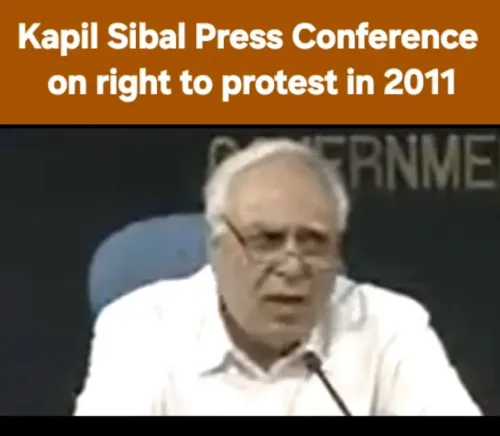
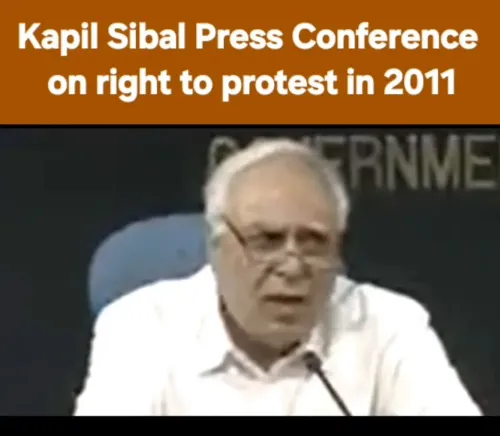
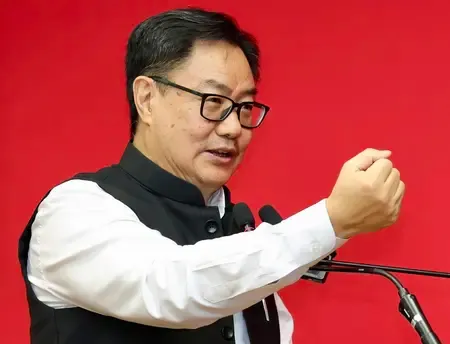
A sharp parliamentary broadside landed on Friday, October 30, 2026, when Union Parliamentary Affairs Minister Kiren Rijiju publicly challenged senior advocate and former Union Minister Kapil Sibal, questioning whether Sibal operates by a different constitutional rulebook since 2014.
Posting on X, Rijiju asked pointedly: 'Has Kapil Sibal changed all laws that he read before 2014? Or has he created a separate Constitution for himself and the Congress Party after 2014?' The question, stripped of diplomatic cushioning, targets what the BJP minister frames as a double standard — one set of legal and constitutional principles when the Congress was in power, and an apparently different one in opposition.
The 2014 fault-line at the heart of the jibe
Sibal is one of the most prominent legal voices in Indian public life — a Supreme Court senior advocate, former Law and Telecom Minister under the United Progressive Alliance, and a politician who has argued constitutional positions before India's highest courts and on the floor of Parliament. That profile is precisely what makes him a high-value target for this kind of rhetorical challenge: Rijiju is essentially arguing that Sibal's legal philosophy shifted the moment Narendra Modi's BJP government came to power in May 2014. The charge of selective constitutional interpretation is a recurring weapon in India's parliamentary arsenal. BJP leaders have long argued that Congress-aligned jurists and politicians embrace executive authority, legislative majority, and constitutional convention when convenient, then pivot to strict-constructionist or activist readings once in opposition. Congress counters that scrutinising government overreach is the very definition of constitutional responsibility.A pattern of escalating BJP-Congress rhetorical exchanges
Rijiju's post follows a well-worn script of high-decibel public exchanges between BJP ministers and Congress leaders over legal and constitutional fidelity — exchanges that typically spike around legislative debates, Supreme Court hearings on sensitive matters, or the approach of Parliament sessions. With the winter session on the horizon, both sides have incentive to sharpen their messaging on who stands where on India's constitutional order. The specific statement or action by Sibal that triggered this particular salvo has not been detailed publicly, but the framing is deliberate: by naming a lawyer-politician rather than a party spokesperson, Rijiju elevates the stakes, implying that even credentialed legal professionals adjust their constitutional compass to political winds. Sibal and Congress have not publicly responded to the post as of the time of publication. Whether the exchange spills into the next Parliament session or courts will be worth watching closely.Point of View
Rijiju implicitly argues that even India's legal-political elite adjusts its principles to electoral convenience. The timing, close to a Parliament session, suggests this is as much about setting the rhetorical agenda inside the House as outside it. If Sibal responds, the exchange could easily migrate from social media into the well of Parliament, giving both sides a larger stage.
NationPress
30 Oct 2026
Frequently Asked Questions
Why did Kiren Rijiju target Kapil Sibal on X?
Rijiju challenged Sibal over what he framed as a shift in constitutional and legal positions since 2014, when the BJP came to power. He asked whether Sibal follows a 'separate Constitution' for himself and the Congress Party in the opposition era.
What is the significance of 2014 in Indian politics?
2014 marks the Lok Sabha election in which the BJP under Narendra Modi won a decisive majority, ending ten years of Congress-led UPA rule. It has since become a reference point in BJP rhetoric about alleged shifts in Congress's approach to governance and the Constitution.
Has Kapil Sibal responded to Rijiju's post?
As of publication, no public response from Kapil Sibal or the Congress Party had been issued in reply to Rijiju's October 30 post.
Why do BJP-Congress exchanges on constitutional issues intensify before Parliament sessions?
Both parties use the run-up to Parliament sessions to sharpen their public messaging, establish narrative dominance, and signal the battles they intend to fight inside the House — making social-media volleys a preview of parliamentary strategy.