Rijiju flags electricity as key to India's rise since 2014
Synopsis
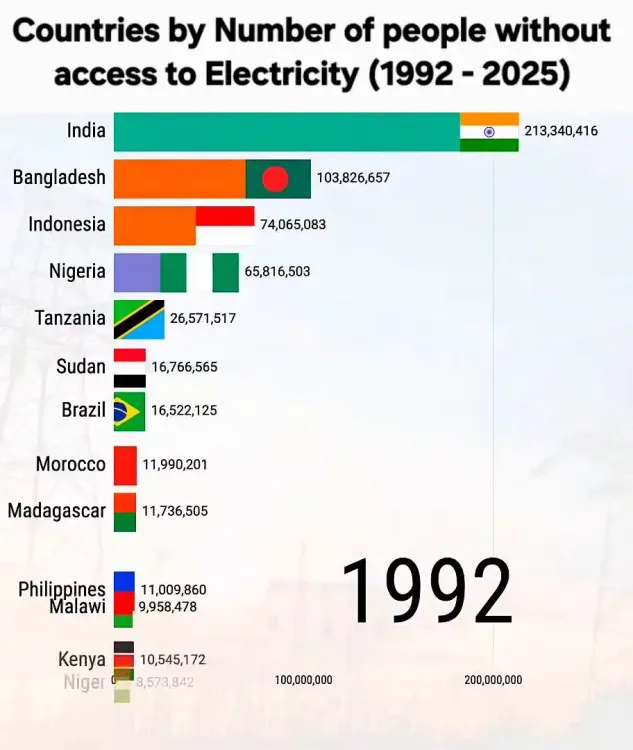
Union Parliamentary Affairs Minister Kiren Rijiju has highlighted electricity access as a critical pillar of India's development index, sharing a video on X that frames the period since 2014 as one of accelerated, peaceful growth backed by landmark electrification schemes.
Key Takeaways
Union Minister Kiren Rijiju posted on August 6, 2026 framing electricity as a 'critical component of the development index.' The Deen Dayal Upadhyaya Gram Jyoti Yojana (2015) strengthened rural power distribution by separating agricultural feeders.
The Saubhagya scheme (2017) targeted universal household electrification across rural and urban India by 2019.
Rijiju's post frames India's post-2014 growth as a 'peaceful rise' — domestically driven and non-confrontational.
State power utilities and rural households were the primary beneficiaries of both flagship electrification programmes.
Since 2014, India has been on a trajectory its own ministers describe as a 'peaceful rise' — and Union Parliamentary Affairs Minister Kiren Rijiju wants the numbers on the power grid to tell that story. On Thursday, August 6, 2026, Rijiju posted a video on X underlining electricity access as a critical pillar of the country's development index, framing the last decade-plus as a period of accelerated, conflict-free growth.
Rijiju wrote: 'How India has been rising peacefully and at a faster rate since 2014. Electricity is a critical component of development index.' The post, accompanied by a video, draws a direct line between energy access and the broader arc of India's rise under the Narendra Modi-led government.
The electrification push that started in 2015
The policy groundwork Rijiju is pointing to began early in the Modi era. The Deen Dayal Upadhyaya Gram Jyoti Yojana, launched in 2015, targeted rural power distribution — separating agricultural feeders to ensure homes got reliable supply. Two years later, in 2017, the government announced the Pradhan Mantri Sahaj Bijli Har Ghar Yojana, better known as Saubhagya, with an explicit goal: every unelectrified household in India — rural and urban — connected to the grid by 2019. These were not incremental upgrades. They were last-mile campaigns targeting villages and homes that had never had a live wire run through them. State power utilities and rural households were the direct beneficiaries, and the programmes became a centrepiece of the government's human development narrative.Why electricity sits at the heart of the development argument
Energy access is not just a comfort metric — it anchors school hours, cold-chain agriculture, small-business viability, and maternal health outcomes. Indian policy since 2014 has treated electrification as foundational infrastructure alongside roads, railways, and digital connectivity. Rijiju's framing of electricity as a 'critical component of the development index' is consistent with that wider thesis: lift energy access, and human development indicators follow. The minister's emphasis on 'peaceful rise' also carries a specific register in the current geopolitical moment — positioning India's growth as domestically driven and non-confrontational, a contrast to narratives of great-power rivalry elsewhere in the world. The next Ministry of Power annual report on household electrification coverage will be the clearest test of how far that arc has actually extended — and whether the development index gains Rijiju is signalling can be pinned to the grid.Point of View
Tangible metric (electricity access) to anchor a decade-long political narrative about BJP's development record. The 'peaceful rise' framing is significant: it simultaneously addresses domestic audiences proud of infrastructure gains and an international audience watching India's global posture. Electrification has been one of the more verifiable planks of the post-2014 development story, which is precisely why the government returns to it. As India approaches the next electoral cycle, expect energy access data to feature prominently in the ruling party's performance pitch.
NationPress
6 Aug 2026
Frequently Asked Questions
What did Kiren Rijiju say about India's development since 2014?
Rijiju stated that India has been rising peacefully and at a faster rate since 2014, and highlighted electricity as a critical component of the country's development index.
What is the Saubhagya scheme?
Saubhagya, formally the Pradhan Mantri Sahaj Bijli Har Ghar Yojana, was launched in 2017 to provide electricity connections to all unelectrified households in rural and urban India, with a target of universal electrification by 2019.
What is the Deen Dayal Upadhyaya Gram Jyoti Yojana?
It is a central government scheme launched in 2015 to strengthen rural power distribution infrastructure, including the separation of agricultural and domestic feeders to improve supply reliability for homes.
Why does the government link electricity to the development index?
Energy access underpins school hours, healthcare, small businesses, and agricultural cold chains — making it a foundational metric that drives improvements across multiple human development indicators.
What does 'peaceful rise' mean in Rijiju's context?
The phrase signals that India's rapid growth since 2014 has been achieved through domestic capacity building and economic diplomacy rather than external conflict or confrontation.