Rijiju Hails India as Top 3 Renewable Energy Producer
Synopsis
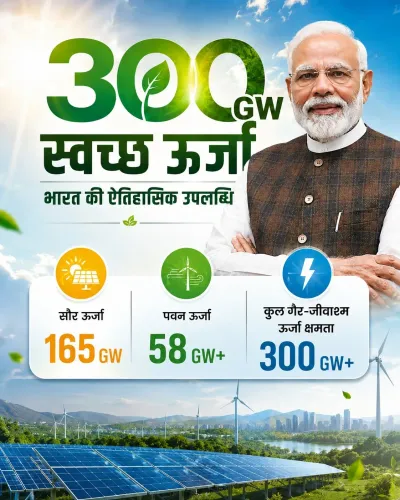
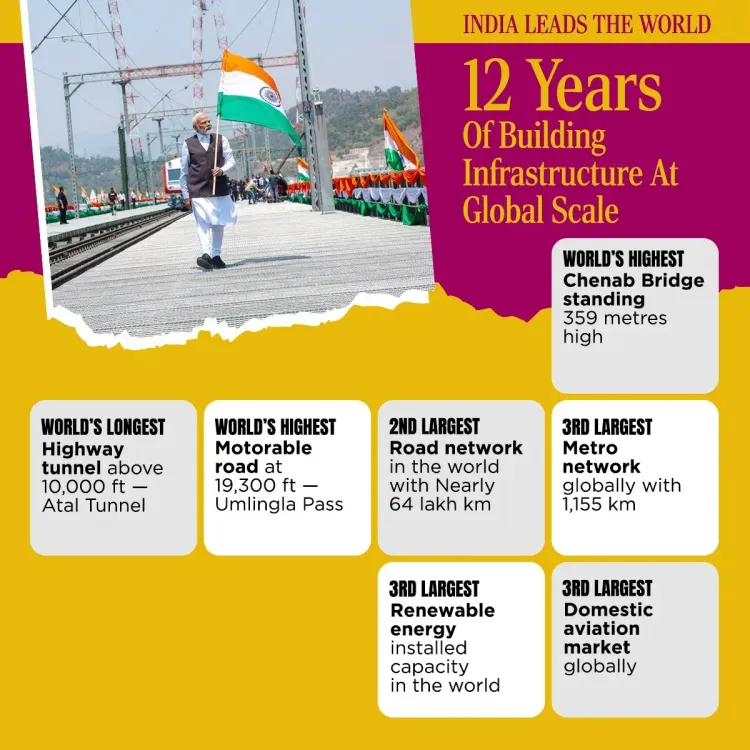
Union Parliamentary Affairs Minister Kiren Rijiju on June 16, 2026, celebrated India's standing as the world's third-largest renewable energy producer, linking the milestone to 12 years of Naya Bharat Nirman governance and the country's 500 GW clean energy target for 2030.
Key Takeaways
Union Parliamentary Affairs Minister Kiren Rijiju posted on June 16, 2026 , highlighting India's rise as the world's third-largest renewable energy producer .
The post is part of the #12YearsOfNayaBharatNirman campaign marking the BJP-led government's governance record since 2014 .
India revised its NDCs in 2022 , committing to 500 GW of non-fossil fuel installed capacity by 2030 .
The International Solar Alliance , co-founded by India and France in 2015 , now has over 120 member countries.
A Production Linked Incentive scheme for solar PV manufacturing was announced in 2022 to build domestic clean energy supply chains.
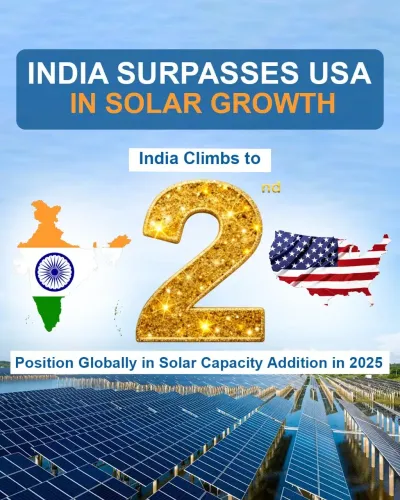
India's renewable growth places it alongside China and the United States as a top global renewable energy market.
Union Parliamentary Affairs Minister Kiren Rijiju on Tuesday, June 16, 2026, highlighted India's emergence as the world's third-largest renewable energy producer, framing the milestone as evidence of the nation's commitment to a greener and more sustainable future. The post, shared under the hashtag #12YearsOfNayaBharatNirman, marks a broader government-led celebration of policy achievements since 2014.
Context
Rijiju's post — 'Powering growth, powering sustainability. India's rise as the world's 3rd largest renewable energy producer reflects the nation's commitment to a greener future' — comes as the ruling Bharatiya Janata Party marks 12 years of governance under the Naya Bharat Nirman narrative. The messaging ties energy transition directly to the administration's broader development record, signalling that clean energy leadership is now a central pillar of political identity for the ruling coalition.
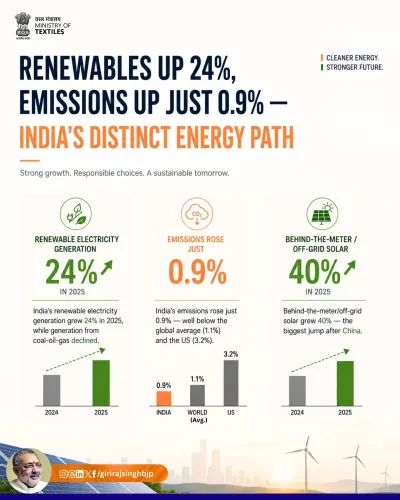
India's renewable energy journey has accelerated sharply since 2014, with successive capacity targets being set and, in many cases, revised upward. The country's installed renewable base — spanning solar, wind, hydro, and biomass — has grown through a combination of central schemes, state-level auctions, and private investment.
Policy Backdrop
The policy architecture underpinning this growth traces back to the National Solar Mission, launched in 2010 and significantly scaled up in 2015. India co-founded the International Solar Alliance alongside France in 2015, positioning itself as a multilateral champion of solar deployment across more than 120 member countries.
Under the Paris Agreement, India submitted Nationally Determined Contributions committing to 40 per cent non-fossil fuel electricity capacity by 2030. Those targets were revised upward in 2022, with India committing to 500 GW of non-fossil fuel-based installed capacity by the end of the decade. The same year, the government announced a Production Linked Incentive scheme for solar photovoltaic manufacturing to reduce import dependence and build domestic supply chains.
The dual emphasis on generation capacity and domestic manufacturing reflects a strategic pivot: energy security through self-reliant clean energy supply chains, rather than reliance on imported components or fossil fuels.
Stakeholders and Impact
The beneficiaries of this policy push span a wide ecosystem — from large renewable energy developers and state power utilities to equipment manufacturers now eligible for PLI incentives. For state utilities, the expansion of renewable capacity has introduced both opportunity and complexity, requiring grid upgrades and storage solutions to manage intermittent supply.
India's positioning alongside China and the United States as one of the world's top renewable markets has also raised its profile in international climate diplomacy. Successive COP summits have seen India present its capacity additions as proof that large developing economies can pursue growth and decarbonisation simultaneously — a message that carries weight in negotiations over climate finance.
What's Next
Progress on the 500 GW non-fossil fuel target will face scrutiny at upcoming COP meetings, where India's delivery against its revised NDCs will be closely watched by partner nations and climate observers. Domestically, the next Union Budget is expected to signal whether fresh PLI allocations or offshore wind bidding rounds will be announced to sustain the current growth trajectory.
As the #12YearsOfNayaBharatNirman campaign unfolds through June 2026, renewable energy is set to remain a headline achievement — one that the government will continue to invoke as both an economic and an environmental credential on the global stage.
Point of View
Designed to convert policy statistics into electoral messaging ahead of future cycles. By anchoring India's renewable energy ranking to the party's governance tenure, the government is attempting to claim ownership of a narrative — clean energy leadership — that resonates both domestically with aspirational voters and internationally with climate-focused partners. The framing of growth alongside sustainability is deliberate: it pre-empts criticism that development and decarbonisation are in tension. Whether the 500 GW target is met on schedule will ultimately determine how durable this messaging proves to be.
NationPress
15 Sept 2026
Frequently Asked Questions
Is India really the third-largest renewable energy producer in the world?
Union Minister Kiren Rijiju stated on June 16, 2026 that India is the world's third-largest renewable energy producer. India's installed renewable capacity has grown significantly since 2014, placing it among the top global markets alongside China and the United States, though exact rankings should be verified against the latest official figures from MNRE.
What is India's renewable energy target for 2030?
India revised its Nationally Determined Contributions in 2022, committing to 500 GW of non-fossil fuel-based installed electricity capacity by 2030. This updated pledge was submitted under the Paris Agreement framework.
What is Naya Bharat Nirman and why is it trending?
Naya Bharat Nirman is a BJP-led government campaign describing its governance and development agenda since 2014. The hashtag #12YearsOfNayaBharatNirman is trending in June 2026 as the party marks 12 years in power, with ministers highlighting policy milestones including renewable energy expansion.
What schemes has India launched to boost renewable energy?
Key initiatives include the National Solar Mission (launched 2010, scaled up 2015), the International Solar Alliance co-founded with France in 2015, and a Production Linked Incentive scheme for solar PV manufacturing announced in 2022 to develop domestic clean energy supply chains.
What is the International Solar Alliance?
The International Solar Alliance is a treaty-based multilateral organisation co-founded by India and France in 2015 to promote solar energy deployment. It has more than 120 member countries and is headquartered in India.