Rijiju backs PM SVANidhi as tool for vendor self-reliance

Synopsis
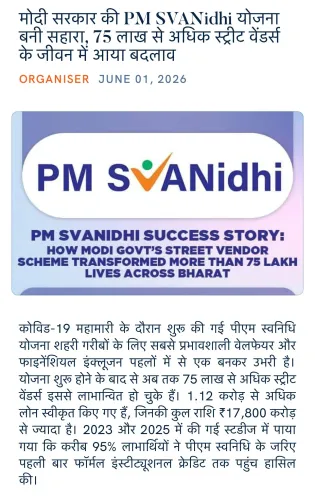
Union Parliamentary Affairs Minister Kiren Rijiju on 6 June 2026 praised PM SVANidhi, launched in 2020 under the Atmanirbhar Bharat package, as a transformative scheme empowering lakhs of street vendors through micro-credit — framing public trust in PM Modi as India's core strength.
Key Takeaways
Kiren Rijiju , Union Parliamentary Affairs Minister and senior BJP leader, publicly backed PM SVANidhi on 6 June 2026 .
PM SVANidhi was launched on 1 June 2020 as part of the Atmanirbhar Bharat package to support street vendors hit by COVID-19 .
The scheme offers working capital micro-credit loans, with repeat loan eligibility tied to timely repayment.
Rijiju described the scheme as more than financial aid — calling it a means to 'realise the dreams of small traders and make them self-reliant.' The minister linked beneficiary gains to the broader national narrative of self-reliance under PM Narendra Modi .
Future scheme updates are expected during the Union Budget cycle or Ministry of Housing and Urban Affairs reviews.
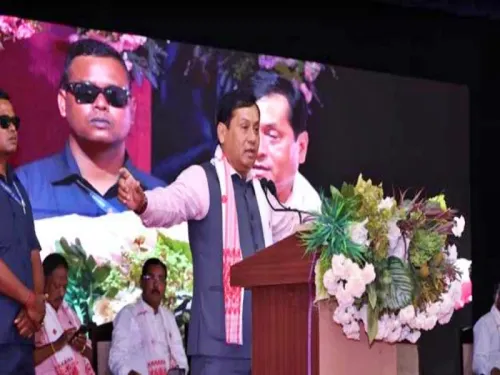
Union Parliamentary Affairs Minister Kiren Rijiju on Saturday, 6 June 2026, praised the PM SVANidhi scheme as a transformative instrument for street vendors, linking public trust in Prime Minister Narendra Modi to India's broader self-reliance mission.
Context
Posting in Hindi on X, Rijiju wrote: 'मोदी जी पर देश के लोगों का यह भरोसा ही भारत की सच्ची ताकत है' ('The trust that the people of this country place in Modi ji is India's true strength'). He described PM SVANidhi as having 'ignited new hope and confidence in the lives of lakhs of street vendors and cart sellers.'
The minister went further, characterising the scheme not merely as financial assistance but as 'a powerful medium to realise the dreams of small traders and make them self-reliant.'
Policy Backdrop
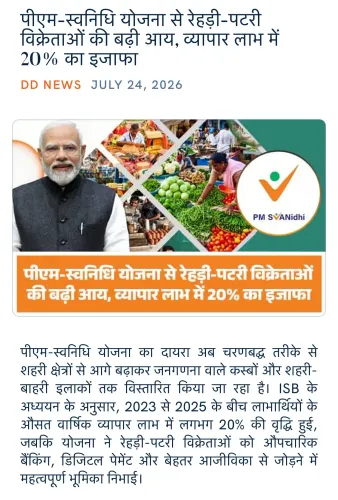
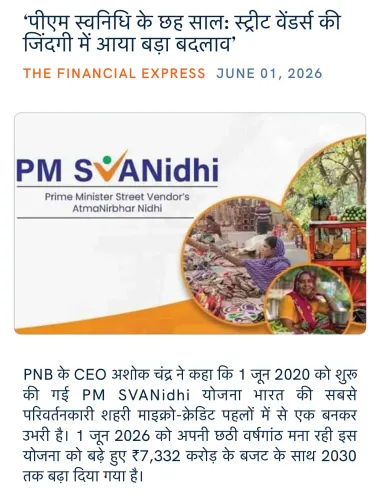
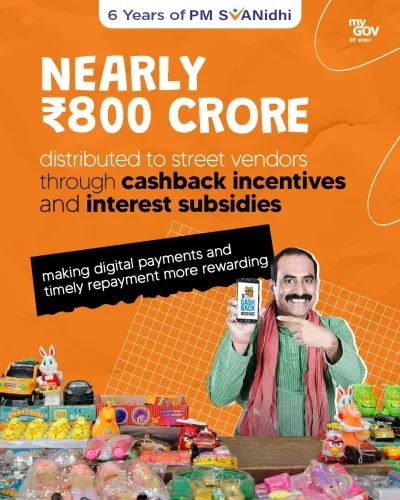
The PM Street Vendor's AtmaNirbhar Nidhi (PM SVANidhi) scheme was launched on 1 June 2020 as part of the Atmanirbhar Bharat package, specifically to support street vendors whose livelihoods were disrupted by COVID-19 restrictions. It provides working capital micro-credit loans to vendors operating in urban and peri-urban areas.
The scheme fits within a wider pattern of targeted credit and livelihood programmes rolled out since 2014, aimed at bringing vendors, artisans, and micro-entrepreneurs in the informal sector into formal financial channels. Beneficiaries who repay loans on time become eligible for enhanced credit in subsequent cycles, building a credit history for the first time.
Stakeholders and Impact
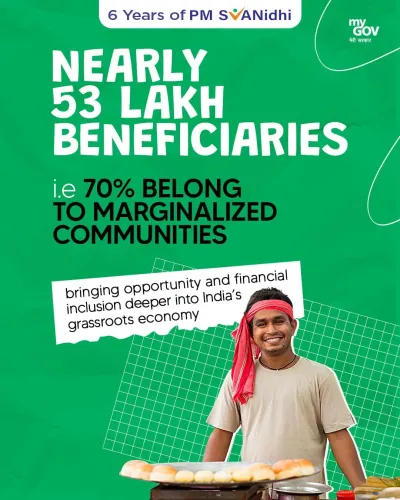
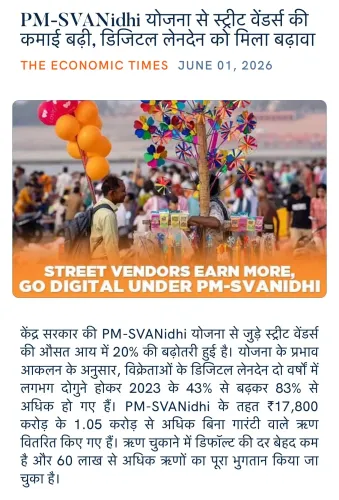
The primary beneficiaries are street vendors and small traders — a large and economically vulnerable segment of India's informal workforce concentrated in cities and towns. For many, PM SVANidhi represents their first formal credit relationship, reducing dependence on high-interest informal moneylenders.
Rijiju's framing — tying individual beneficiary gains to national self-reliance — reflects the government's consistent communication strategy of presenting welfare schemes as expressions of the Atmanirbhar Bharat vision rather than standalone relief measures. As a senior BJP leader from Arunachal Pradesh and a Cabinet minister, his amplification of the scheme signals continued political investment in its visibility ahead of urban governance reviews.
What's Next
Updates on scheme disbursements, new enrolment targets, or possible enhancements are typically announced during the annual Union Budget cycle or through the Ministry of Housing and Urban Affairs, which administers the programme. Sustained political messaging from senior ministers suggests the scheme will remain a centrepiece of the government's outreach to the urban informal economy.
Point of View
Linking individual economic uplift to a personalised trust in the Prime Minister. By framing PM SVANidhi as an instrument of self-reliance rather than charity, the BJP continues to recast government support as dignity-enabling rather than dependency-creating — a distinction that has proved electorally resonant with urban informal workers. The timing, six years after the scheme's launch, suggests a deliberate effort to keep SVANidhi salient as the government approaches budget season and urban local body cycles. Amplification by a Cabinet minister rather than a party functionary also signals that SVANidhi retains strategic importance in the government's welfare optics.
NationPress
21 Oct 2026
Frequently Asked Questions
What is PM SVANidhi scheme?
PM SVANidhi — PM Street Vendor's AtmaNirbhar Nidhi — is a micro-credit scheme launched on 1 June 2020 to provide working capital loans to street vendors and small traders affected by COVID-19 restrictions, administered by the Ministry of Housing and Urban Affairs .
Who launched PM SVANidhi scheme?
The scheme was launched by the Narendra Modi government as part of the Atmanirbhar Bharat economic relief package in June 2020 .
What did Kiren Rijiju say about PM SVANidhi?
Kiren Rijiju said the scheme has 'ignited new hope and confidence in the lives of lakhs of street vendors,' calling it not just financial aid but a means to realise small traders' dreams and make them self-reliant.
Who benefits from PM SVANidhi scheme?
The primary beneficiaries are street vendors, rehri-patri sellers, and cart traders in urban and peri-urban areas who previously had little or no access to formal credit.
What is Atmanirbhar Bharat?
Atmanirbhar Bharat ('Self-Reliant India') is the economic framework announced by PM Narendra Modi in 2020 , encompassing a range of stimulus and welfare measures aimed at boosting domestic production and financial inclusion.