Rijiju Shares PM Modi's Words on India-New Zealand Maritime Ties
Synopsis
Union Minister Kiren Rijiju shared PM Modi's remarks during the Prime Minister's visit to New Zealand, emphasising that shared democratic values and maritime geography make India and New Zealand 'natural partners' capable of giving the Indo-Pacific new strength and energy for peace.
Key Takeaways
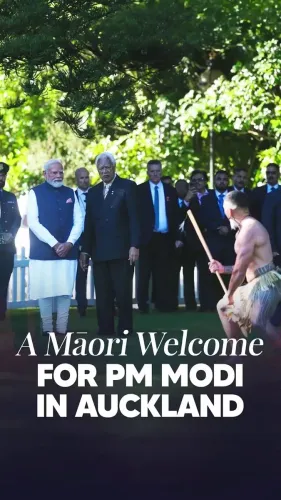
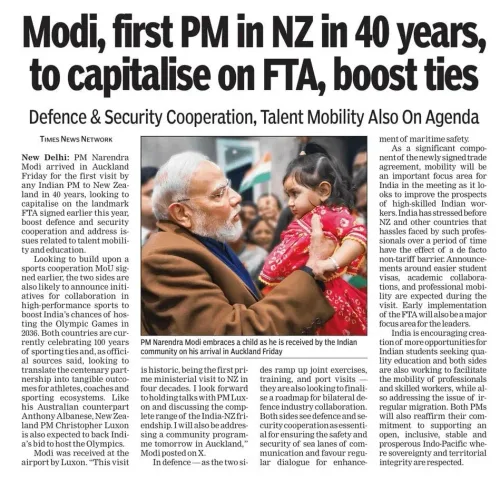
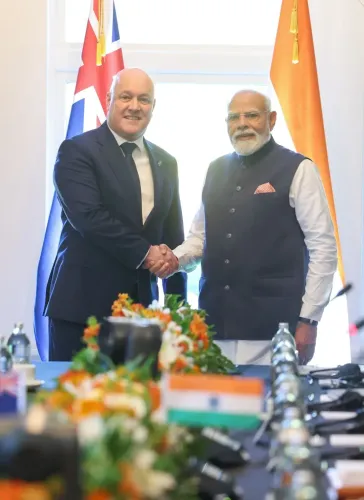
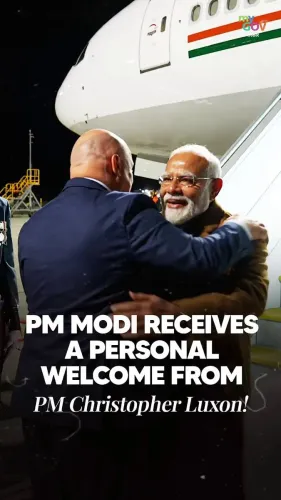
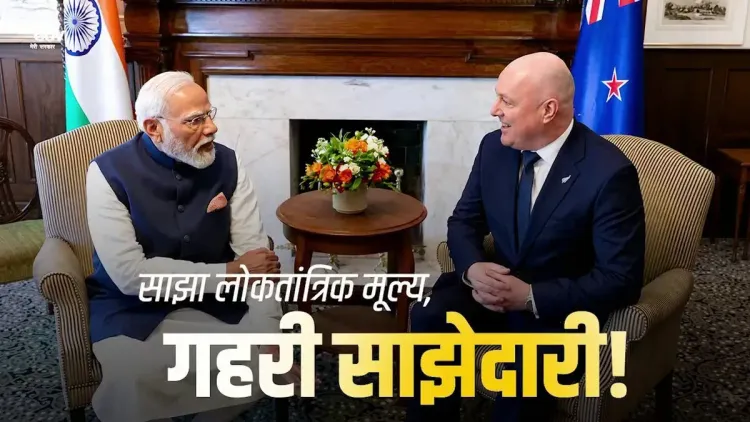
Union Parliamentary Affairs Minister Kiren Rijiju shared PM Narendra Modi 's statement on 11 July 2026 during the Prime Minister's visit to New Zealand .
PM Modi described shared democratic values as the foundation that makes India and New Zealand 'natural partners'.
Modi framed the two nations' maritime cooperation as giving the Indo-Pacific 'a new strength' and advancing shared goals of peace.
The visit aligns with India's Act East Policy (launched 2014 ) and the Indo-Pacific vision articulated at the Shangri-La Dialogue in 2018 .
Bilateral agreements and joint statements from the visit are expected to be watched closely by Indo-Pacific stakeholders and discussed in the Indian Parliament .
Union Parliamentary Affairs Minister Kiren Rijiju on Saturday, 11 July 2026, shared a key statement by Prime Minister Narendra Modi on the deepening bilateral relationship between India and New Zealand, highlighting shared democratic values and maritime cooperation as the foundation of a natural partnership in the Indo-Pacific.
Context
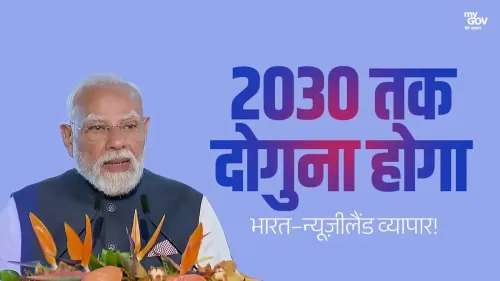
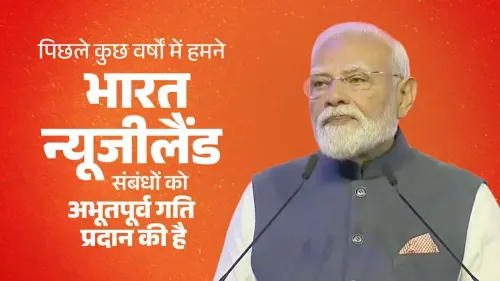
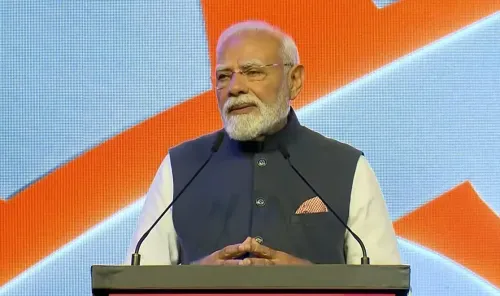
Rijiju quoted Prime Minister Modi as saying: 'लोकतांत्रिक मूल्यों में दृढ विश्वास हमें natural partner बनाता है' ('A firm belief in democratic values makes us natural partners'). Modi further stated that as two maritime nations, close cooperation between India and New Zealand gives the Indo-Pacific 'a new strength', and that their relationship 'can infuse new energy' into achieving shared goals of peace. The remarks were made in the context of #PMModiInNewZealand, signalling a high-level visit by the Prime Minister to Wellington.
Rijiju's post amplifies the Prime Minister's framing of the India-New Zealand relationship as one rooted in democratic solidarity and maritime geography — two pillars that have consistently anchored India's outreach to Pacific nations.
Policy Backdrop
India's engagement with Pacific democracies has deepened steadily since the country upgraded its Look East Policy to the Act East Policy in 2014, expanding the strategic aperture to include nations like New Zealand. Prime Minister Modi laid out India's vision for a free, open, and inclusive Indo-Pacific at the Shangri-La Dialogue in 2018, a framework that has since guided bilateral and multilateral outreach across the region.
New Zealand, as a maritime democracy with Commonwealth ties to India, fits naturally within this framework. Both nations share an interest in freedom of navigation, regional stability, and rules-based order in the Indo-Pacific — themes that Modi's quoted remarks directly invoke.
Stakeholders and Impact
The bilateral relationship carries significance for Indo-Pacific nations watching India's engagement with smaller Pacific democracies. A closer India-New Zealand partnership can strengthen multilateral groupings such as the East Asia Summit and reinforce norms around maritime security and peaceful dispute resolution.
For Indian diaspora communities in New Zealand — one of the largest immigrant groups in the country — stronger bilateral ties also carry practical implications for trade, mobility, and cultural exchange. The framing of the relationship as a 'natural partnership' built on democratic values elevates it beyond transactional diplomacy.
What's Next
Attention will now turn to any bilateral agreements or joint statements emerging from the Prime Minister's visit to New Zealand, and whether these translate into concrete cooperation frameworks in defence, trade, or maritime domain awareness. Any outcomes are also likely to be discussed in the Indian Parliament, where Rijiju, as Parliamentary Affairs Minister, plays a central role in shaping the legislative agenda and inter-house communication.
India's sustained outreach to Pacific democracies suggests that the Modi government views partnerships like the one with New Zealand not as peripheral, but as integral to its broader Indo-Pacific strategy — a posture that is likely to deepen in the months ahead.
Point of View
Reinforcing the narrative of India as a leading Indo-Pacific power. The choice to foreground democratic values alongside maritime identity is deliberate — it positions India as a peer partner to Pacific democracies rather than a regional hegemon. This visit and its framing extend a well-established policy arc from the Act East Policy to the Indo-Pacific vision, suggesting continuity rather than a course correction. The real test will be whether the visit produces substantive agreements that outlast the diplomatic optics.
NationPress
11 Jul 2026
Frequently Asked Questions
Why is PM Modi visiting New Zealand in 2026?
PM Modi's visit to New Zealand is aimed at strengthening bilateral ties rooted in shared democratic values and maritime cooperation, with a focus on India's broader Indo-Pacific strategy.
What did PM Modi say about India-New Zealand relations?
PM Modi stated that a firm belief in democratic values makes India and New Zealand 'natural partners', and that their cooperation as two maritime nations gives the Indo-Pacific new strength and can advance shared peace goals.
What is India's Act East Policy and how does it relate to New Zealand?
India's Act East Policy, launched in 2014, expanded the country's strategic engagement beyond Southeast Asia to include Pacific nations like New Zealand, deepening trade, defence, and diplomatic ties.
What is the Indo-Pacific and why does India prioritise it?
The Indo-Pacific is a geopolitical region spanning the Indian and Pacific Oceans. India prioritises it as a zone of strategic interest, promoting a free, open, and inclusive order through partnerships with maritime democracies.
What role does Kiren Rijiju play in Indian foreign policy communication?
As Union Minister of Parliamentary Affairs and a senior BJP leader, Rijiju frequently amplifies the government's foreign policy positions on social media, helping relay the Prime Minister's statements to domestic audiences.