CM Rio flags EAP pre-financing burden on smaller NE states
Synopsis
Nagaland Chief Minister Neiphiu Rio has called for advance financing support from Multilateral Development Banks to fix the structural cash-flow problem smaller North Eastern states face under the reimbursement-based Externally Aided Projects model.
Key Takeaways
CM Neiphiu Rio publicly flagged structural difficulties smaller North Eastern states face in implementing Externally Aided Projects (EAPs) .
EAPs operate on a reimbursement model , requiring states to pre-finance projects before recovering costs — a particular burden for states with limited fiscal capacity.
Rio proposed that advance financing support from Multilateral Development Banks (MDBs) be considered as a structural remedy.
Nagaland , like other smaller NE states, relies heavily on central transfers and has limited own-revenue capacity to front large project costs.
The issue has broader implications for how India's Act East Policy goals are financed across the eight northeastern states.
Possible policy responses include revised disbursement norms in the next Union Budget or Finance Commission recommendations for special-category states.
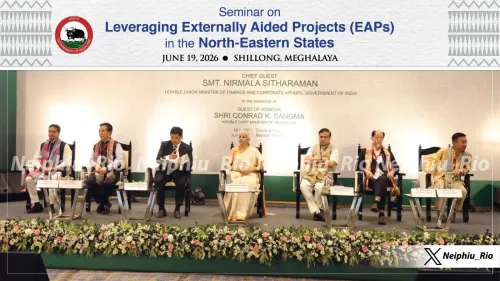
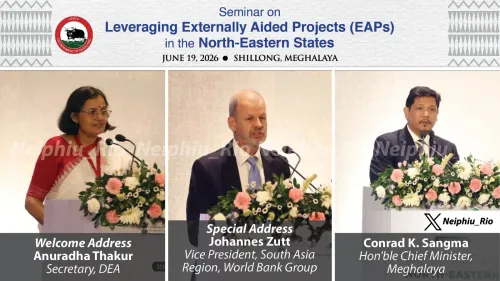
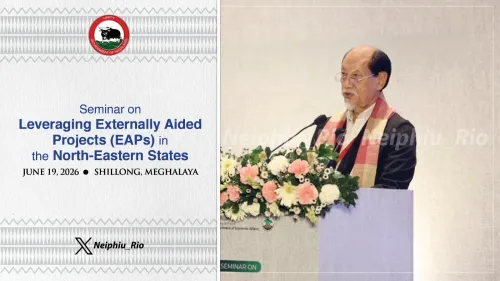
Nagaland Chief Minister Neiphiu Rio on Friday, 19 June 2026, publicly flagged structural challenges facing smaller North Eastern states in implementing Externally Aided Projects (EAPs), calling for advance financing support from Multilateral Development Banks (MDBs) to ease the burden on states that must pre-finance projects before claiming reimbursements.
Context
Responding to AIR News Kohima, Rio stated that EAPs operate on a reimbursement model that requires states to front the cost of projects before funds are released. For smaller North Eastern states like Nagaland, which have limited fiscal bases and constrained own-revenue generation, this creates a structurally difficult cash-flow challenge.
Rio noted that he had 'highlighted challenges in EAP implementation' and suggested that 'advance financing support from MDBs may be considered' as a potential remedy. The remark signals a push for a systemic change in how externally aided development funds reach smaller states.
Policy Backdrop
India has long used externally aided projects — funded by institutions such as the World Bank and the Asian Development Bank — to supplement central allocations for infrastructure and social-sector spending in the North East. The region gained renewed policy attention after India's Act East Policy was announced in 2014, which prioritised connectivity and development in the eight northeastern states.
The standard reimbursement model has historically created cash-flow pressure for smaller states. Unlike larger states with deeper treasuries, states such as Nagaland must divert scarce resources to incur expenditure upfront, then wait for reimbursement — a cycle that can delay or stall projects. Discussions on alternative mechanisms, including revolving funds and advance disbursements from multilateral lenders, have surfaced periodically in policy circles.
The North Eastern Council, established in 1971 to coordinate development planning across the region, has long recognised the fiscal asymmetry between northeastern states and the rest of India. Yet the EAP reimbursement structure has remained largely unchanged, leaving smaller states at a disadvantage in accessing external development finance.
Stakeholders and Impact
The primary stakeholders are the eight North Eastern states, their finance departments, and the central ministries that administer EAP frameworks. For Nagaland specifically, the challenge is acute: the state depends heavily on central transfers and has limited capacity to pre-finance large infrastructure or social-sector projects.
MDBs such as the World Bank and Asian Development Bank have existing mechanisms — including project preparation facilities and advance financing instruments — that could, in principle, be adapted to address pre-financing constraints. Rio's public call adds political weight to what has previously been a technocratic debate within finance ministries and planning bodies.
If adopted, advance financing support would directly benefit smaller special-category states that have historically struggled to absorb external aid at the pace envisioned by project timelines.
What's Next
Rio's remarks are likely to feed into upcoming deliberations on North Eastern development financing, including potential proposals in the next Union Budget or recommendations from Finance Commission consultations on easing pre-financing requirements for EAPs in special-category states. A formal proposal to MDBs or the Ministry of Finance for revised disbursement norms would be the logical next step. How the Centre and multilateral lenders respond will determine whether smaller northeastern states can more effectively tap into the growing pipeline of externally aided infrastructure projects.
Point of View
Placing the pre-financing problem squarely in the public domain ahead of likely budget and Finance Commission cycles. By invoking MDBs rather than solely the Centre, he signals that the fix must come from the architecture of external aid itself, not just from additional central grants. This aligns with a broader pattern of smaller northeastern states asserting fiscal asymmetry in national policy forums. The call could catalyse a coalition among NE chief ministers to press for structural changes in EAP disbursement norms — a shift that would have significant implications for how India's Act East Policy is actually delivered on the ground.
NationPress
19 Sept 2026
Frequently Asked Questions
What is the EAP reimbursement model and why is it a problem for North Eastern states?
Under the EAP reimbursement model, state governments must spend their own funds on externally aided projects first and then claim the money back from the central government or multilateral lender. For smaller North Eastern states like Nagaland, which have limited own revenues and tight budgets, this upfront spending requirement creates severe cash-flow pressure and can delay or stall projects.
What did Nagaland CM Neiphiu Rio say about EAPs?
On 19 June 2026, CM Rio stated that he had highlighted challenges in EAP implementation, specifically that the reimbursement model is 'structurally difficult' for smaller NE states, and suggested that advance financing support from Multilateral Development Banks should be considered as a solution.
What are Multilateral Development Banks and how can they help?
Multilateral Development Banks (MDBs) such as the World Bank and the Asian Development Bank are international financial institutions that fund development projects in member countries including India. They have instruments like advance financing facilities and revolving funds that could allow states to access project funds before incurring expenditure, addressing the pre-financing burden.
Which states are affected by the EAP pre-financing problem?
All eight North Eastern states — including Nagaland, Manipur, Mizoram, Meghalaya, Arunachal Pradesh, Tripura, Assam, and Sikkim — face this challenge to varying degrees, but smaller states with limited fiscal bases are most severely affected.
What policy changes could follow from CM Rio's remarks?
Rio's public call could lead to proposals in the next Union Budget or Finance Commission deliberations to ease pre-financing requirements for EAPs in special-category states, or to formal negotiations with MDBs for revised advance disbursement mechanisms.