Rohit Pawar demands ₹1 lakh/hectare drought aid in Maharashtra
Synopsis
Rohit Pawar has put Maharashtra drought crop losses at over ₹1.15 lakh crore and demanded ₹1 lakh per hectare, flagging that 55 lakh farmers still await a ₹5,000 Diwali payout and rabi sowing has fallen below 1972 drought levels. A tractor march from Shegaon to Nagpur begins 4 December.
Key Takeaways
Rohit Pawar demanded ₹1 lakh per hectare drought aid in a letter on 25 November 2026 to Revenue Minister Chandrashekhar Bawankule .
He estimated kharif and rabi crop losses at over ₹1.15 lakh crore , with the state 28 per cent short of expected rainfall.
31 of 36 districts recorded severe rainfall deficits; rabi sowing of 10 lakh hectares is below the 1972 drought level.
Pawar alleged 55 lakh farmers have not received the promised ₹5,000 Diwali assistance and cited 760 farmer suicides in Marathwada from January to September 2026 .
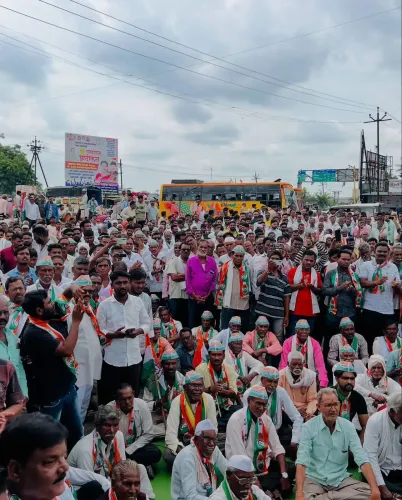
The Nyayhakka tractor march will run from Shegaon on 4 December 2026 to Nagpur on 9 December .
Nationalist Congress Party (Sharadchandra Pawar) MLA Rohit Pawar on Wednesday demanded immediate drought aid of ₹1 lakh per hectare for farmers in Maharashtra, writing to Revenue Minister Chandrashekhar Bawankule, who heads the Cabinet Sub-Committee on Drought Relief. In the communication dated 25 November 2026, Pawar estimated combined kharif and rabi crop losses at over ₹1.15 lakh crore and announced a Nyayhakka tractor march from Shegaon to Nagpur starting 4 December 2026.
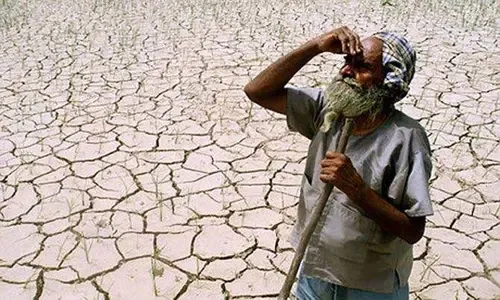
He said 31 of Maharashtra's 36 districts recorded severely below-average rainfall between 1 June and 25 November, with the state receiving 796 mm against an expected 1,092 mm — a shortfall of nearly 28 per cent. The letter urged concrete assistance for drought-hit farmers and agricultural labourers across the state.
Rainfall deficit and crop-loss estimates
Region-wise rainfall deficits were reported at 42 per cent in Marathwada, 40 per cent in North Maharashtra, 38 per cent in Western Maharashtra, 33 per cent in Vidarbha, and 13 per cent in Konkan. Monthly shortfalls were sharp, with a near-absence of retreating rainfall in October (93 per cent deficit) and November (78 per cent deficit).
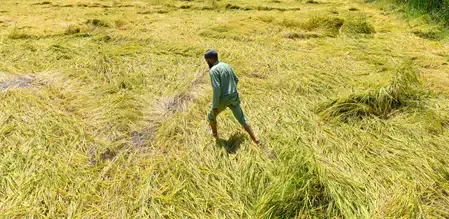
While kharif sowing covered 144 lakh hectares, widespread crop damage has caused an estimated loss of over ₹75,000 crore, according to Pawar. For the rabi season, sowing reached only 10 lakh hectares by 16 November against a normal of around 58 lakh hectares — lower than the 47 lakh hectares sown during the severe 1972 drought — with projected losses of ₹35,000 crore due to water scarcity.
This comes amid mounting farm distress. Pawar cited 760 farmer suicides in Marathwada between January and September 2026 and an average of eight suicides daily across the state.
Gaps in announced relief, Pawar alleges
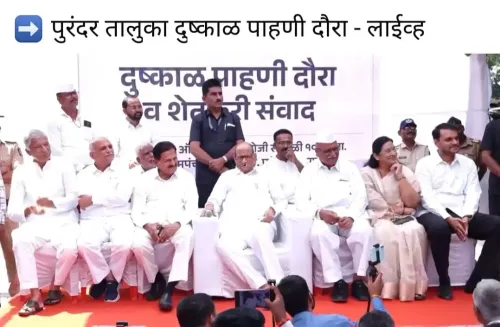
Pawar welcomed Minister Bawankule's readiness to discuss the tractor-march demands at the sub-committee meeting. He noted he was outside Mumbai and lacked prior notice to attend in person, and alleged that government relief announcements have fallen short in execution.
Around 55 lakh farmers have yet to receive the ₹5,000 assistance announced ahead of Diwali, even a week after the festival, he said. Three instalments of the Namo Shetkari Mahasanman Nidhi have been pending since December 2025, requiring an estimated ₹5,425 crore.
Against an announced loan-waiver target of 56 lakh farmers, 26.69 lakh (47 per cent) appeared on beneficiary lists and funds were disbursed to 21 lakh (37 per cent), while only 1.50 lakh farmers received fresh crop loans through the end of October, he noted.
Against a ₹31,000 crore package announced for last year's excessive rains, ₹13,000–14,000 crore was disbursed, according to the letter. Crop insurance payouts stood at ₹1,890 crore (₹3,200 per hectare) rather than the ₹9,500 crore (₹17,000 per hectare) figure cited by the Chief Minister. The Krishi Samruddhi scheme, announced at ₹5,000 crore annually for five years, has not been implemented over three years, he said. Thousands of crores in employment-guarantee bills remain pending, alongside instances of irregularities.
Fourteen demands placed before the government
The letter put forward 14 demands. Pawar sought immediate relief of ₹1 lakh per hectare for drought-affected farmers, including tenant and sharecropping farmers; financial assistance of ₹25,000 each for agricultural labourers, estimated at over one crore statewide; compensation of ₹1.50 lakh per hectare for damaged orchards across 14.5 lakh hectares of fruit crops; and ₹60,000 per hectare for tanker irrigation.
He also called for immediate loan waivers for eligible farmers who defaulted in 2025–26 under the Punyashlok Ahilyadevi Holkar scheme, as well as those excluded from the 2017 and 2019 loan waivers, along with a ₹1 lakh incentive grant for farmers who regularly repay crop loans.
Further demands include restoration of the Re 1 crop insurance scheme with its earlier triggers; immediate disbursement of pending crop insurance dues of ₹17,500 per hectare from the previous year; a waiver of microfinance and self-help group loans or a one-year moratorium on recovery, with the government covering interest and ensuring CIBIL protection; and a one-year recovery moratorium through the Reserve Bank of India (RBI) for small businesses and farm-equipment loans.
Pawar also sought immediate fodder camps based on village-level demand or fodder grants through direct benefit transfer; fee concessions for students from economically disadvantaged families; immediate release of pending bonuses for paddy growers; and the withdrawal of import-duty concessions on cotton. He said per-capita drinking water supply should be raised from 20 litres to 40 litres, with planned water for livestock and local fodder and water arrangements via tehsildars where nomadic herders graze.
Additional demands cover special financial aid for fishing families affected by dry reservoirs; relaxing restrictive conditions under the rural employment scheme or launching a dedicated drought employment guarantee scheme to curb migration; waiving property and water taxes for economically weaker residents in municipal councils and nagar panchayats in drought-declared talukas; and exempting small shopkeepers and traders from business tax.
Nyayhakka tractor march and what happens next
The Nyayhakka tractor march will begin on 4 December 2026 from Shegaon and reach Nagpur on 9 December via Balapur, Wadegaon, Takli, Kherda Phata, Karanja Lad, Darwha, Yavatmal, Kalamb, Ralegaon, Hinganghat and Butibori. NCP (SP) chief Sharadchandra Pawar has also written to the Chief Minister on farmers' and labourers' issues, the letter noted.
How the Cabinet Sub-Committee on Drought Relief responds to the per-hectare aid demand and the pending-disbursement allegations will shape Maharashtra's farm-politics calendar through December, as the tractor column heads towards Nagpur.
Point of View
000 crore rain package that, by his account, disbursed less than half, insurance payouts a fraction of the Chief Minister's cited figure, and a five-year Krishi Samruddhi scheme that has not moved in three years — that pattern is why farm distress outlasts every relief press note. Rabi sowing below even 1972 levels should alarm any government, regardless of party. The tractor march will test whether the Cabinet sub-committee treats this as a file or as a statewide livelihood emergency.
NationPress
25 Nov 2026
Frequently Asked Questions
What did Rohit Pawar demand for drought-hit Maharashtra farmers?
He demanded immediate relief of ₹1 lakh per hectare for drought-affected farmers, including tenants and sharecroppers, in a letter to Revenue Minister Chandrashekhar Bawankule on 25 November 2026. The letter listed 14 demands covering labourers, orchards, insurance, loan waivers and fodder.
How severe is the rainfall shortfall in Maharashtra?
According to Pawar, the state received 796 mm against an expected 1,092 mm between 1 June and 25 November, a shortfall of nearly 28 per cent, with 31 of 36 districts severely below average. Marathwada was worst hit at a 42 per cent deficit, followed by North Maharashtra at 40 per cent.
What is the Nyayhakka tractor march announced by Rohit Pawar?
It is a farmers' tractor march scheduled to start on 4 December 2026 from Shegaon and reach Nagpur on 9 December. The route includes Balapur, Wadegaon, Takli, Kherda Phata, Karanja Lad, Darwha, Yavatmal, Kalamb, Ralegaon, Hinganghat and Butibori.
What pending farm payments has Pawar flagged?
He said around 55 lakh farmers have not received the ₹5,000 Diwali assistance and that three Namo Shetkari Mahasanman Nidhi instalments have been pending since December 2025, needing about ₹5,425 crore. He also alleged crop insurance was paid at ₹3,200 per hectare instead of the ₹17,000 per hectare figure cited by the Chief Minister.
Who would be covered under Pawar's drought-aid demands?
The demands cover drought-hit farmers including tenants and sharecroppers, over one crore agricultural labourers, orchard growers across 14.5 lakh hectares, fishing families, nomadic herders, students from poor families, paddy growers, and weaker residents and small traders in drought-declared talukas. He has also sought loan-waiver coverage for eligible defaulters from 2025–26 and those left out of the 2017 and 2019 waivers.