Uddhav Sena's Saamana accuses BJP of politicising Independence Day
Synopsis
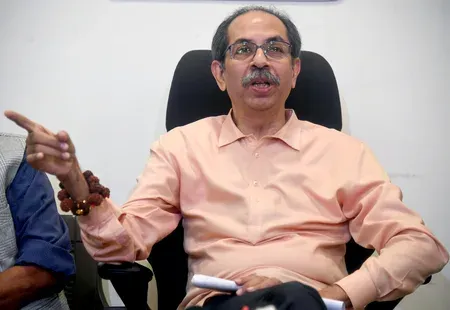
Uddhav Thackeray's Shiv Sena used its mouthpiece Saamana on Independence Day to level a pointed historical charge: that the BJP and Sangh Parivar — organisations absent from the freedom struggle — have turned the national flag, Vande Mataram, and Independence Day itself into a BJP public-relations machine, driven by electoral pressure rather than patriotism.
Key Takeaways
Shiv Sena (UBT) published a sharp editorial in Saamana on 15 August accusing the BJP of politicising Independence Day .
The editorial targeted the Tiranga Yatra and Har Ghar Tiranga campaigns as large-scale BJP public relations exercises.
Saamana noted that the RSS headquarters in Nagpur did not hoist the national flag for years after Independence despite public criticism.
A 700-foot tricolour was reportedly paraded through Nagpur during this year's rallies.
The editorial linked the intensity of nationalist campaigns to mounting political pressure on the ruling party, including protests at Jantar Mantar .
The Shiv Sena (Uddhav Balasaheb Thackeray) on Saturday, 15 August charged that India's Independence Day has, over the past decade, been progressively converted into a political showcase by the Bharatiya Janata Party (BJP) and the Sangh Parivar — a critique published in the party's mouthpiece Saamana.
The Core Accusation
The Saamana editorial argued that Prime Minister Narendra Modi's choice of traditional turbans and attire at the Red Fort each year is calibrated around upcoming state elections rather than reflecting genuine cultural sentiment. According to the editorial, even the solemnity of the national day has been subordinated to electoral arithmetic, with BJP-sponsored initiatives dominating the occasion's public narrative.
The mouthpiece specifically targeted the 'Tiranga Yatra' and 'Har Ghar Tiranga' campaigns, describing them as large-scale public relations exercises. 'Leading up to the celebrations, the party conducted the widespread Tiranga Yatra initiative with extensive publicity. The grandly organised rallies aimed to portray the ruling party as the primary creators and protectors of the Indian tricolour, presenting the spectacle as though the national flag were being unfurled in India for the very first time,' the editorial stated.
Historical Contrast Drawn
The Uddhav Thackeray-led faction drew a pointed historical contrast, noting that during the pre-1947 prabhat pheris (morning processions) and satyagrahas, the BJP's parent organisation was absent from the freedom struggle. The editorial contended that organisations that historically showed little affinity for the national flag have now embraced it with conspicuous fervour.
It further noted that the Rashtriya Swayamsevak Sangh (RSS) headquarters in Nagpur did not hoist the national flag for years after Independence, even as public criticism mounted. 'Thousands of freedom fighters went to the gallows holding the tricolour and singing Vande Mataram while modern-day advocates remained silent,' the editorial remarked. Rallies this year reportedly featured a 700-foot tricolour paraded through Nagpur.
Political Pressure Cited as Motive
The Thackeray camp argued that the surge in nationalistic spectacle coincides with mounting political pressures on the ruling dispensation — including ongoing protests at Jantar Mantar and political challenges across multiple states. The editorial contended that the BJP is leveraging the emotional atmosphere of Independence Day to project patriotism and shore up public standing.
'In 2014, supporters proclaimed the Narendra Modi government's arrival as the true dawn of Indian Independence. Today, facing shifting public sentiment, those who once viewed the flag as an official formality now spend substantial funds on cutouts, rallies, and countrywide events to bolster their public standing,' the editorial said.
Broader Significance
The broadside from Saamana is notable given the Shiv Sena (UBT)'s own historical proximity to cultural nationalism. The party's critique signals a deliberate effort to draw ideological distance from the BJP ahead of electoral contests in Maharashtra. It also reflects a wider opposition argument that the ruling party conflates state resources and national symbols with partisan identity — a charge the BJP has consistently denied. How the ruling alliance responds to this narrative in the run-up to state polls will be closely watched.
Point of View
Itself rooted in cultural nationalism, is now questioning the BJP's ownership of the tricolour signals how far Maharashtra's political realignment has shifted. The historical argument about RSS and the freedom struggle is not new, but deploying it on Independence Day itself maximises its symbolic weight. What mainstream coverage underplays is the irony: a party that built its identity on Hindutva is now invoking secular freedom-fighter credentials to delegitimise the BJP's nationalism. Whether that argument resonates with voters — or merely fires up the base — will be tested at the next Maharashtra ballot.
NationPress
30 Sept 2026
Frequently Asked Questions
What did Saamana say about BJP and Independence Day?
The Saamana editorial, published on 15 August by the Shiv Sena (Uddhav Balasaheb Thackeray), accused the BJP of converting Independence Day into a political and public relations spectacle over the past decade. It specifically criticised the Tiranga Yatra and Har Ghar Tiranga campaigns as partisan exercises designed to project the ruling party as the guardian of the national flag.
What historical claim did Uddhav Sena make about the RSS and the national flag?
The Saamana editorial claimed that the RSS headquarters in Nagpur did not hoist the national flag for years after Independence despite public criticism, and that the BJP's parent organisation was absent from the pre-1947 freedom struggle. It argued that organisations with little historical affinity for the tricolour have now embraced it for political gain.
Why did Uddhav Sena publish this editorial on Independence Day?
According to the editorial, the timing reflects mounting political pressure on the ruling BJP, including ongoing protests at Jantar Mantar and political challenges across states. The Thackeray camp argued that the surge in nationalistic spectacle is a response to shifting public sentiment rather than genuine patriotism.
What is the Tiranga Yatra and why is it controversial?
The Tiranga Yatra is a BJP-organised campaign involving mass processions with the national tricolour, run alongside the Har Ghar Tiranga initiative around Independence Day. Critics, including Uddhav Sena, argue it is designed to portray the ruling party as the primary custodian of the national flag, conflating a state symbol with partisan identity.
What is the significance of Shiv Sena (UBT) making this argument?
The Shiv Sena (UBT) is itself rooted in cultural nationalism, making its critique of BJP's nationalistic campaigns ideologically notable. The editorial signals a deliberate effort by the Thackeray faction to draw ideological distance from the BJP ahead of electoral contests in Maharashtra.