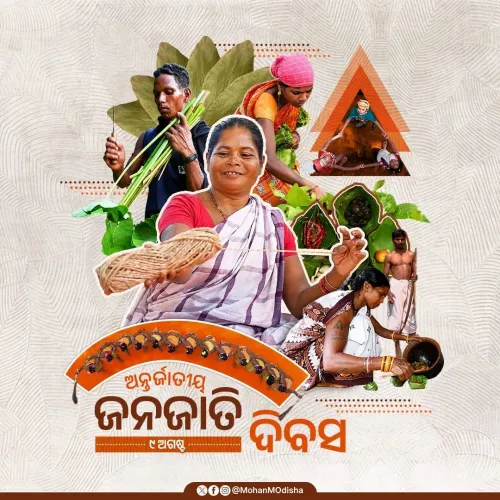
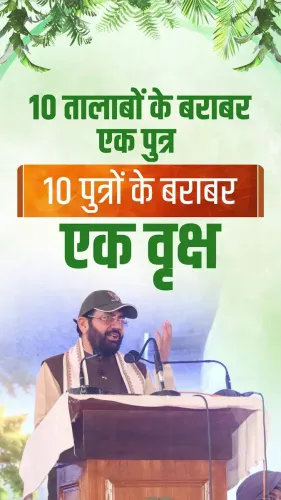
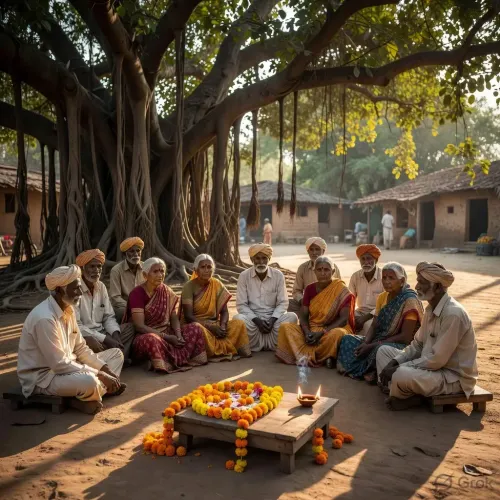
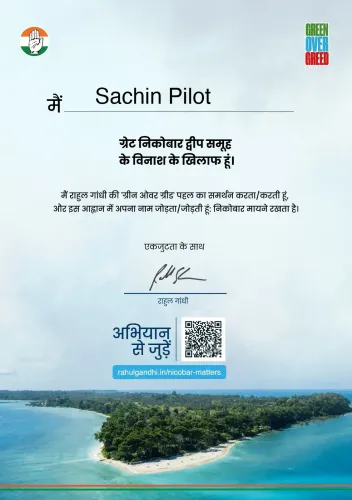
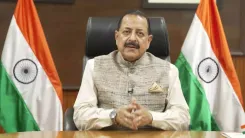
Sachin Pilot calls for tribal rights on World Indigenous Day
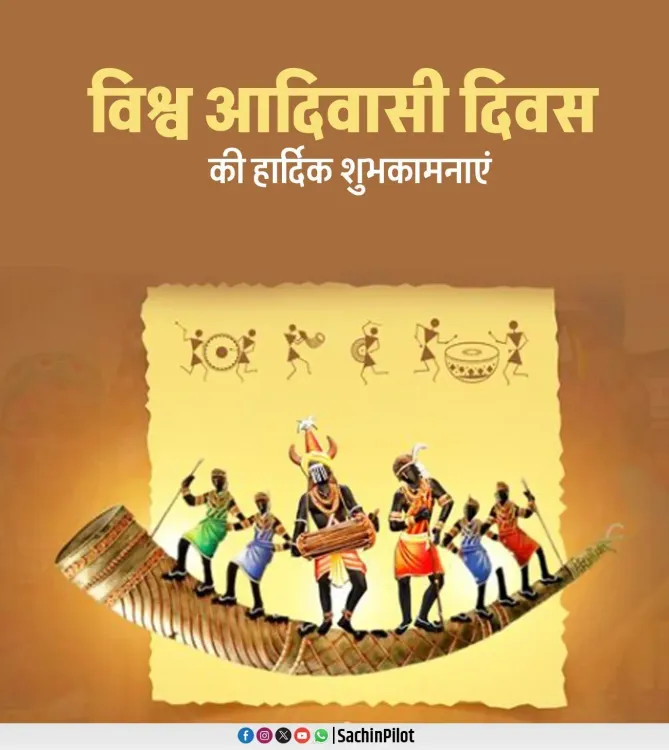
Synopsis
On World Indigenous Peoples' Day, Congress leader Sachin Pilot called for a pledge to protect Adivasi water, forest, and land rights alongside preserving tribal culture and heritage, invoking the enduring jal-jangal-zameen framework central to tribal political identity in India.
Key Takeaways
Congress leader Sachin Pilot posted a World Indigenous Peoples' Day message on 9 August 2026 .
He called for protecting Adivasi rights over jal-jangal-zameen — water, forest, and land.
The Forest Rights Act, 2006 recognised individual and community rights of forest-dwelling tribal communities but implementation remains uneven.
India's Fifth and Sixth Schedules provide constitutional safeguards for Scheduled Tribe areas and land rights.
Adivasi communities constitute roughly 8 percent of India's population and inhabit many of the country's most resource-contested regions.
On World Indigenous Peoples' Day, 9 August, Congress leader and Rajasthan's former Deputy Chief Minister Sachin Pilot issued a call that goes beyond seasonal greetings — urging every Indian to pledge the protection of Adivasi land, forests, and water rights alongside celebrating tribal heritage.
Posting in Hindi, Pilot wrote: 'जल-जंगल-जमीन एवं उनके अधिकारों की रक्षा का संकल्प लें' — 'Let us resolve to protect water, forest, and land, and the rights of tribal communities' — framing World Adivasi Divas not as ceremony but as a moment of commitment.
Why jal-jangal-zameen still carries weight
The phrase jal-jangal-zameen — water, forest, land — is not rhetorical decoration. It is the load-bearing pillar of Adivasi political identity in India, rooted in decades of movements from Jharkhand to Bastar. The Scheduled Tribes and Other Traditional Forest Dwellers (Recognition of Forest Rights) Act, 2006 gave it legislative form, recognising individual and community rights of forest-dwelling tribal populations over land and natural resources. Yet implementation has remained uneven, with large numbers of claims still pending or rejected across states — making the annual pledge on 9 August a live political statement, not just a cultural salute.Constitutional scaffolding behind the pledge
India's Constitution provides structural protection for tribal communities through the Fifth and Sixth Schedules, which govern administration of Scheduled Tribe areas and restrict alienation of tribal land. Politicians across the spectrum invoke these safeguards on World Adivasi Divas — but the gap between constitutional promise and ground-level delivery in forest rights claim settlements is precisely what advocacy groups track year after year. Pilot's post lands squarely in that tradition: pairing cultural pride with a pointed rights reminder. The broader pattern is consistent: in a country where Adivasi communities make up roughly 8 percent of the population and occupy some of India's most resource-rich and contested geographies, the politics of tribal rights never truly go quiet — they simply find fresh expression on days like this.Point of View
He positions the Congress in the ongoing national debate over Forest Rights Act implementation — a fault line that cuts through several states the party is contesting. The invocation of jal-jangal-zameen signals alignment with grassroots Adivasi movements without naming any specific government failure, keeping the message broad enough for national resonance. For a leader who holds the Chhattisgarh in-charge role — a state with one of India's largest Scheduled Tribe populations — this is also constituency-building by another name. The post fits a larger Congress pattern of using symbolic dates to reinforce tribal-rights credentials ahead of electoral cycles.
NationPress
9 Aug 2026
Frequently Asked Questions
What is World Indigenous Peoples' Day and when is it observed?
World Indigenous Peoples' Day, also called World Adivasi Divas, is observed every year on 9 August to raise awareness of the rights, cultures, and histories of indigenous communities worldwide. The United Nations designated this date in 1994.
What does jal-jangal-zameen mean in the context of Adivasi rights?
Jal-jangal-zameen — literally 'water, forest, land' — is the core demand framework of Adivasi rights movements in India, asserting tribal communities' entitlement to access and govern the natural resources on which their livelihoods depend.
What is the Forest Rights Act and how does it protect tribal communities?
The Scheduled Tribes and Other Traditional Forest Dwellers (Recognition of Forest Rights) Act, 2006 legally recognised the rights of forest-dwelling tribal and other traditional communities over land they have historically occupied and resources they have depended upon, correcting decades of dispossession.
What are the Fifth and Sixth Schedules of the Indian Constitution?
The Fifth Schedule governs the administration of Scheduled Tribe areas in most Indian states, restricting land alienation and providing for Tribal Advisory Councils. The Sixth Schedule grants autonomous district councils with legislative powers to tribal regions in the northeastern states.
Why is Sachin Pilot significant for tribal communities in Chhattisgarh?
As the Indian National Congress in-charge for Chhattisgarh — a state with one of the country's largest Scheduled Tribe populations — Pilot's statements on Adivasi rights carry direct political weight for the party's engagement with tribal voters in the region.