Sachin Pilot pays tribute to Dr. Manmohan Singh's legacy
Synopsis
Congress general secretary Sachin Pilot paid tribute to former PM Dr. Manmohan Singh on August 11, 2026, honouring his 1991 economic reforms, MGNREGA, and the personal values of simplicity and integrity that defined his decades in public life.
Key Takeaways
Congress leader Sachin Pilot posted a tribute to former PM Dr.
Manmohan Singh on August 11, 2026 .
Singh with driving the landmark 1991 economic liberalisation as Finance Minister.
The tribute highlighted major welfare programmes including MGNREGA , which provided 100 days of guaranteed rural employment .
CPP Chairperson Smt.
Sonia Gandhi is quoted as writing that 'History will indeed remember Dr Manmohan Singh kindly.' Pilot emphasised Dr.
Singh's personal qualities — simplicity, humility, and integrity — as a model for public service.
The tribute is part of Congress's broader ongoing narrative linking its historical leadership to economic growth and equity.
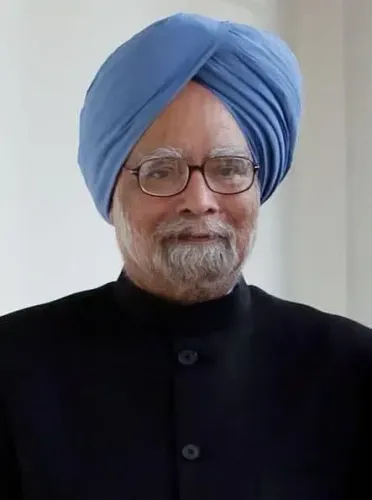
A statesman who reshaped India's economy and quietly dignified every office he held — Congress leader Sachin Pilot on Tuesday, August 11, 2026, paid a heartfelt tribute to former Prime Minister Dr. Manmohan Singh, calling his contributions to the nation 'significant' and his personal values an enduring model of public service.
From the 1991 reforms to MGNREGA: a legacy that reshaped millions of lives
Pilot's tribute traces a sweeping arc across Dr. Singh's career — from the 1991 economic liberalisation that cracked open India's closed economy to the social welfare architecture of the UPA years (2004–2014). As Finance Minister under Prime Minister P.V. Narasimha Rao, Dr. Singh dismantled the licence raj, slashed import duties, and invited foreign investment at a moment when India's foreign reserves had nearly run dry. The reforms he shepherded that year are widely credited with setting India on a sustained high-growth trajectory.
As Prime Minister, Dr. Singh presided over the launch of landmark welfare programmes including the Mahatma Gandhi National Rural Employment Guarantee Act (MGNREGA), which guaranteed 100 days of wage employment to rural households and became one of the world's largest public works programmes. Pilot's post specifically credits Dr. Singh with 'helping millions of families rise out of poverty' — a line that points directly at this social-sector record.
Sonia Gandhi's words anchor the tribute
Congress Parliamentary Party Chairperson Smt. Sonia Gandhi is quoted by Pilot as writing: 'History will indeed remember Dr Manmohan Singh kindly.' The invocation of Gandhi's words is deliberate — it situates the tribute within the party's collective voice rather than as a lone individual's sentiment, lending it institutional weight. Congress leaders have consistently returned to Dr. Singh's legacy to reinforce the party's narrative of combining economic growth with equity and personal integrity.
Simplicity as a political statement
Perhaps the most pointed element of Pilot's tribute is its emphasis on character over achievement. 'His simplicity, humility, and integrity will always serve as a reminder of what public service stands for,' Pilot writes — a formulation that, in the current political climate, carries an implicit contrast without naming one. In a political culture increasingly defined by spectacle, invoking a leader known for quiet competence and personal austerity is itself a message. It lands.
Point of View
Congress continues to construct a historical identity that bridges market liberalism with social equity, a combination the party believes sets it apart. The explicit invocation of Sonia Gandhi's words signals party unity on legacy and leadership at a time when the Congress is working to consolidate its ideological narrative. The emphasis on Dr. Singh's personal integrity functions as a quiet but pointed contrast in contemporary political discourse, reminding voters of a different register of leadership.
NationPress
11 Aug 2026
Frequently Asked Questions
What is Dr. Manmohan Singh's contribution to India?
Dr. Manmohan Singh is credited with architecting India's 1991 economic liberalisation as Finance Minister, which opened the economy and set India on a high-growth path. As Prime Minister from 2004 to 2014 , he oversaw landmark welfare programmes including MGNREGA , which guaranteed rural employment to millions of families.
Why did Sachin Pilot pay tribute to Manmohan Singh?
Congress general secretary Sachin Pilot posted a tribute on August 11, 2026 , honouring Dr. Singh's economic reforms, social welfare legacy, and personal values of simplicity and integrity, also quoting CPP Chairperson Smt. Sonia Gandhi on his historical significance.
What did Sonia Gandhi say about Manmohan Singh?
According to Sachin Pilot's post, CPP Chairperson Smt. Sonia Gandhi wrote that 'History will indeed remember Dr Manmohan Singh kindly,' a sentiment Pilot used to anchor his tribute.
What is MGNREGA and who introduced it?
MGNREGA (Mahatma Gandhi National Rural Employment Guarantee Act) was enacted during the UPA-I government (2004–2009) led by Prime Minister Dr. Manmohan Singh. It guarantees 100 days of wage employment per year to rural households and is one of the world's largest public works programmes.
What were Manmohan Singh's key achievements as Finance Minister?
As Finance Minister under Prime Minister P.V. Narasimha Rao in 1991 , Dr. Manmohan Singh dismantled India's licence raj, reduced import duties, and opened the economy to foreign investment at a moment of severe balance-of-payments crisis, reforms widely credited with transforming India's economic trajectory.