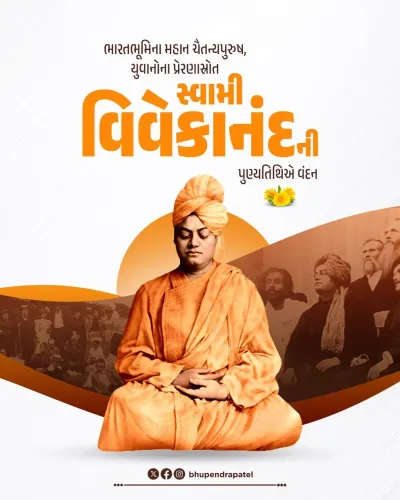
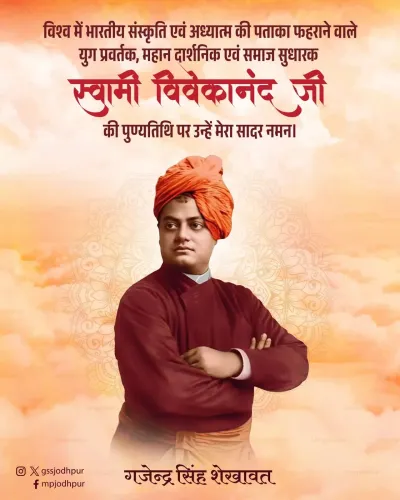
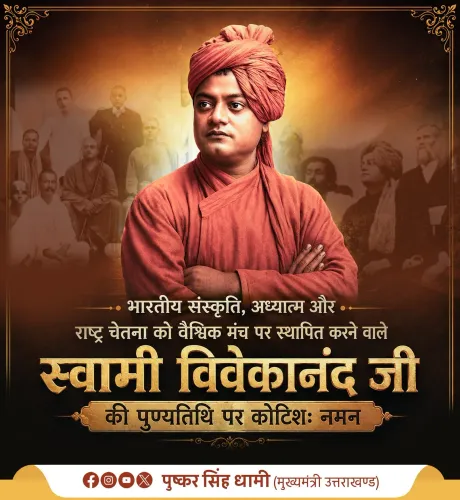
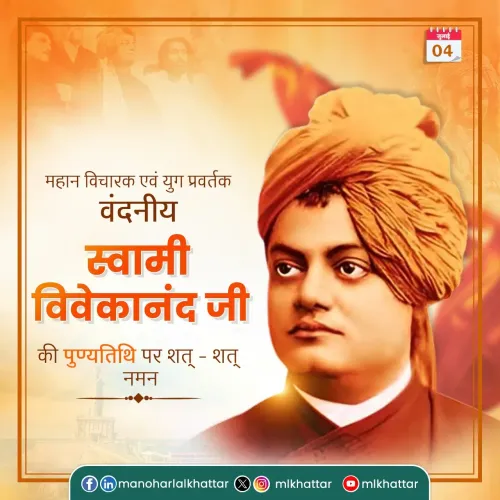
Sachin Pilot Pays Tribute to Swami Vivekananda on Death Anniversary
Synopsis
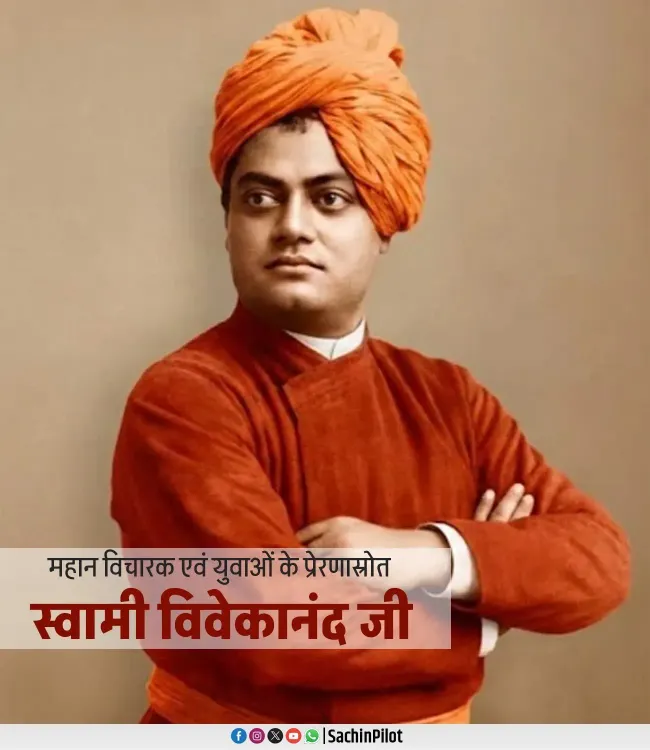
Congress general secretary Sachin Pilot on July 4, 2026, paid tribute to Swami Vivekananda on his death anniversary, honouring the 19th-century monk-philosopher as a global ambassador of Indian cultural and spiritual heritage and a perennial source of inspiration for youth.
Key Takeaways
Sachin Pilot , Congress general secretary and Chhattisgarh in-charge, posted a tribute to Swami Vivekananda on his death anniversary on July 4, 2026 .
Pilot described Vivekananda as a great thinker who gave Indian cultural and spiritual heritage a distinct global identity and as a source of inspiration for youth.
Swami Vivekananda passed away on July 4, 1902 , at Belur Math , near Kolkata , at the age of 39.
Vivekananda's 1893 address at the Parliament of the World's Religions in Chicago is regarded as a landmark moment in the global spread of Indian spiritual thought.
His birth anniversary, January 12 , is observed as National Youth Day in India.
Cross-party tributes to Vivekananda on July 4 reflect a long-standing pattern of invoking 19th-century reformist thinkers in contemporary Indian political discourse.
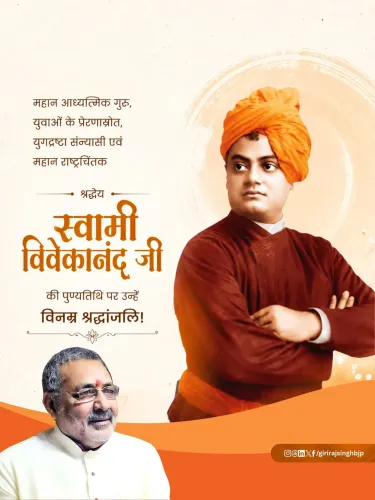
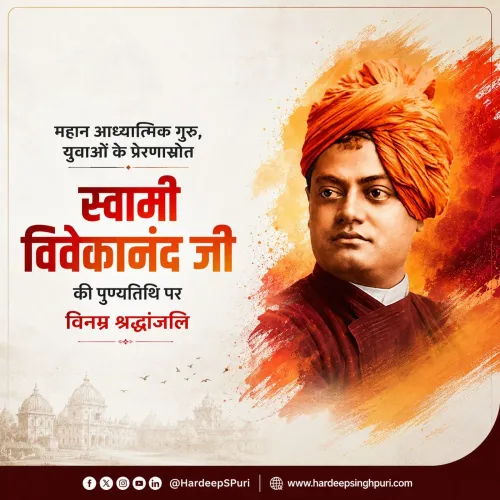
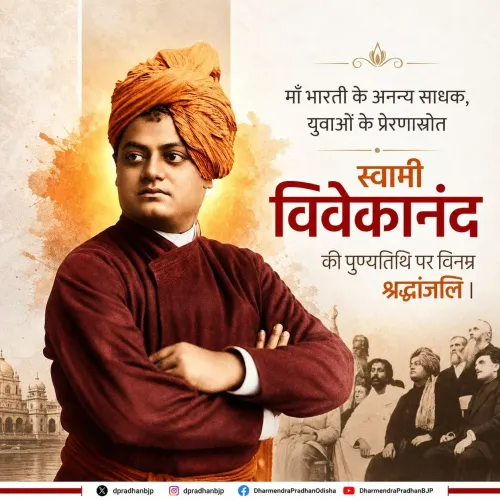
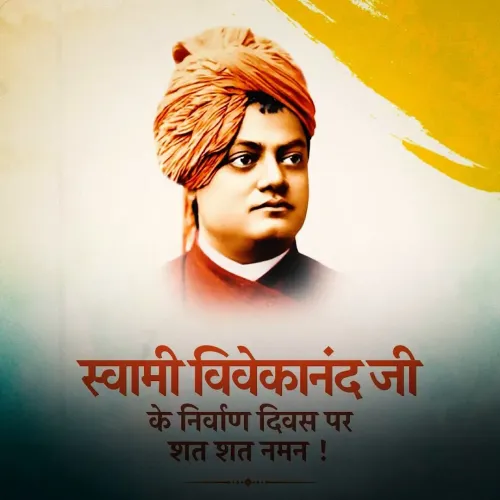
Congress leader and party general secretary Sachin Pilot on Saturday, July 4, 2026, paid tribute to Swami Vivekananda on the monk-philosopher's death anniversary, honouring him as a great thinker who gave Indian cultural and spiritual heritage a distinct identity across the world.
In his post on X, Pilot wrote — 'भारतीय सांस्कृतिक एवं आध्यात्मिक विरासत को विश्वभर में एक विशेष पहचान दिलाने वाले महान विचारक व युवाओं के प्रेरणास्रोत स्वामी विवेकानंद जी की पुण्यतिथि पर मैं उन्हें श्रद्धापूर्वक नमन करता हूँ।' — translated: 'On the death anniversary of Swami Vivekananda, the great thinker who gave Indian cultural and spiritual heritage a distinct identity across the world and who is a source of inspiration for the youth, I bow to him with reverence.'
Context
Swami Vivekananda passed away on July 4, 1902, at the age of 39 at Belur Math near Kolkata. His death anniversary is observed annually by cultural organisations, spiritual institutions, and political figures across India. Pilot's tribute is consistent with a broad, cross-party tradition of honouring Vivekananda on this date.
Indian political leaders from across the spectrum routinely issue public statements on July 4 to mark the occasion, underscoring the enduring political and cultural resonance of Vivekananda's legacy. Such commemorations reflect the continued relevance of 19th-century reformist thinkers in shaping contemporary discourse on national identity.
Policy Backdrop
Swami Vivekananda is widely regarded as the monk who introduced Vedanta and Yoga to the Western world. His landmark address at the Parliament of the World's Religions in Chicago in 1893 established a global platform for Indian spiritual thought and earned him international recognition. His opening words — addressing the audience as 'Sisters and Brothers of America' — are among the most cited moments in modern Indian cultural history.
Vivekananda founded the Ramakrishna Mission in 1897, an organisation that continues to run educational, healthcare, and relief institutions across India and abroad. His writings and lectures on youth empowerment, self-reliance, and cultural confidence have been invoked by leaders and educators for over a century.
Stakeholders and Impact
Vivekananda's legacy holds particular significance for Indian youth, cultural organisations, and spiritual institutions. His birth anniversary on January 12 is observed as National Youth Day in India, a designation that reflects the government's recognition of his role as a symbol of youthful energy and national purpose.
Tributes from political figures such as Pilot serve to reinforce the non-partisan nature of Vivekananda's legacy, positioning him as a unifying cultural figure rather than one claimed by any single ideological camp. Sachin Pilot, who also serves as the Indian National Congress in-charge for Chhattisgarh and is a former Deputy Chief Minister of Rajasthan, addressed his tribute to a broad national audience.
What's Next
State-level youth conventions and Ministry of Culture events that reference Vivekananda's teachings are periodically organised, particularly around National Youth Day in January. Cultural and spiritual organisations affiliated with the Ramakrishna Mission are expected to hold commemorative programmes marking the death anniversary. The broader pattern of political leaders invoking Vivekananda's philosophy in public discourse is likely to continue as discussions on national identity and youth engagement remain central to Indian political life.
Point of View
Which has historically framed itself as the inheritor of India's pluralist reform tradition, such commemorations serve a dual purpose: affirming continuity with a broadly venerated figure while reinforcing the party's claim to the discourse on national identity. The timing — July 4, a date observed by organisations and institutions across the country — ensures maximum visibility with minimal political risk. Over time, these tributes have become a standard instrument in the repertoire of Indian political communication, their frequency underscoring how deeply Vivekananda's legacy has been institutionalised in public life.
NationPress
4 Jul 2026
Frequently Asked Questions
When did Swami Vivekananda die?
Swami Vivekananda died on July 4, 1902 , at Belur Math near Kolkata , at the age of 39.
Why is July 4 significant in India?
July 4 marks the death anniversary — or punyatithi — of Swami Vivekananda , observed annually by cultural, spiritual, and political figures across India.
What is Sachin Pilot's current role in Congress?
Sachin Pilot is the Indian National Congress general secretary and the party's in-charge for Chhattisgarh . He is also a former Deputy Chief Minister of Rajasthan .
What is Swami Vivekananda known for?
Swami Vivekananda is known for introducing Vedanta and Yoga to the Western world and for his landmark speech at the Parliament of the World's Religions in Chicago in 1893 . He also founded the Ramakrishna Mission in 1897 .
What is National Youth Day in India?
National Youth Day in India is observed on January 12 , the birth anniversary of Swami Vivekananda , in recognition of his enduring influence on Indian youth and national consciousness.