CM Vishnu Deo Sai hails Koleng as face of changing Bastar
Synopsis
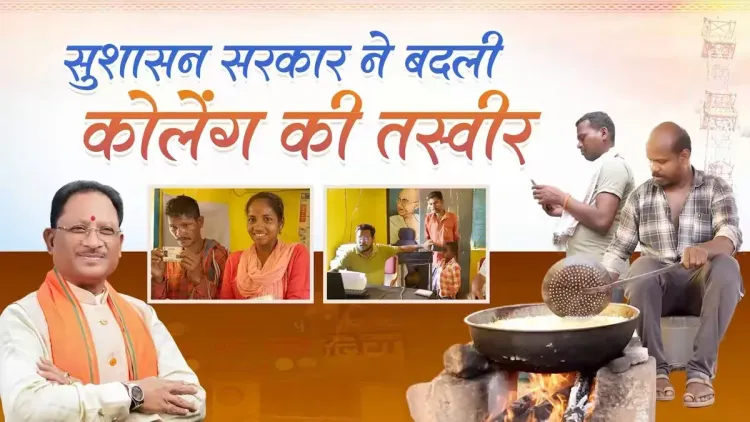
Chhattisgarh CM Vishnu Deo Sai showcased Gram Koleng in Bastar as proof of his government's tribal-development push, citing new roads, electricity, drinking water, education and welfare delivery. Tagged with Sushasan Tihar 2026, the post framed the village's turnaround as a step toward a 'developed Bastar and developed Chhattisgarh' under the BJP administration.
Key Takeaways
Chhattisgarh CM Vishnu Deo Sai highlighted Gram Koleng in Bastar as a symbol of changing tribal Chhattisgarh.
He cited gains in roads, electricity, drinking water, education and welfare schemes .
The post was tagged with Sushasan Tihar 2026 , the state's annual governance outreach.
Sai linked the village's progress to the goal of a 'developed Bastar and developed Chhattisgarh' .
The BJP government in the state, in office since December 2023 , has made tribal-area development a flagship theme.
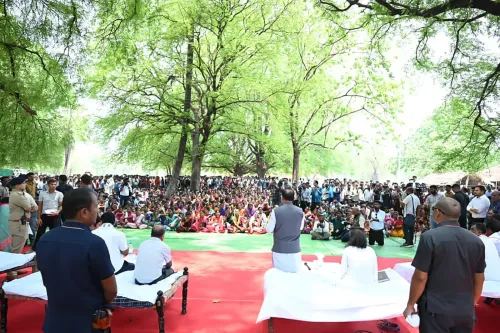
Chhattisgarh Chief Minister Vishnu Deo Sai on 3 June 2026 showcased Gram Koleng in Bastar as a 'living picture of changing Bastar', citing improved roads, electricity, drinking water, education and welfare delivery in a village once cut off from basic services. The post, tagged with the state's ongoing Sushasan Tihar 2026 outreach, framed Koleng's transformation as proof of the BJP government's tribal-development pitch.
'At a time when delivering even basic facilities was a challenge, the same Koleng is today emerging as a new identity of development, trust and good governance,' the Chief Minister wrote, adding that 'सड़क, बिजली, पेयजल, शिक्षा और जनकल्याणकारी योजनाओं' (roads, power, drinking water, education and welfare schemes) were now bringing 'positive change' to villagers' lives. He described growing confidence on residents' faces as 'the biggest testimony' to the shift.
Context
Gram Koleng lies in the Bastar region of southern Chhattisgarh, an area with a large tribal population that for decades faced left-wing extremism and patchy access to roads, power and schools. Villages of this profile have been a recurring focus of state outreach as security operations have widened the footprint of civilian administration.
Sai linked the Koleng story directly to a larger goal, writing that the change 'gives new strength to our resolve of a developed Bastar and developed Chhattisgarh'. The accompanying video, posted from his official handle, was shared as part of the state's Sushasan Tihar 2026 programme.
Policy backdrop
The BJP government in Chhattisgarh, led by Sai since December 2023, has made accelerated development in tribal districts a central plank of its agenda. Road-building, rural electrification and piped drinking-water projects in Bastar had been expanded in earlier years alongside improved security operations, and the current administration has continued to push these as visible markers of governance.
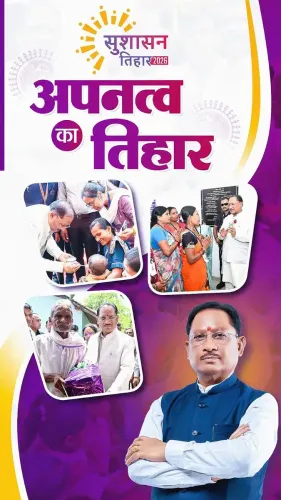
Sushasan Tihar, or the 'good governance festival', is an annual state outreach exercise that uses district-level events and social-media communication to highlight scheme delivery. The 2026 edition has anchored several recent ministerial messages, situating local stories within the broader Viksit Bharat 2047 and 'Viksit Chhattisgarh' frames the BJP has adopted nationally.
Stakeholders and impact
The primary stakeholders in the Koleng narrative are tribal villagers and rural communities across Bastar division, for whom road connectivity, household electricity and assured drinking water materially alter access to markets, healthcare and schooling. State officials view such villages as test cases for whether welfare delivery can stick in areas that were long administratively thin.
Politically, the message is aimed at reinforcing the BJP's claim that its tenure is closing long-standing gaps in tribal Chhattisgarh. By naming a specific village rather than citing aggregate figures, the Chief Minister's post leans on a recognisable, ground-level example, a communication style that has become common across state governments seeking to demonstrate scheme outcomes.
What's next
Further events under Sushasan Tihar 2026 are expected across districts in the coming weeks, with similar village-level showcases likely. Budget allocations for Bastar infrastructure in the 2026-27 state budget, and the rollout of road, power and water projects flagged by the administration, will be the next measurable checkpoints for the agenda Sai has outlined.
For now, the Chief Minister's framing of Koleng as a symbol of 'development, trust and good governance' sets a clear yardstick: the credibility of the 'developed Bastar' pitch will rest on whether such gains spread beyond individual villages to the region as a whole.
Point of View
Sai personalises the 'Viksit Bastar' pitch and ties it to the wider Viksit Bharat 2047 arc. The framing also positions Sushasan Tihar 2026 as a political vehicle, not merely an administrative review. The credibility test will be whether similar gains are documented across other Bastar villages, not just the ones featured in official outreach.
NationPress
20 Sept 2026
Frequently Asked Questions
Where is Gram Koleng located?
Gram Koleng is a village in the Bastar region of southern Chhattisgarh, an area with a large tribal population that has historically faced limited access to basic services.
What is Sushasan Tihar 2026?
Sushasan Tihar 2026 is the Chhattisgarh government's annual 'good governance festival', a state-wide outreach programme used to showcase scheme delivery and development work across districts.
Who is Vishnu Deo Sai?
Vishnu Deo Sai is the Chief Minister of Chhattisgarh and a senior BJP leader, in office since December 2023, with a background in tribal welfare and state party leadership.
What development work did the CM highlight in Koleng?
The Chief Minister highlighted improvements in roads, electricity, drinking water, education and welfare schemes in Koleng, calling them visible signs of changing Bastar.
How does Koleng fit into the wider Bastar development push?
Koleng is being projected as a model village under the state's broader effort to extend infrastructure and welfare delivery into former conflict-affected and under-served tribal pockets of Bastar.