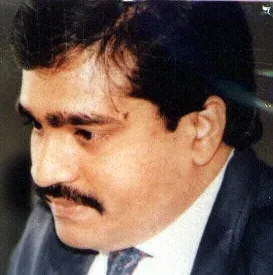
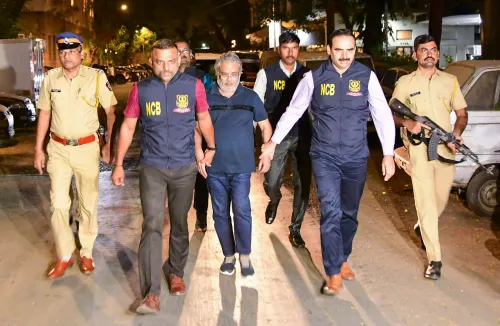
Salim Dola arrest forces Haji Salim cartel to shrink routes, cut consignments
Synopsis
The extradition of Salim Dola has done what years of interceptions alone could not — forced the Haji Salim cartel to abandon its large-scale, audacious smuggling model. Consignments once weighing up to 5,000 kg have been slashed to small batches, and the cartel has retreated to obscure coastal stretches in Tamil Nadu and Kerala. The network is battered but adapting, and officials warn the threat is far from over.
Key Takeaways
The arrest and extradition of Salim Dola is described by officials as one of the biggest blows to the Dawood Ibrahim–Haji Salim narcotics cartel .
Haji Salim's peak consignments of 2,000–5,000 kg have been deliberately cut to smaller batches to evade scrutiny.
The cartel has shifted to complex coastal terrain in Vedaranyam , Nagapattinam , Rameswaram , and the Palk Strait in Tamil Nadu.
In Kerala , operations have moved from Vizhinjam to coastal Kasargod , Malappuram , and Kochi rural waters after multiple successful interceptions.
The cartel's supply chain — running from Iran through Afghanistan and Malaysia to Sri Lanka — has been further disrupted by instability in Iran .
Agencies warn the cartel is 'down but not out' and continues to probe low-surveillance coastal stretches.
The arrest and extradition of Salim Dola has dealt one of the heaviest blows in recent years to the Dawood Ibrahim–Haji Salim narcotics cartel, triggering a visible pullback in smuggling volumes, a deliberate shift in landing points, and a return to older, lower-profile techniques across South India's coastline, according to multiple intelligence officials.
How the Cartel Has Gone Low-Key
According to an official familiar with the matter, Haji Salim — who oversees South India operations for the syndicate — has been actively re-strategising since Dola's arrest. 'He and his men are no longer operating with the audacity that they used to. They are aware that the agencies are on their trail and hence they have deliberately kept the operations low-key,' the official said.
The most telling indicator of this retreat is the dramatic reduction in consignment sizes. At their peak, networks under Haji Salim would move consignments in the range of 2,000 to 5,000 kg. According to an Intelligence Bureau official, quantities have been 'deliberately reduced to avoid scrutiny,' with drugs now arriving in smaller, fragmented batches. Landing points have also shifted to confound surveillance.
Coastal Tamil Nadu and Kerala Now Preferred Routes
Intelligence officials say the cartel has reverted to exploiting complex coastal terrain in Tamil Nadu. Areas such as Vedaranyam and Nagapattinam are now relied upon heavily, with small boats blending into local maritime traffic to avoid detection. Rameswaram, the Palk Strait, and the Thoothukudi outer coast have also emerged as favoured corridors, partly because the cartel can exploit local fishing networks.
In Kerala, the earlier preferred entry point — the Vizhinjam outer sea coastline near Thiruvananthapuram — has been largely abandoned following several large-haul interceptions by agencies. Operations have now shifted to Kochi rural waters, coastal Kasargod, and Malappuram in northern Kerala, where surveillance levels are reportedly lower. Officials note that narcotics routed through these areas are primarily destined for consumption in Kerala, Goa, and Karnataka.
The Syndicate's Disrupted Supply Chain
The cartel's logistics chain has historically run from Iran through Afghanistan and Malaysia, before shipments arrived in Sri Lanka and were then distributed into India, the Maldives, and Mauritius. Officials indicate that instability in Iran has compounded the disruption caused by Dola's arrest, further squeezing the network's operational capacity. Just two years ago, Haji Salim was described as a dominant player across South India, Mauritius, Maldives, and Sri Lanka — a reach that has now visibly contracted.
Agencies Remain on Alert
Despite the setbacks to the cartel, officials caution against complacency. 'These cartels may be down, but not out. They would do everything to save their trade, from finding newer routes to coastal areas in South India that have low surveillance,' one official said. Authorities continue to monitor shifting landing patterns, with particular attention to stretches of coastline that have historically received lower enforcement resources.
The Centre's broader anti-narcotics drive, framed as a mission to make India drug-free, has notched multiple successful interceptions in recent months — but the cartel's adaptive tactics signal that the pressure campaign remains an ongoing contest rather than a concluded victory.
Point of View
But the cartel's pivot to smaller consignments and harder-to-monitor coastlines reveals a structural problem: India's enforcement wins are forcing adaptation, not elimination. The shift to Kasargod, Malappuram, and minor Tamil Nadu fishing harbours is a direct consequence of higher surveillance at traditional entry points — which means the solution requires closing surveillance gaps faster than the cartel can find them. The Iran disruption adds a geopolitical wildcard that agencies cannot control, but the domestic coastal-monitoring deficit remains squarely within policy reach. The Centre's drug-free mission needs a harder answer on low-surveillance littoral zones before the cartel rebuilds its volumes through a hundred smaller pipelines.
NationPress
22 Sept 2026
Frequently Asked Questions
Who is Salim Dola and why does his arrest matter?
Salim Dola is a key operative of the Dawood Ibrahim–Haji Salim narcotics cartel whose arrest and extradition has significantly disrupted the syndicate's global supply chain. Intelligence officials describe it as one of the biggest blows dealt to the cartel by Indian agencies, forcing a major operational restructuring.
How has the Haji Salim cartel changed its operations after Salim Dola's arrest?
The cartel has reduced consignment sizes from a peak of 2,000–5,000 kg to smaller, fragmented batches to avoid scrutiny, shifted landing points to lower-surveillance coastal stretches in Tamil Nadu and Kerala, and reverted to small boats that blend with local maritime traffic.
Which coastal areas in South India are now being used by the Haji Salim network?
The network now favours Vedaranyam, Nagapattinam, Rameswaram, the Palk Strait, and the Thoothukudi outer coast in Tamil Nadu, as well as coastal Kasargod, Malappuram, and Kochi rural waters in Kerala. These areas are chosen for their complex terrain and lower surveillance levels.
What is the Haji Salim cartel's drug supply route?
Shipments originate in Iran, pass through Afghanistan and Malaysia, and land in Sri Lanka before being distributed into India, the Maldives, and Mauritius. Ongoing instability in Iran has further disrupted this chain beyond the impact of Salim Dola's arrest.
Are Indian agencies close to dismantling the cartel entirely?
Officials caution that the cartel is 'down but not out.' While multiple interceptions and the Salim Dola arrest have shrunk its reach, the network continues to probe new routes along low-surveillance coastlines, and authorities say the threat remains active and adaptive.