ECI decisions are collective, not unilateral: Assam CM Himanta Biswa Sarma
Synopsis
Assam CM Himanta Biswa Sarma stepped into the national debate over the Election Commission's functioning on Thursday, publicly defending CEC Gyanesh Kumar and insisting no commissioner can act unilaterally. His use of the term 'Dimagi Naxals' for critics and his framing of Opposition concern as 'frustration' signals the BJP's intent to go on the offensive over the electoral rolls controversy.
Key Takeaways
Assam CM Himanta Biswa Sarma defended CEC Gyanesh Kumar at a press conference in Guwahati on 24 September 2026 .
Sarma argued that ECI decisions must be passed by a majority and cannot be taken unilaterally by the CEC or any single commissioner.
He called Opposition criticism of the CEC a political campaign driven by 'frustration' and used the term 'Dimagi Naxals' for some critics.
The remarks come amid reported differences within the three-member Commission — comprising CEC Gyanesh Kumar , and Commissioners Sukhbir Singh Sandhu and Vivek Joshi — over electoral-roll decisions.
The controversy centres on the Special Intensive Revision (SIR) of electoral rolls and questions about intra-commission consensus.
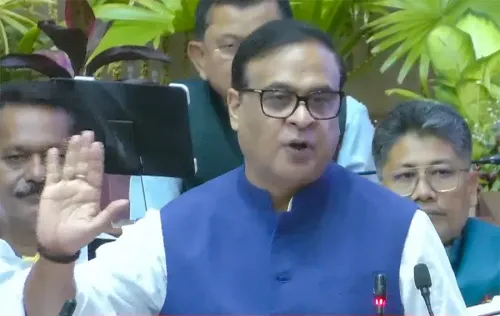
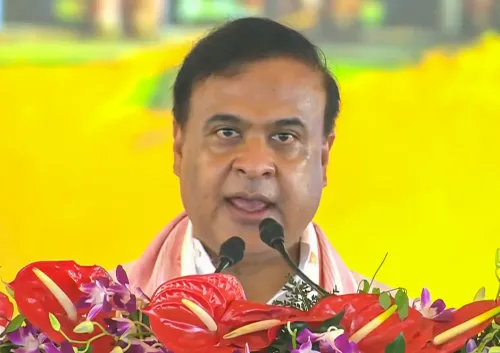
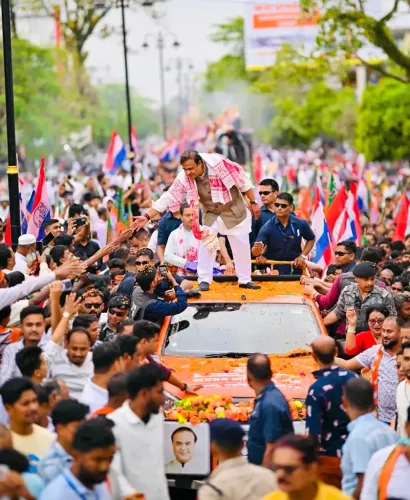
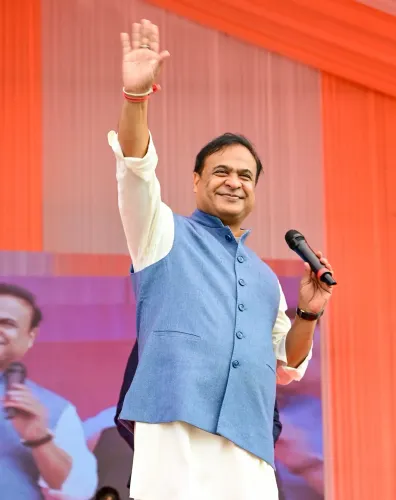
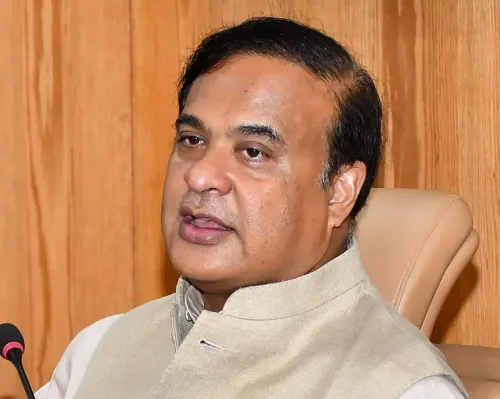
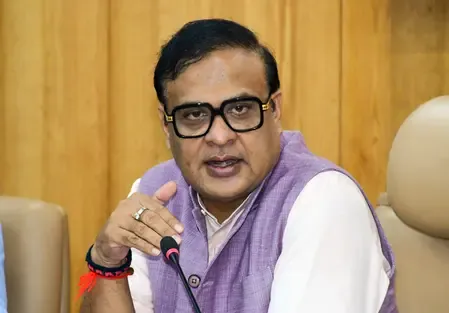
Assam Chief Minister Himanta Biswa Sarma on Thursday, 24 September 2026, came out in defence of Chief Election Commissioner (CEC) Gyanesh Kumar, arguing that the Election Commission of India (ECI) functions as a collective body and that no single commissioner — including the CEC — can make decisions unilaterally. Sarma made the remarks at a press conference in Guwahati amid a growing political controversy over the Commission's functioning and its handling of the Special Intensive Revision (SIR) of electoral rolls.
What Sarma Said
'In my humble view, the Election Commission cannot take any decision when the Chief Election Commissioner or any other Election Commissioner is in the minority. Every decision has to be passed or taken by a majority because it is a collective body,' Sarma stated.
He further noted that while internal deliberations among commissioners were their own affair, any final decision issued by the Commission must represent its collective position. 'Sending a message across the country that the Chief Election Commissioner has taken a decision unilaterally does not fit into the constitutional scheme,' he remarked.
Attack on the Opposition
Sarma dismissed criticism aimed specifically at CEC Kumar, characterising it as a political campaign by the Opposition born out of 'frustration.' He went further, deploying the term 'Dimagi Naxals' to describe some of the critics — a phrase that is likely to draw sharp reactions. The Chief Minister's intervention signals that the ruling Bharatiya Janata Party (BJP) intends to actively counter narratives questioning the Commission's neutrality.
The Backdrop: Controversy Over Electoral Rolls
The remarks come against the backdrop of reported differences within the three-member Commission over certain electoral-roll-related decisions. According to the Commission's official directory, the ECI currently comprises CEC Gyanesh Kumar and Election Commissioners Sukhbir Singh Sandhu and Vivek Joshi. Reports have raised questions about whether all decisions have had unanimous support among the commissioners, a claim Sarma sought to pre-empt by emphasising the constitutional framework of majority-based decision-making.
Constitutional Role of the ECI
The Election Commission administers elections to Parliament, state legislatures, and the offices of the President and Vice-President of India. As a constitutional body, its credibility rests on perceived impartiality — making any suggestion of internal divisions politically sensitive. Notably, this is not the first time questions about intra-commission dynamics have surfaced; past episodes have similarly triggered debate about the structural independence of Election Commissioners relative to the CEC.
What Comes Next
The controversy is unlikely to dissipate quickly, with Opposition parties showing no signs of backing down from their criticism of CEC Kumar. How the Commission itself responds — particularly on the SIR exercise — will be watched closely as a test of its institutional standing ahead of upcoming state elections.
Point of View
The BJP shifts focus away from what the Commission actually decided and toward who has the authority to criticise it. The 'Dimagi Naxals' label, applied to critics of an independent constitutional body, is a notable escalation that could itself become the story. Crucially, the controversy over the SIR exercise is substantive: if there are genuine divisions within the Commission, the constitutional principle Sarma is citing — majority-based decision-making — could cut both ways. Whether the Commission's output reflects consensus or a steamrolled minority is precisely what critics are asking.
NationPress
24 Sept 2026
Frequently Asked Questions
Why did Assam CM Himanta Biswa Sarma defend CEC Gyanesh Kumar?
Sarma defended CEC Gyanesh Kumar at a Guwahati press conference on 24 September 2026 in response to Opposition criticism of the Election Commission of India's functioning. He argued the ECI is a collective body and no decision can be taken unilaterally by the CEC.
What is the controversy surrounding the Election Commission of India?
Reports have raised questions about differences among ECI commissioners over certain electoral-roll-related decisions, particularly concerning the Special Intensive Revision (SIR) of electoral rolls. Critics have alleged that some decisions did not reflect a true consensus within the three-member commission.
Who are the current members of the Election Commission of India?
According to the Commission's official directory, the ECI currently comprises CEC Gyanesh Kumar and Election Commissioners Sukhbir Singh Sandhu and Vivek Joshi. The three-member body collectively administers elections to Parliament, state legislatures, and constitutional offices.
What did Sarma mean by 'Dimagi Naxals'?
Sarma used the term 'Dimagi Naxals' to describe some critics of CEC Gyanesh Kumar, framing their criticism as ideologically motivated rather than constitutionally grounded. The phrase is a rhetorical label he has used previously for perceived ideological opponents and is likely to draw further controversy.
What is the constitutional framework for ECI decision-making?
The Election Commission of India is a constitutional body whose decisions, according to Sarma's reading and established legal understanding, must reflect a majority view among its members rather than the will of any single commissioner. This principle becomes relevant when intra-commission disagreements are reported.