CM Sawant Hails India's Solar Surge, Cites 37 GW Added in 2025
Synopsis
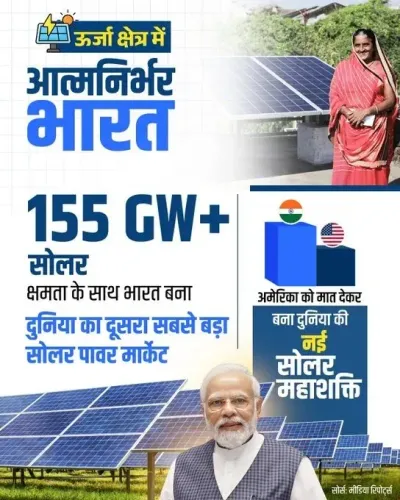
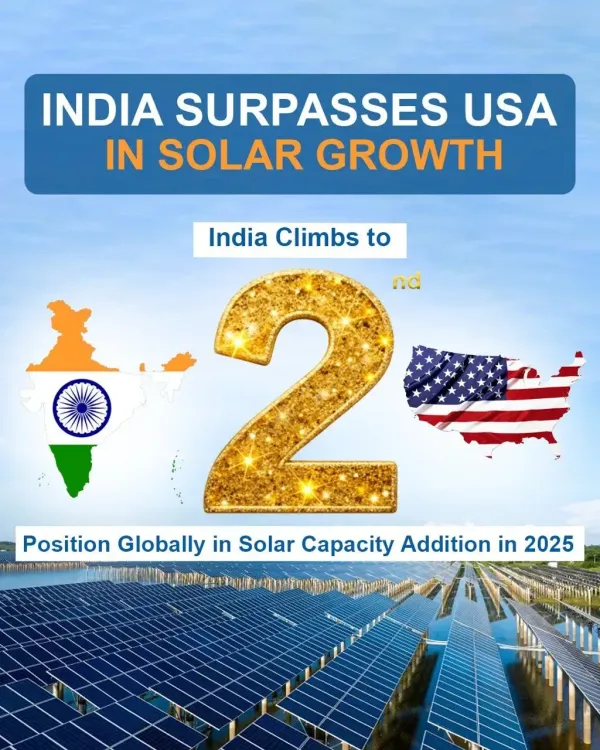
Goa Chief Minister Pramod Sawant hailed India's clean energy push on X, citing a record 37 GW of solar capacity added in 2025 that placed the country second globally in annual additions. He credited PM Narendra Modi and linked the milestone to Atmanirbhar Bharat and the Viksit Bharat 2047 roadmap.
Key Takeaways
Goa CM Pramod Sawant posted on X citing India added a record 37 GW of solar capacity in 2025.
He claimed India ranks second globally in annual solar capacity additions.
Sawant credited PM Narendra Modi's leadership and the Viksit Bharat 2047 vision.
The post invoked Atmanirbhar Bharat, Green Growth and energy security themes.
India has pledged 500 GW of non-fossil capacity by 2030 under its COP26 Panchamrit commitments.
PLI for solar manufacturing was launched in 2021 to cut import dependence.
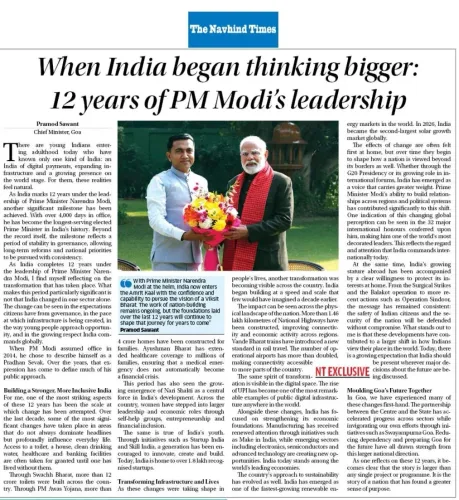
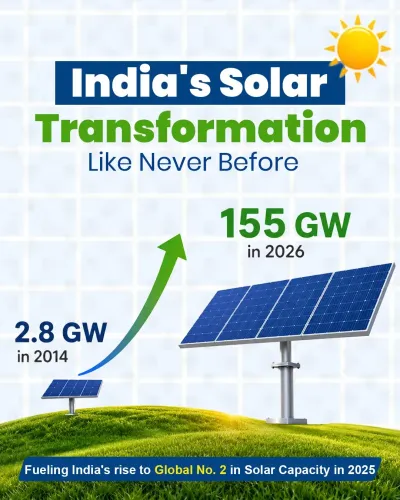
Goa Chief Minister Pramod Sawant on Wednesday lauded India's clean energy push, citing what he described as a record addition of 37 GW of solar capacity in 2025 that placed the country at the world's number two position in annual solar deployment. In a post on X, the Chief Minister credited Prime Minister Narendra Modi's leadership for the milestone and linked it to the broader vision of Viksit Bharat 2047.
'Clean Energy for Future India!' Sawant wrote, asserting that 'India added a record 37 GW of solar energy capacity in 2025, emerging as the world's #2 nation in annual solar additions.' He framed the achievement as reflective of India's commitment to renewable energy, climate action, energy security and self-reliance, hashtagging the post #IndiaRanks2InSolar.
Context
The post arrives as state leaders increasingly amplify national clean energy benchmarks alongside their own subnational programmes. Sawant, who has championed rooftop solar adoption in Goa, tied the figure to two flagship slogans of the Union government — Atmanirbhar Bharat (self-reliant India) and Viksit Bharat 2047, the Centre's roadmap for a developed India by the centenary of Independence.
The Chief Minister's framing connects solar capacity addition to a wider narrative of Green Growth, a theme that has featured prominently in successive Union Budgets and climate policy statements since 2023.
Policy backdrop
India's solar trajectory traces back to the National Solar Mission, launched in 2010 with an initial target of 20 GW that was subsequently revised upward to 100 GW by 2022. At COP26 in 2021, Prime Minister Modi announced the 'Panchamrit' climate commitments, including a pledge to reach 500 GW of non-fossil capacity by 2030.
To reduce dependence on imported modules, the Centre rolled out the Production Linked Incentive (PLI) scheme for solar manufacturing in 2021, supporting domestic production of high-efficiency cells and modules. India also co-founded the International Solar Alliance with France in 2015, a treaty-based grouping aimed at mobilising solar investment across member countries.
Stakeholders and impact
A sustained increase in annual solar capacity addition has direct implications for solar developers, power distribution utilities and rural households expecting cheaper, cleaner electricity. Utility-scale parks, hybrid wind-solar projects and the rooftop segment have all been positioned as parallel growth engines under the Ministry of New and Renewable Energy.
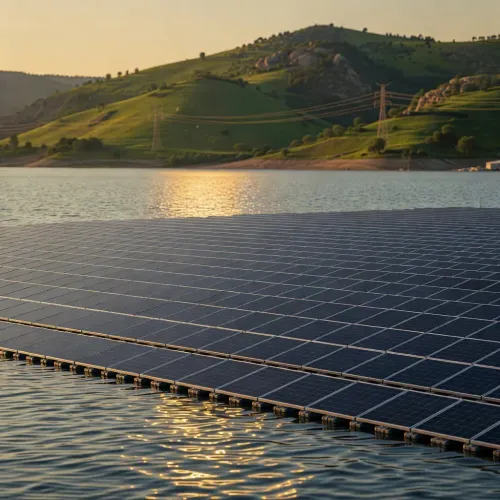
For coastal states such as Goa, where land for utility-scale parks is constrained, the rooftop and floating solar segments have been a particular focus. Sawant's emphasis on 'solar rooftops to large-scale renewable infrastructure' echoes that mixed deployment strategy.
What's next
Attention will turn to official capacity data releases for FY 2025-26 and state-level implementation updates on rooftop solar, including the Centre's household rooftop programme. The pace of module manufacturing ramp-up under PLI, transmission build-out for renewable-rich states, and storage tenders will determine whether the annual addition pace shown in 2025 can be sustained on the path to the 500 GW non-fossil target by 2030.
For Sawant and other BJP chief ministers, the messaging signals continued alignment of state political communication with the Centre's climate and self-reliance narrative as India approaches the next round of international climate reporting.
Point of View
He ties an environmental achievement to the party's broader development branding ahead of the 2030 non-fossil target year. The communication also nudges attention towards manufacturing self-reliance, where PLI outcomes remain politically sensitive. Expect more such synchronised messaging as India approaches its next climate reporting cycle.
NationPress
17 Oct 2026
Frequently Asked Questions
How much solar capacity did India add in 2025?
According to Goa Chief Minister Pramod Sawant's post on X, India added a record 37 GW of solar energy capacity in 2025. He stated this placed India at the number two position globally in annual solar additions.
What is India's renewable energy target for 2030?
India has committed to achieving 500 GW of non-fossil fuel-based electricity capacity by 2030. This pledge was announced by Prime Minister Narendra Modi as part of the 'Panchamrit' commitments at the COP26 summit in 2021.
What is the Viksit Bharat 2047 vision?
Viksit Bharat 2047 is the Union government's long-term roadmap to make India a developed nation by 2047, the centenary of Independence. It spans economic growth, infrastructure, technology and sustainability goals, including a strong clean energy component.
What is the PLI scheme for solar manufacturing?
The Production Linked Incentive (PLI) scheme for solar manufacturing was introduced in 2021 to boost domestic production of high-efficiency solar cells and modules. It aims to reduce India's dependence on imported solar equipment.
Who is Pramod Sawant?
Pramod Sawant is the Chief Minister of Goa and a senior BJP leader. He frequently uses X to align state messaging with the Union government's policy themes, including clean energy and self-reliance.