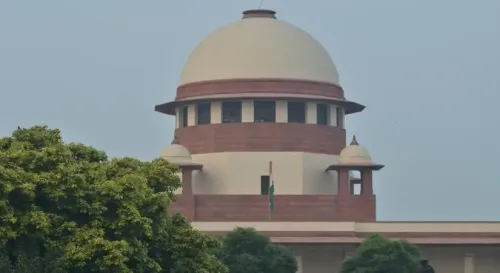
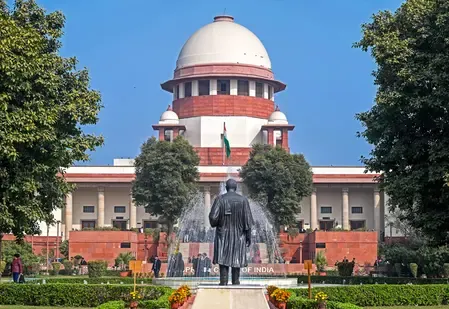
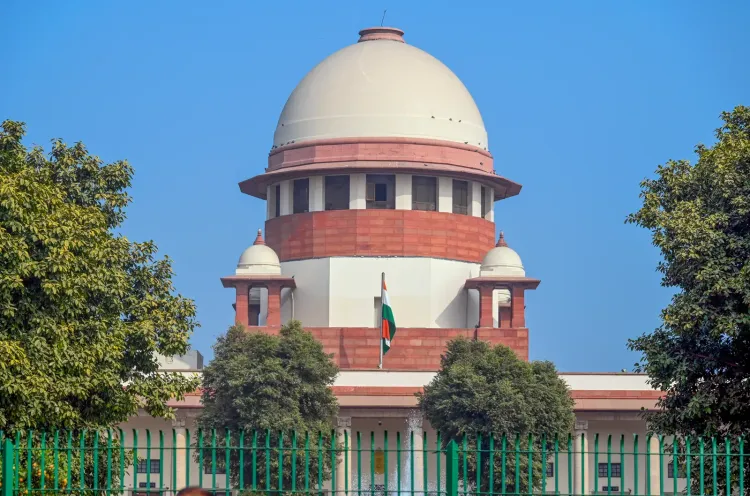
Supreme Court: Abusive words alone not obscenity under IPC Section 294(b)
Synopsis
The Supreme Court has drawn a line that lower courts have long blurred: abusive language, however foul, is not obscenity under the IPC. The ruling sets a strict three-part test — lascivious, prurient, and depraving — and acquits a 70-year-old Tamil Nadu man of obscenity and intimidation charges while upholding his conviction for fracturing a man's nose with a billhook.
Key Takeaways
The Supreme Court on 17 July ruled that abusive or vulgar words alone do not amount to obscenity under Section 294(b) IPC .
A Bench of Justices Sanjay Karol and Vipul M.
Pancholi held that obscenity requires words to be lascivious, appeal to prurient interests, and tend to deprave and corrupt minds.
Conviction under Section 506(ii) IPC (criminal intimidation) was also quashed — threatening words in an altercation are insufficient without proof of intent to cause alarm.
Conviction under Section 326 IPC for grievous hurt was upheld after the complainant was found to have suffered a fractured nasal bone from a billhook assault.
Sentence was modified from one year's imprisonment to imprisonment till the rising of the court, plus a fine of ₹50,000 within two months.
The case originated from a 2017 land dispute in Tamil Nadu involving a 70-year-old appellant .
The Supreme Court of India on Friday, 17 July ruled that the use of abusive and profane language during a heated altercation — however offensive or uncivil — does not by itself constitute the offence of obscenity punishable under Section 294(b) of the Indian Penal Code (IPC), unless the words are lascivious, appeal to prurient interests, and carry a tendency to deprave and corrupt the minds of those exposed to them. The ruling draws a clear legal boundary between vulgarity and obscenity that courts across India will now be bound to follow.
Background: The Case That Triggered the Ruling
A Bench of Justices Sanjay Karol and Vipul M. Pancholi delivered the judgment while partly allowing an appeal filed by a 70-year-old man who had been convicted in a 2017 assault case arising from a land dispute in Tamil Nadu. The appellant had been found guilty under multiple sections of the IPC, including Section 294(b) for obscenity, Section 506(ii) for criminal intimidation, and Section 326 for voluntarily causing grievous hurt by a dangerous weapon.
The Court's Legal Test for Obscenity
The apex court drew a sharp distinction between 'obscenity' and 'vulgarity', holding that swear words and abusive expressions — though distasteful — cannot automatically attract criminal liability. 'Legally, obscenity is not synonymous with vulgarity, abuse or profanity. Use of mere swear words, profanities and vulgar expletives, however distasteful or uncivil they may be, cannot be equated with obscenity,' the Justice Karol-led Bench observed.
The court laid down that an utterance qualifies as obscene only if it is lascivious, appeals to prurient interests, has the tendency to deprave and corrupt impressionable minds, and causes annoyance to others in a public place — the last being a mandatory ingredient of Section 294(b). 'Words which are merely vulgar or abusive may evoke a feeling of disgust, revulsion or shock, but that by itself does not make them obscene in law,' the Bench added.
Convictions Set Aside — and One Upheld
On the facts of the case, the court found that even if the abusive expressions allegedly used by the appellant during the altercation were accepted in their entirety, they could only be described as abusive or vulgar and did not satisfy the ingredients of Section 294(b) IPC. The conviction under that section was accordingly set aside.
The Bench also quashed the conviction under Section 506(ii) IPC for criminal intimidation, holding that mere threatening words uttered during an altercation are insufficient unless it is proved they were intended to cause alarm or compel the complainant to act or refrain from acting. 'Mere use of threatening words during the course of an altercation, without proof that it was intended to cause alarm to the complainant or to compel him to do or omit to do any act, would not be sufficient,' the court said.
However, the Supreme Court upheld the conviction under Section 326 IPC for voluntarily causing grievous hurt by a dangerous weapon, after finding that the complainant had suffered a fractured nasal bone in an assault with a billhook. Medical evidence fully corroborated the prosecution's case, and the injury fell squarely within the definition of 'grievous hurt' under Section 320 IPC.
Sentence Modified, Considering Age and Context
Taking into account the land-dispute origins of the incident, as well as the appellant's age of 70 years and his health condition, the apex court modified the sentence from one year's imprisonment to imprisonment till the rising of the court on a day to be specified by the concerned court. The appellant was also directed to pay a fine of ₹50,000 within two months.
The ruling is expected to have significant implications for how lower courts assess obscenity charges in altercation cases going forward, narrowing the scope of Section 294(b) and requiring prosecutors to clear a higher evidentiary threshold.
Point of View
Prurient, depraving — is not new law, but its emphatic restatement signals frustration with how loosely the provision has been applied by trial courts. Notably, the simultaneous quashing of the criminal intimidation charge under Section 506(ii) tightens that provision too, demanding proof of intent to alarm rather than mere threatening utterance. Together, the two acquittals suggest the court is pushing back against the criminalisation of heated speech in private disputes — a meaningful corrective in a legal environment where FIRs are frequently weaponised in civil conflicts like land rows.
NationPress
16 Oct 2026
Frequently Asked Questions
What did the Supreme Court rule about abusive language and obscenity under IPC?
The Supreme Court ruled on 17 July that abusive or profane words used during an altercation do not by themselves constitute obscenity under Section 294(b) IPC. For words to be legally obscene, they must be lascivious, appeal to prurient interests, and have a tendency to deprave and corrupt the minds of those exposed to them.
What is the legal difference between vulgarity and obscenity under Indian law?
According to the Supreme Court, vulgarity and obscenity are distinct legal concepts. Vulgar or abusive words may cause disgust or shock but do not meet the threshold of obscenity, which requires the additional elements of lasciviousness, prurient appeal, and a depraving tendency — along with causing annoyance in a public place, which is a mandatory ingredient of Section 294(b) IPC.
Why was the criminal intimidation charge under Section 506(ii) IPC quashed?
The Supreme Court quashed the Section 506(ii) conviction because mere threatening words during an altercation are insufficient to establish criminal intimidation. The prosecution must prove that the words were specifically intended to cause alarm to the complainant or to compel them to act or refrain from acting — a standard the evidence in this case did not meet.
Which conviction did the Supreme Court uphold in this case?
The court upheld the conviction under Section 326 IPC for voluntarily causing grievous hurt by a dangerous weapon. The complainant had suffered a fractured nasal bone from an assault with a billhook, and medical evidence fully supported the prosecution's case.
What sentence was handed down to the 70-year-old appellant?
The Supreme Court modified the sentence from one year's imprisonment to imprisonment till the rising of the court on a day to be specified by the concerned court. The appellant was also directed to pay a fine of ₹50,000 within two months, with the court citing his age, health condition, and the land-dispute context of the incident.