Supreme Court Clarifies Abusive Language Not Obscenity Under IPC
Synopsis
In a significant ruling, the Supreme Court clarified that merely using abusive words, such as 'bastard', during an argument does not constitute obscenity under IPC Section 294(b). This decision stems from a case involving a family boundary dispute in Tamil Nadu.
Key Takeaways
Supreme Court ruling clarifies definition of obscenity.
Use of abusive language alone is not a legal offense.
Court emphasized context in which words are used.
Convictions were partly overturned based on this ruling.
Significant implications for future cases involving language in disputes.
New Delhi, April 6 (NationPress) The Supreme Court has determined that the simple use of offensive language, including terms like "bastard", during a contentious dispute does not constitute an act of obscenity as defined under Section 294(b) of the Indian Penal Code (IPC).
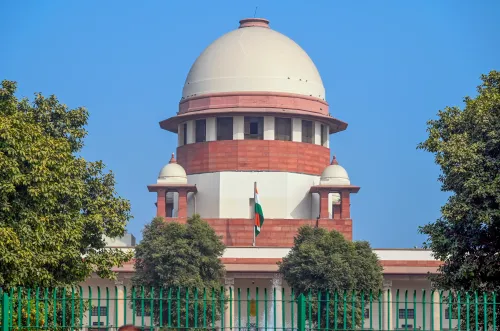
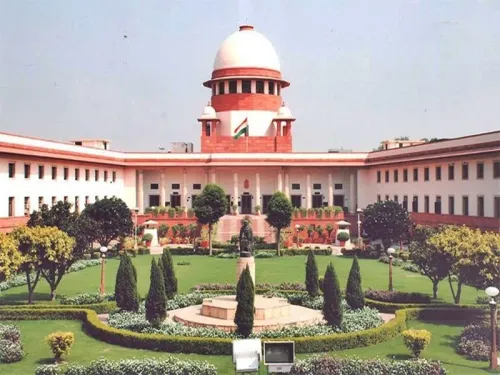
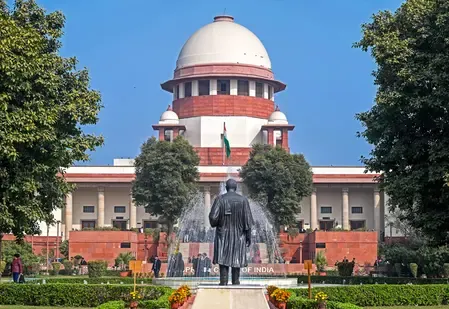
A bench comprising Justices Pamidighantam Sri Narasimha and Manoj Misra made this ruling while addressing appeals from two individuals contesting their convictions linked to a 2014 incident related to a protracted boundary conflict among relatives in Tamil Nadu.
In their comprehensive ruling, the Justice Narasimha-led bench scrutinized the definition of "obscenity" as per Section 294 of the IPC, affirming that not every vulgar or derogatory term would result in legal repercussions.
According to the court, "merely uttering the word 'bastard' does not suffice to provoke prurient interest in an individual. This is especially true as such expressions are frequently employed in modern discourse during intense discussions.
The apex court emphasized that an expression is only considered obscene if it incites sexual or lustful thoughts, rather than being simply offensive or unpleasant.
By overturning the appellants' convictions under Section 294(b) IPC, the Supreme Court concluded that the Madras High Court mistakenly classified the derogatory words exchanged during the argument as a punishable obscene act.
The case stemmed from a violent episode in September 2014, where a family boundary dispute escalated, resulting in one person fatally injured by a blow to the head.
While affirming the conviction of one accused for culpable homicide not amounting to murder under Section 304 Part II IPC, the Supreme Court reduced his sentence from five years to three years of rigorous imprisonment, considering the circumstances surrounding the event.
The apex court noted that the altercation was a spur-of-the-moment reaction during a sudden quarrel among family members and involved a single strike with a wooden log found on site.
According to the bench, "the incident was preceded by a dispute among neighbors who are close relatives, and the injury was inflicted with a log, not a weapon, during an emotional moment."
Regarding the co-accused, the Supreme Court annulled his conviction for culpable homicide, stating that there was insufficient evidence to prove a joint intent to cause serious bodily harm likely to result in death.
Nonetheless, the Supreme Court upheld his conviction under Section 324 IPC for causing injury with a weapon and commuted his sentence to the duration already served.
Ultimately, the bench partially granted the appeals, instructing the accused convicted under Section 304 Part II IPC to surrender and complete the remainder of their reduced sentence.
Point of View
This ruling emphasizes the need for clarity in the interpretation of obscenity laws. The Supreme Court's decision balances the necessity to protect individuals from genuine harm while ensuring that everyday language used in disputes does not automatically lead to legal repercussions. This approach promotes a more nuanced understanding of language and its implications in legal contexts.
NationPress
20 Sept 2026
Frequently Asked Questions
What did the Supreme Court rule regarding abusive language?
The Supreme Court ruled that the mere use of abusive language, such as 'bastard', does not constitute obscenity under IPC Section 294(b).
What was the case about?
The case involved a violent incident stemming from a boundary dispute among relatives in Tamil Nadu in 2014.
How did the Supreme Court view the use of the word 'bastard'?
The court noted that the term 'bastard' does not, by itself, provoke prurient interest and is commonly used in heated conversations.
What were the outcomes for the accused?
The Supreme Court overturned one conviction under Section 294(b) and reduced the sentence for another accused from five years to three years for culpable homicide.
What implications does this ruling have?
This ruling sets a precedent that not all abusive language will lead to legal penalties, emphasizing the context in which words are used.