Supreme Court Dismisses West Bengal's Appeal Against NIA Investigation into Beldanga Violence
Synopsis
In a significant ruling, the Supreme Court has upheld the Calcutta High Court's decision, allowing the NIA to continue its investigation into the Beldanga violence. This ruling underscores the importance of thorough investigations in politically sensitive cases.
Key Takeaways
The Supreme Court upheld the Calcutta High Court's decision allowing the NIA to investigate the Beldanga violence.
The violence was reportedly sparked by misinformation regarding a migrant worker's death.
The court emphasized the necessity of the NIA's access to relevant case materials.
A report from the NIA is expected by March 24.
The ruling highlights the judiciary's role in maintaining national security.
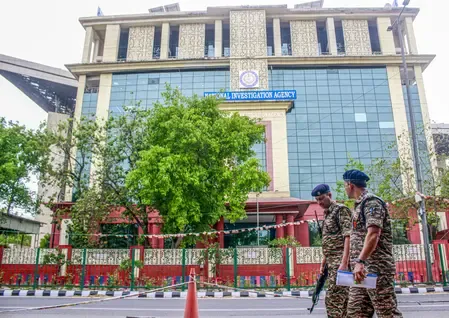
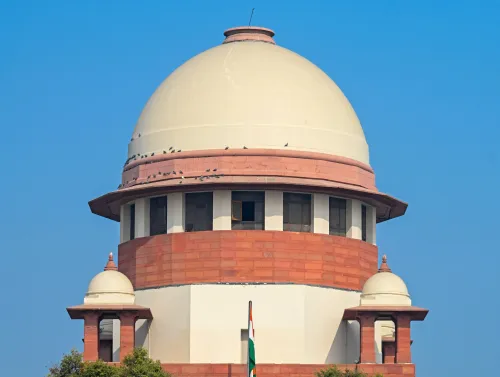
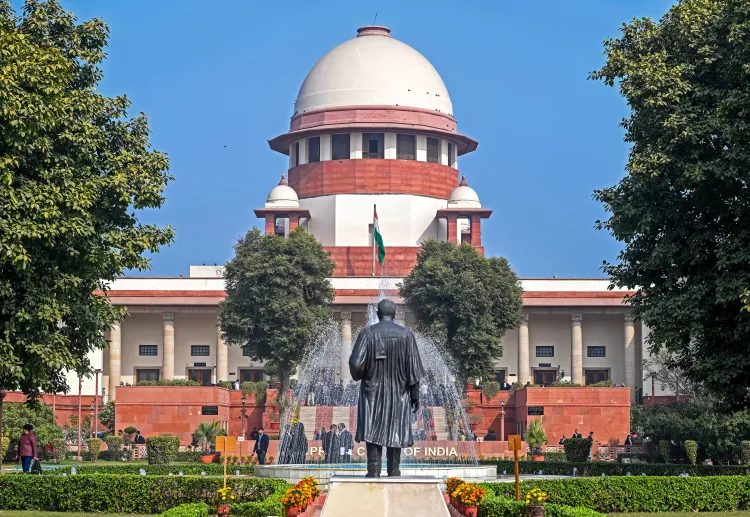
New Delhi, March 16 (NationPress) The Supreme Court has rejected an appeal from the West Bengal government that contested a Calcutta High Court ruling. This ruling permitted the National Investigation Agency (NIA) to continue its investigation into the chaos that erupted in Beldanga, located in the minority-heavy Murshidabad district.
A panel led by Chief Justice of India (CJI) Surya Kant and Justice Joymalya Bagchi stated that the Calcutta High Court had made a well-considered decision to allow the investigation to move forward while assessing if the evidence gathered by the anti-terror agency warranted a prima facie case under the Unlawful Activities (Prevention) Act (UAPA).
During the session, senior advocate Kalyan Banerjee, representing the West Bengal government, contended that the trial court's order to transfer the case diary and evidence to the NIA conflicted with a prior Supreme Court ruling. This earlier decision instructed the Calcutta High Court to evaluate the justification of invoking UAPA in this matter.
However, the CJI Kant-led panel noted that the NIA's access to the case diary was essential to fulfill the Supreme Court's previous directives.
The apex court emphasized that its February 11 order required the Calcutta High Court to scrutinize the NIA’s findings and determine if a prima facie case under UAPA existed. Thus, reviewing the case diary was necessary.
The CJI Kant-led panel found no inconsistency between the trial court's order and the Supreme Court's previous ruling, asserting that there was no valid reason to halt the Calcutta High Court's permission for the investigation to proceed.
Earlier, the Calcutta High Court had also dismissed a request to pause the trial court's order mandating the transfer of the case diary to the NIA and instructed the agency to submit a report by March 24.
In a decision not to intervene, the Supreme Court dismissed the state government's appeal and encouraged the Calcutta High Court to continue its proceedings as planned.
In January, unrest and violence erupted in Beldanga due to the dissemination of allegedly false information regarding the murder of a local migrant worker in nearby Jharkhand.
The Jharkhand Police later classified the death as a suicide based on the autopsy results.
Following this, Leader of Opposition Suvendu Adhikari petitioned the Calcutta High Court for an NIA investigation into the events. Responding to this, the Calcutta High Court granted the Union government the authority to decide on assigning the NIA to the case.
The Ministry of Home Affairs subsequently instructed the Central agency to take over the investigation, prompting the state government to appeal to the Supreme Court to annul the order for an NIA investigation.
On February 11, the Supreme Court directed the Calcutta High Court to independently evaluate the legitimacy of the NIA's invocation of UAPA in relation to the violence.
The Supreme Court also instructed the anti-terror agency to present its status report to the Calcutta High Court, indicating whether there was a prima facie case under UAPA.
Point of View
Particularly in cases involving potential threats to national security. The court's emphasis on a balanced approach ensures that justice is not only served but also perceived to be served, maintaining public trust in the legal system.
NationPress
19 Sept 2026
Frequently Asked Questions
What did the Supreme Court rule regarding the NIA investigation?
The Supreme Court dismissed the West Bengal government's appeal against the NIA's investigation into the Beldanga violence, allowing the probe to continue.
What prompted the violence in Beldanga?
The violence was triggered by the circulation of alleged false information regarding the murder of a migrant worker from the area.
What is the Unlawful Activities (Prevention) Act?
The Unlawful Activities (Prevention) Act (UAPA) is an Indian law aimed at preventing unlawful activities associated with terrorism.
What are the next steps following this ruling?
The Calcutta High Court is expected to continue its hearings and the NIA is required to submit a report by March 24.
Who is Suvendu Adhikari?
Suvendu Adhikari is the Leader of Opposition in West Bengal and was instrumental in seeking the NIA investigation into the Beldanga violence.