Supreme Court dismisses PIL on medical degree fraud verification, rebukes petitioner
Synopsis
The Supreme Court not only dismissed a PIL seeking stronger checks on fake medical degrees — it publicly called out the petitioner for running what it termed a 'PIL factory.' The underlying concern about fraudulent medical credentials, backed by incidents from UP, Kerala, Delhi, and Rajasthan, remains unaddressed by regulators.
Key Takeaways
The Supreme Court dismissed a PIL on 16 September 2026 seeking fraud-resistant verification of medical degrees and registrations.
The bench of Justice P.S.
Narasimha and Justice Alok Aradhe sharply rebuked petitioner Narendra Kumar Goswami for filing repetitive petitions.
The PIL cited a UP STF raid at Monad University, Hapur in May 2025 where 1,372 fake degrees and 262 counterfeit certificates were allegedly recovered.
The petitioner had sent unanswered representations to the Union Health Ministry and National Medical Commission in February and May 2026 .
The plea was filed under Articles 32, 14 and 21 of the Constitution, invoking the National Medical Commission Act, 2019 .
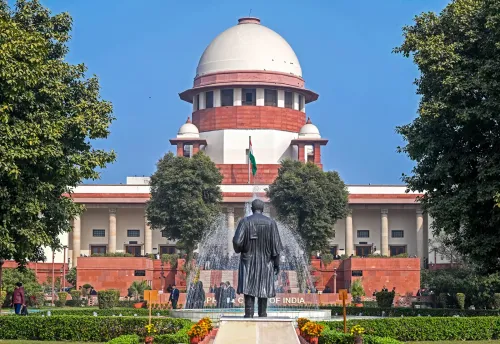
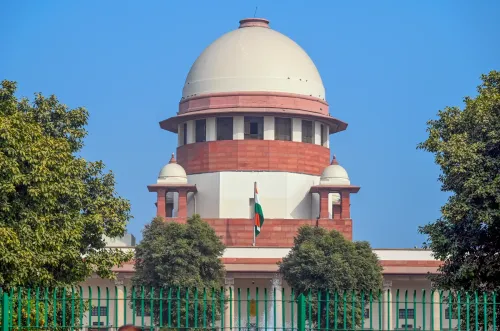
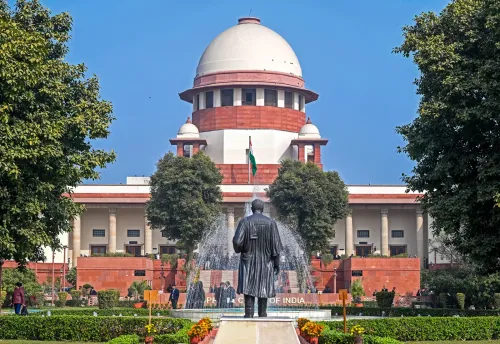
The Supreme Court on Wednesday, 16 September 2026, dismissed a public interest litigation (PIL) seeking a uniform, fraud-resistant verification mechanism for medical qualifications and registrations across India, while sharply rebuking the petitioner for filing what the bench described as repetitive and poorly considered petitions.
What the Court Said
A bench comprising Justice P.S. Narasimha and Justice Alok Aradhe dismissed the plea filed by advocate Narendra Kumar Goswami, who appeared in person. The bench did not merely reject the petition — it issued a pointed public reprimand, questioning the petitioner's habit of approaching the apex court with routine filings.
'You file one PIL per week. What kind of petitions do you draft? You have made it a factory. That's what, every week you file a writ petition. You draft the moment you see news. Look at your prayers. Do you ever apply your mind?' Justice Narasimha remarked from the bench.
The court further questioned whether such petitions were driven by the desire for publicity rather than genuine legal grievance: 'Why do you do such things just because it's easy to file a writ petition and anybody can file and get publicity? Just don't pile us with petitions like this routinely.'
What the PIL Sought
The PIL, filed under Article 32 of the Constitution, sought enforcement of fundamental rights under Articles 14 and 21 and directions for implementation of the statutory framework under the National Medical Commission Act, 2019. The petitioner argued that the right to life enshrined in Article 21 encompasses the right to safe and competent medical treatment, and that practitioners holding forged, doubtful, or unverified qualifications must not be permitted to enter or remain in the medical profession.
The plea called for a 'reliable, auditable, fraud-resistant and due-process-compliant' verification mechanism covering initial registration, renewal, addition of qualifications, and continuation of a licence to practise. It contended that the National Medical Register serves as the statutory foundation on which patients, hospitals, public authorities, and society depend to establish that a practitioner is duly qualified.
Incidents Cited as Evidence
To substantiate the need for stronger safeguards, the petitioner referred to several reported incidents. These included a raid by the Uttar Pradesh Special Task Force at Monad University in Hapur in May 2025, where 1,372 fake degrees or mark sheets and 262 counterfeit certificates were allegedly recovered, followed by Enforcement Directorate (ED) searches in November 2024.
The petition also cited a reported forged certificate network investigated by Kerala Police, an alleged fake pharmacy registration racket probed by the Delhi Anti-Corruption Branch, and a racket involving fake Foreign Medical Graduate Examination certificates and fraudulent medical registrations investigated by the Rajasthan Police Special Operations Group in March 2026. The petitioner clarified he was not seeking adjudication of criminal guilt in any of these cases, but was relying on them to argue for systemic verification reforms.
Representation to Government Went Unanswered
Before approaching the Supreme Court, the petitioner had submitted a representation to the Union Ministry of Health and Family Welfare and the National Medical Commission on 26 February 2026, followed by a reminder on 31 May 2026. He claimed both had remained unanswered, compelling him to seek judicial intervention.
Notably, the PIL explicitly sought a structural and preventive remedy — not the cancellation of any individual registration, nor monitoring of criminal probes or adjudication of negligence claims. The petitioner had also asked that any verification, audit, or adverse action be conducted after due process, including notice, hearing, and a reasoned order subject to statutory remedies.
Broader Context
The dismissal comes against the backdrop of recurring concerns about fake medical credentials in India. While the court declined to entertain this particular petition — citing its framing and the petitioner's litigation pattern — the underlying regulatory question of whether the National Medical Commission's verification infrastructure is sufficiently robust remains open. The Health Ministry's silence on the pre-litigation representation may itself draw scrutiny in the months ahead.
Point of View
Documented challenges, and the Health Ministry's failure to respond to a February 2026 representation is harder to defend than the petitioner's drafting quality. Dismissing a badly framed petition is not the same as resolving the underlying concern. If the government's silence on fake credential complaints continues, better-drafted litigation — or parliamentary scrutiny — is only a matter of time.
NationPress
16 Sept 2026
Frequently Asked Questions
Why did the Supreme Court dismiss the PIL on medical degree verification?
The Supreme Court dismissed the PIL filed by advocate Narendra Kumar Goswami primarily because the bench found it to be part of a pattern of poorly drafted, repetitive petitions filed by the same petitioner. Justice P.S. Narasimha described the practice as running a 'factory' of writ petitions, and the court declined to entertain it on those grounds.
What did the PIL on medical degree fraud actually seek?
The PIL sought a reliable, auditable, and fraud-resistant verification mechanism for medical qualifications and registrations under the National Medical Commission Act, 2019. It asked for verification at the stages of initial registration, renewal, addition of qualifications, and licence continuation — with due-process safeguards including notice and a reasoned order.
What fake degree incidents were cited in the dismissed PIL?
The petition cited a UP Special Task Force raid at Monad University in Hapur in May 2025, where 1,372 fake degrees and 262 counterfeit certificates were allegedly recovered. It also referenced a forged certificate network probed by Kerala Police, a fake pharmacy registration racket investigated by the Delhi Anti-Corruption Branch, and a fake Foreign Medical Graduate Examination certificate racket investigated by the Rajasthan Police Special Operations Group in March 2026.
Did the petitioner approach the government before filing in the Supreme Court?
Yes. Narendra Kumar Goswami submitted a representation to the Union Ministry of Health and Family Welfare and the National Medical Commission on 26 February 2026, followed by a reminder on 31 May 2026. He claimed both remained unanswered, which he cited as the reason for approaching the Supreme Court.
What is the National Medical Register and why does it matter?
The National Medical Register is a statutory database maintained under the National Medical Commission Act, 2019, listing duly qualified and registered medical practitioners in India. The dismissed PIL argued it forms the foundational trust mechanism on which patients, hospitals, and public authorities rely to verify that a doctor is legitimately credentialed.