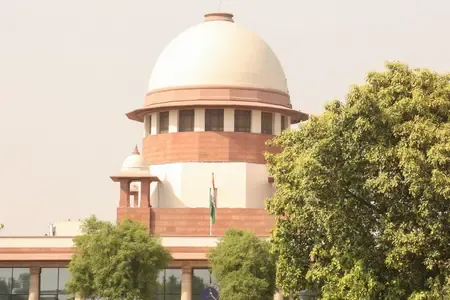
Supreme Court declines PIL on ethanol content disclosure in petrol
Synopsis
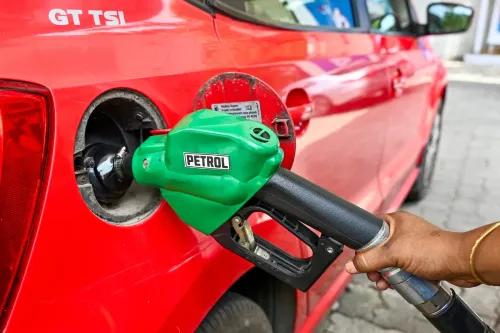
The Supreme Court has again shut down a PIL demanding that petrol pumps and fuel invoices disclose the ethanol content in blended fuel — a question that directly affects millions of owners of pre-2023 vehicles running on E20 without their knowledge or consent. With the apex court pointing petitioners to the High Court, the fight for fuel-label transparency is far from over.
Key Takeaways
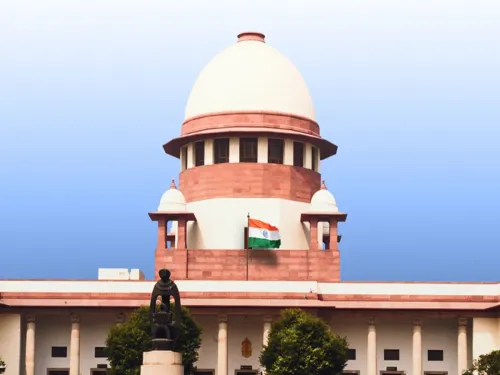
The Supreme Court on 31 August declined to entertain a PIL seeking mandatory ethanol content disclosure on petrol pumps and fuel invoices.
Goswami , who owns a 2018 Honda BR-V , argued that consumers have a right to know the composition of the fuel they purchase.
Venkataramani called the petition a 'proxy petition' and noted a similar PIL was dismissed on 1 September 2025 .
The Court directed Goswami to approach the concerned High Court for relief.
The Centre maintains E20 petrol cuts carbon emissions by approximately 30 per cent versus E10 and benefits sugarcane farmers.
E20 engine-tuned vehicles began rolling out only from 1 April 2025 , leaving a large fleet of older vehicles in a compatibility grey zone.
The Supreme Court on Monday, 31 August declined to entertain a public interest litigation (PIL) seeking mandatory disclosure of ethanol content in petrol sold at fuel stations, directing the petitioner to approach the concerned High Court instead. The PIL, filed by advocate N.K. Goswami, had sought transparency around ethanol-blended fuel and its compatibility with older vehicles — but the apex court shut the door at the threshold.
What the PIL Demanded
The petition sought directions requiring every petrol dispensing nozzle and fuel invoice to display the percentage of ethanol in the fuel being sold. It also called for the publication of an official vehicle-wise compatibility database, a transparent transition framework for legacy vehicles, and safeguards against warranty, insurance, or service-related prejudice to owners of non-compatible vehicles.
Additionally, the plea sought the constitution of an independent expert committee to examine the broader ramifications of the government's ethanol-blending programme. Goswami, who owns a 2018 Honda BR-V petrol vehicle, argued that his car was designed and sold before E20 was notified as an automotive fuel, and that he has no genuine option to purchase a lower-ethanol blend at the pump.
What the Petitioner Argued
Goswami, appearing in person, was careful to clarify that he was not challenging the Centre's ethanol-blending policy itself. 'I am not challenging the policy. I just want to know. I have the right to know. Even when we buy a packet of biscuits we know the ingredients,' he told the Bench.
He contended that consumers were being compelled to purchase fuel without knowing its exact composition, without authoritative compatibility information for their vehicles, and without a realistic alternative. The petition described this as a 'constitutional validity of a silent, unconsenting compulsion visited upon millions of citizens.'
Government's Objection
Attorney General for India R. Venkataramani, the highest law officer of the Centre, objected sharply to the manner in which the matter was being pursued. 'He wants the Government of India to be answerable to him!' Venkataramani told the court. He also described the petition as a 'proxy petition' and pointed out that the Supreme Court had dismissed a similar PIL the previous year.
The 2025 Precedent
On 1 September 2025, a Bench headed by then Chief Justice of India B.R. Gavai and Justice K. Vinod Chandran dismissed an earlier PIL that had challenged the Centre's rollout of E20 petrol as the default fuel. That petition had argued that mandating E20 for a predominantly non-compatible vehicle fleet — particularly pre-April 2023 models — could cause material degradation, safety risks, mileage loss, and warranty and insurance disputes.
In that hearing too, Attorney General Venkataramani had described the litigant as a 'name-lender' and alleged that a lobby was driving the litigation. The Centre had also cited Brazil's experience with higher ethanol blends, noting that the country runs successfully on E27 and that the same automakers — including Toyota, Honda, and Hyundai — manufacture vehicles there.
Government's Stand on Ethanol Blending
The Centre has maintained that E20 petrol delivers better acceleration and ride quality, and has helped lower carbon emissions by approximately 30 per cent compared to E10 fuel. Officials have also cited benefits for sugarcane farmers and the country's energy security as key rationales for the programme.
The NITI Aayog's Roadmap for Ethanol Blending in India 2020-25, released in June 2021, had contemplated a phased transition and envisaged continued availability of lower-ethanol fuel for older vehicles. The Union Ministry of Road Transport and Highways notified E20 as an automotive fuel on 8 March 2021, while the Bureau of Indian Standards issued E20 specifications in 2022 for suitably compatible vehicles. E10-tuned and E20 material-compliant vehicles began rolling out from 1 April 2023, with E20 engine-tuned vehicles following from 1 April 2025.
With the Supreme Court now directing Goswami to the High Court, the broader question of consumer disclosure rights in the context of India's ethanol transition remains unresolved — and is likely to resurface in lower courts.
Point of View
And no official compatibility database exists in the public domain. The Attorney General's framing of the petitioner as a proxy litigant sidesteps the substance: even India's food labelling laws require ingredient disclosure on a packet of biscuits. The government's energy transition goals are legitimate, but the absence of a mandatory fuel-label standard is a policy gap that will eventually force a judicial or legislative reckoning — the question is only which forum gets there first.
NationPress
31 Aug 2026
Frequently Asked Questions
Why did the Supreme Court dismiss the PIL on ethanol content disclosure?
The Supreme Court declined to entertain the PIL filed by advocate N.K. Goswami and directed him to approach the concerned High Court instead. The Bench, led by Justice M.M. Sundresh, did not rule on the merits; it simply found the Supreme Court was not the appropriate forum at this stage.
What did the PIL on ethanol content in petrol actually seek?
The PIL sought mandatory disclosure of ethanol percentage on every petrol dispensing nozzle and fuel invoice, an official vehicle-wise compatibility database, a transparent transition framework for legacy vehicles, and safeguards against warranty and insurance disputes for owners of non-compatible vehicles. It also sought an independent expert committee to examine the ethanol-blending programme.
Has a similar PIL been dismissed before?
Yes. On 1 September 2025, a Bench led by then Chief Justice B.R. Gavai dismissed a PIL challenging the Centre's rollout of E20 as the default petrol. That petition had argued that mandating E20 for a predominantly non-compatible vehicle fleet posed safety, mileage, and warranty risks.
What is the government's position on E20 petrol?
The Centre maintains that E20 petrol provides better acceleration, improves ride quality, and reduces carbon emissions by approximately 30 per cent compared to E10 fuel. It also argues the programme boosts sugarcane farmers' incomes and advances energy security, citing Brazil's successful experience with E27 blends.
Which vehicles are affected by the E20 transition?
Vehicles manufactured before April 2023 — when E10-tuned and E20 material-compliant models began rolling out — are potentially in a compatibility grey zone. E20 engine-tuned vehicles only began production from 1 April 2025, meaning a large share of India's existing vehicle fleet was not designed for the higher ethanol blend now widely available at pumps.