Supreme Court refuses to halt CJP's Sept 5 march; directs petitioner to Centre
Synopsis
The Supreme Court refused to stop the Cockroach Janta Party's September 5 march from India Gate to Delhi Police Headquarters, saying it had no reason to presume the protest would turn violent. With a retired Delhi Police officer's petition deferred to September 10 and the BRICS Summit looming, the ball is now squarely in the Centre's court.
Key Takeaways
The Supreme Court on 31 August declined to issue an interim order blocking the CJP 's September 5 protest march in New Delhi .
A bench led by CJI Surya Kant said there was no compelling reason to presume the demonstration would cause a law-and-order problem.
The petitioner, retired Delhi Police officer Rajendra Singh , was directed to approach the Centre with his concerns.
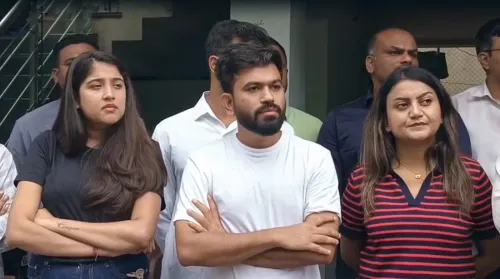
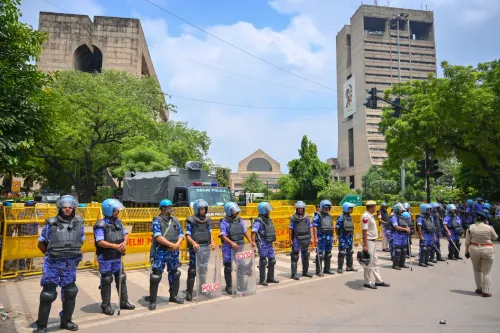
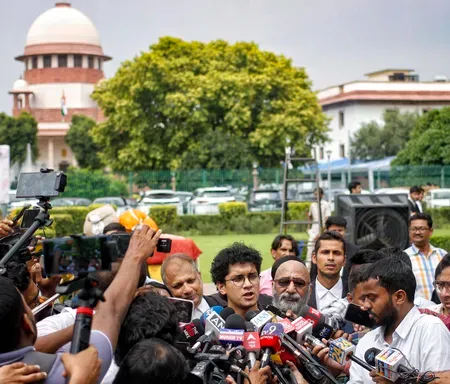
The CJP plans to march from India Gate to New Delhi Police Headquarters , led by families of deceased NEET victims and alleged police brutality victims.
The Supreme Court will hear the matter in detail on September 10 alongside other pending student protest cases.
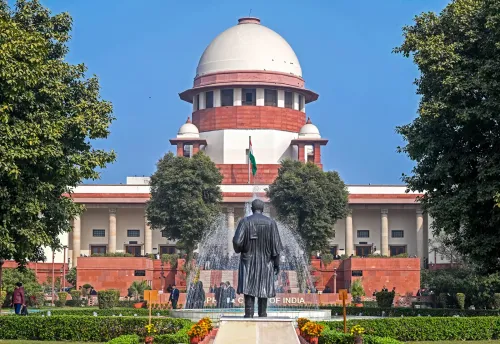
The Supreme Court on Monday, 31 August declined to issue any interim order blocking the Cockroach Janta Party (CJP)'s planned protest march on September 5, stating it found no compelling reason to presume the demonstration would disturb law and order. A bench led by Chief Justice of India (CJI) Surya Kant, along with Justices Joymalya Bagchi and V. Mohana, issued notice on the challenge but refused to advance the hearing before the march date.
What the Court Said
The CJI Kant-led bench was unambiguous in its refusal to pre-empt the organisers. 'At least as of now, we will presume, and we have no reason to doubt, that everybody will act and behave in a very responsible manner and in a peaceful and lawful manner. So right now, for us, there are no compelling circumstances to presume that anything wrong will happen,' the apex court observed.
The bench further noted that maintaining law and order was ultimately the responsibility of police authorities, not the court. 'We are not calling upon anyone who is not a party before us. Approach the Central Government,' the bench directed the petitioner.
Who Filed the Petition and Why
The application was filed by Rajendra Singh, a retired Delhi Police officer, who sought directions against large-scale demonstrations or protest marches in sensitive areas of the national capital without requisite permission. His counsel, advocate Rizwan Ahmed, raised concerns about the proposed march from India Gate to the New Delhi Police Headquarters, citing the upcoming BRICS Summit in the capital as a potential security risk.
The counsel also argued that the march had been announced through social media and that, to his knowledge, organisers had not obtained the necessary permissions from authorities. He pressed for an urgent hearing before September 5, further contending that the CJP could not be made a party since it lacked a registered office or official letterhead.
The bench, however, remained disinclined to intervene, observing that Union and Delhi authorities retained the legal responsibility to ensure order within the established framework.
The CJP March: Background and Stated Aims
The CJP had announced the September 5 march alleging that the Centre had failed to honour commitments made to young people on 25 July. The party said the march would be led by families of deceased NEET victims and victims of alleged police brutality, and would be joined by students and young citizens from across the country.
In its statement, the CJP alleged that the government had delayed implementing its commitments to youth and had avoided giving clear assurances even before the Supreme Court. The party also referenced 18 August proceedings before the apex court, claiming the court had repeatedly sought a list of FIRs registered across the country for consideration of their collective quashing — a commitment it said the government had not fulfilled in writing.
Describing the situation as a 'vishwasghaat (betrayal)' with the Gen-Z generation, the CJP appealed to students and youth organisations to gather at India Gate and participate peacefully.
What Happens Next
The Supreme Court has scheduled a detailed hearing on the application for September 10, clubbing it with other pending matters related to the CJP-linked student protests. In the interim, the petitioner has been directed to approach the Centre with his grievances. How Delhi Police and Union authorities respond to the march — and whether permissions are sought or granted — will be closely watched ahead of the BRICS Summit.
Point of View
Delhi Police faces a governance grey zone on the eve of the BRICS Summit. The court's direction to approach the Centre is constitutionally sound, but it effectively defers the hard call to the executive — which is precisely where political calculations, not just legal ones, will determine what happens on September 5.
NationPress
31 Aug 2026
Frequently Asked Questions
What did the Supreme Court decide about the CJP's September 5 protest march?
The Supreme Court declined to issue any interim order blocking the march, stating it found no compelling reason to presume the demonstration would lead to a law-and-order problem. The bench directed the petitioner to approach the Central Government with his concerns instead.
Who filed the petition against the CJP march and what did it seek?
Retired Delhi Police officer Rajendra Singh filed the petition, seeking directions against large-scale demonstrations in sensitive areas of New Delhi without requisite permission. His counsel raised concerns about the march's proximity to the upcoming BRICS Summit and the absence of official permission from authorities.
What is the CJP's September 5 march about?
The Cockroach Janta Party announced a peaceful protest march from India Gate to the New Delhi Police Headquarters on September 5, alleging the Centre failed to honour commitments made to young people on 25 July. The march is to be led by families of deceased NEET victims and alleged police brutality victims, joined by students from across the country.
When will the Supreme Court next hear the matter?
The Supreme Court has scheduled a detailed hearing for September 10, clubbing the application with other pending matters related to CJP-linked student protests. No hearing was listed before the September 5 march date.
What did the Supreme Court say about law and order responsibility?
The bench observed that maintaining law and order is ultimately the responsibility of police authorities, not the court. It directed the petitioner to raise his apprehensions with the Central Government, stating it would not call upon parties not before it.