Did the SC Uphold Land Acquisition Near Takiya Masjid in Ujjain?
Synopsis
In a significant ruling, the Supreme Court has upheld the Madhya Pradesh High Court's decision on land acquisition near Takiya Masjid. This decision affects the Mahakal Lok Phase-II project and highlights the ongoing tensions over land use for religious and public facilities.
Key Takeaways
The Supreme Court affirmed the Madhya Pradesh High Court's ruling on land acquisition.
The land acquisition is part of the Mahakal Lok Phase-II project aimed at improving facilities for devotees.
Legal remedies are available for those contesting the acquisition.
Most affected families have accepted compensation and vacated their properties.
The case highlights ongoing debates on land use for religious projects.
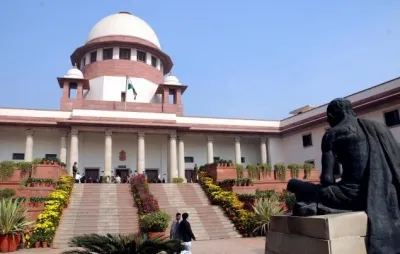
New Delhi, Dec 18 (NationPress) The Supreme Court declined to intervene in the Madhya Pradesh High Court's ruling that supported the acquisition of land adjacent to Takiya Masjid in Ujjain for the Mahakal Lok Phase-II initiative.
A panel of Justices Vikram Nath and Sandeep Mehta rejected the special leave petition (SLP) brought forward by Mohammed Taiyab, expressing their disinterest in challenging the contested judgment and order made by the High Court.
"The Special Leave Petition is thus dismissed," stated the bench led by Justice Nath.
The SLP stemmed from the verdict delivered by the Madhya Pradesh High Court on January 11, 2025, which dismissed a series of writ petitions contesting land acquisition awards related to the enhancement of parking facilities for worshippers visiting the Mahakaleshwar Temple and the Mahakal Lok complex.
In its comprehensive order, the Madhya Pradesh High Court noted that the acquisition was initiated upon the request of the Mahakaleshwar Mandir Prabandhan Committee to the state government for land acquisition near Triveni Sangrahalaya to improve parking.
The District Collector-cum-Land Acquisition Officer Raushan Kumar Singh invoked the urgency clause under Section 40 of the Right to Fair Compensation and Transparency in Land Acquisition, Rehabilitation and Resettlement Act, 2013, to acquire over 2.13 hectares of land.
The bench, comprising Justices Vivek Rusia and Sanjeev S. Kalgaonkar, dismissed the appellants' plea, emphasizing that the petitioners had a viable statutory remedy.
"The appellants/writ petitioners have a remedy to request a reference under Section 64 of the Act, 2013," it was stated, adding that the competent authority under Section 64 was authorized to consider objections regarding not just compensation, but also rehabilitation and resettlement.
The Madhya Pradesh High Court pointed out that the petitioners had not challenged the acquisition notifications that invoked urgency.
"The appellants immediately contested the final award issued after the notifications were released under the Act of 2013," the bench, led by Justice Rusia, remarked.
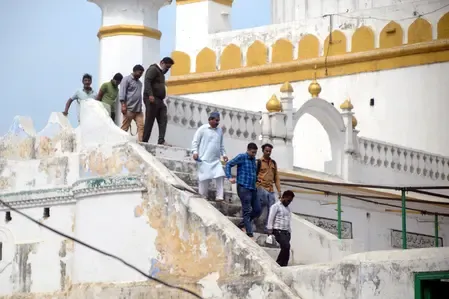
It was also noted that out of almost 250 affected families, more than 230 had accepted compensation and vacated the premises, leaving a small number of residents opposing the project.
Before the Supreme Court, senior advocate Huzefa Ahmadi, representing the petitioner, argued that the acquisition was flawed due to the lack of a mandatory social impact assessment.
Nevertheless, the apex court was not convinced and upheld the Madhya Pradesh High Court's perspective that alternative statutory remedies existed against the land acquisition award.
Point of View
It's crucial to acknowledge the delicate balance between infrastructure development and community rights. This Supreme Court ruling reflects the ongoing dialogue in our nation regarding land acquisition for public projects, which must respect both religious sentiments and statutory frameworks.
NationPress
26 Sept 2026
Frequently Asked Questions
What was the Supreme Court's decision regarding the land acquisition?
The Supreme Court upheld the Madhya Pradesh High Court's decision to support the land acquisition near Takiya Masjid for the Mahakal Lok Phase-II project.
Why was the land near Takiya Masjid acquired?
The land was acquired to enhance parking facilities for devotees visiting the Mahakaleshwar Temple and the Mahakal Lok complex.
What legal options do affected families have?
Affected families have the option to seek a reference under Section 64 of the Right to Fair Compensation and Transparency in Land Acquisition Act, 2013.
What did the Madhya Pradesh High Court state about the acquisition process?
The High Court noted that the acquisition was initiated based on a request from the Mahakaleshwar Mandir Prabandhan Committee and invoked the urgency clause.
How many families accepted the compensation offered?
Out of nearly 250 affected families, more than 230 accepted compensation and vacated the land.