Sci-Tech Minister Singh flags ₹1,141-cr postal scheme
Synopsis
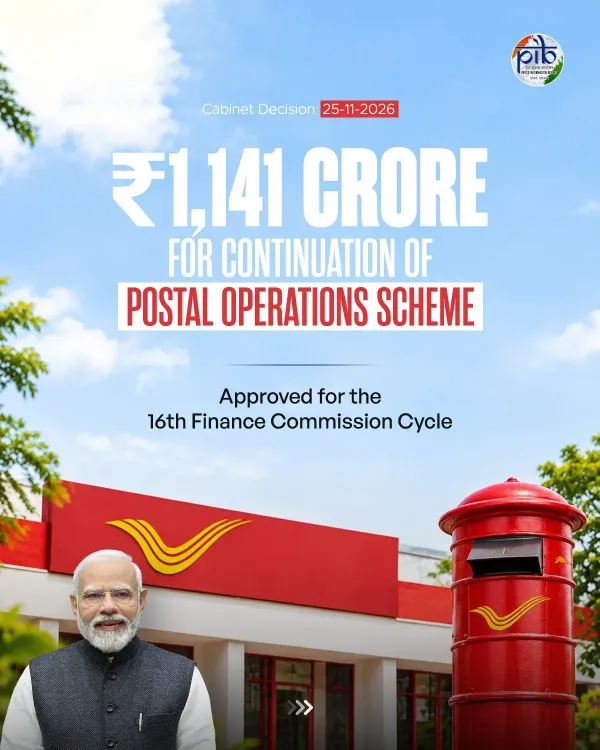
Union Science and Technology Minister Dr. Jitendra Singh said the Union Cabinet chaired by PM Narendra Modi has approved continuation of the Postal Operations Scheme with ₹1,141 crore for FY 2026-27 to FY 2030-31, aimed at remote and underserved areas.
Key Takeaways
The Union Cabinet, chaired by Prime Minister Narendra Modi, approved continuation of the Postal Operations Scheme.
The outlay is ₹1,141 crore for the 16th Finance Commission cycle from FY 2026-27 to FY 2030-31.
Union Science and Technology Minister Dr.
Jitendra Singh announced the decision on 25 November 2026.
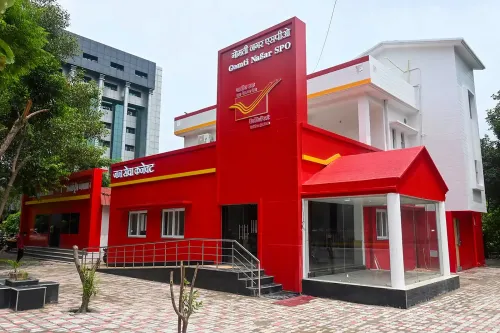
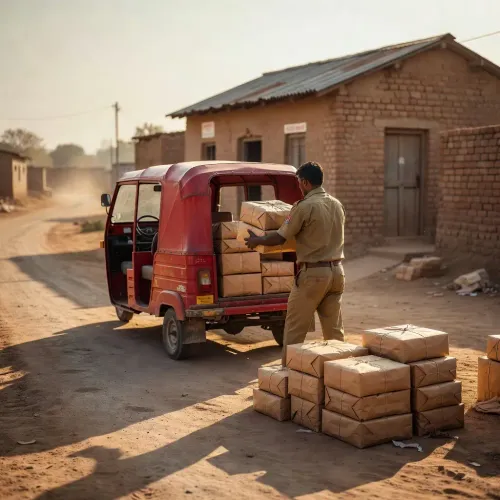
The scheme is meant to keep postal services accessible, reliable and efficient, especially in remote and underserved areas.
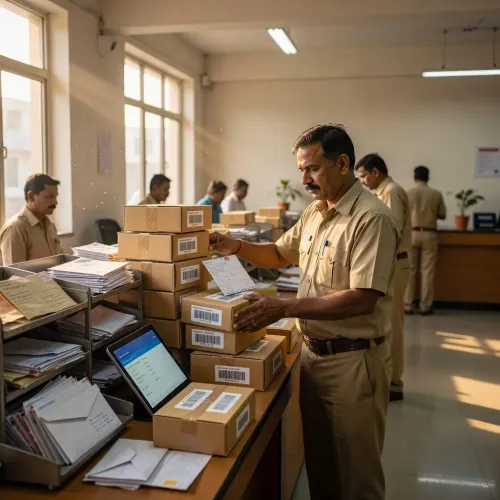
The Department of Posts carries a universal service obligation through this physical network.
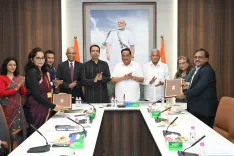
Union Science and Technology Minister Dr. Jitendra Singh has put a five-year price on keeping India's postal backbone alive in the last village: ₹1,141 crore. On Wednesday in New Delhi, he announced that the Union Cabinet, chaired by Prime Minister Narendra Modi, approved continuation of the Postal Operations Scheme for the 16th Finance Commission cycle from FY 2026-27 to FY 2030-31.
In his post, Dr. Singh framed the decision as strengthening the reach and efficiency of India's postal network. The initiative, he said, will support the continued delivery of accessible, reliable and efficient postal services across the country, particularly in remote and underserved areas.
₹1,141 crore through the 16th Finance Commission cycle
The money is parked across FY 2026-27 to FY 2030-31 — the full span of the 16th Finance Commission. That body sets the Centre-state resource template for five years. Putting a postal operations scheme inside that window is a signal: this is meant to be a steady line item, not a one-season burst.
The Department of Posts still carries a universal service obligation. Mail and basic counters must exist where private logistics does not bother to go. Governments of different stripes have therefore treated the network as public infrastructure, not a commercial leftover.
Why remote counters still carry the state
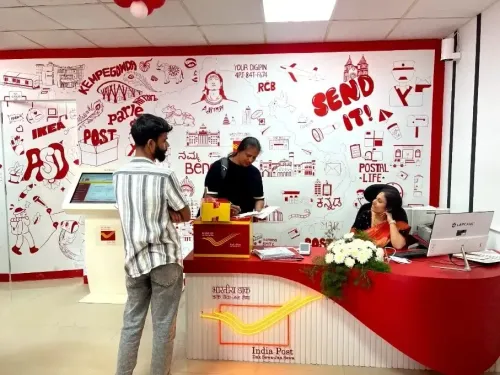
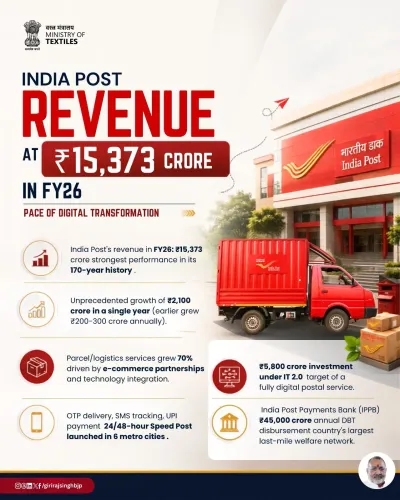
In large parts of rural, hill and island India, the post office is the state's most familiar window. Small savings, Aadhaar-linked services and the India Post Payments Bank all ride that last mile. Keep operations funded, and those counters stay open.
Dr. Singh did not spell out how the ₹1,141 crore will be split among staff, transport, buildings or technology. That breakdown is not yet on the public record. What is on the record is the choice to keep paying for reach in underserved pockets.
State shares and digital links still unlisted
Two follow-throughs will decide whether the headline number becomes service on the ground. First, state-wise allocation and physical targets — extra routes, hill belts, the islands. Second, any explicit tie-up with digital upgrades already under way, including payments-bank expansion.
A funded counter in a far village will never look like an expressway ribbon-cutting. It is the quieter half of connectivity: the envelope, the pension, the passbook. The Cabinet has chosen to keep writing that cheque through 2031.
Point of View
On par with the roads and fibre that usually grab the headlines. The political test now is whether the ₹1,141 crore actually reaches the counters that still matter in remote blocks, or dissolves into an undifferentiated departmental budget.
NationPress
25 Nov 2026
Frequently Asked Questions
What did the Union Cabinet approve for India's postal network?
The Union Cabinet approved continuation of the Postal Operations Scheme with an outlay of ₹1,141 crore for the 16th Finance Commission cycle from FY 2026-27 to FY 2030-31.
Who announced the Postal Operations Scheme Cabinet decision?
Union Science and Technology Minister Dr. Jitendra Singh announced that the Cabinet, chaired by Prime Minister Narendra Modi, had approved the scheme's continuation.
Why is the Postal Operations Scheme focused on remote areas?
The scheme is meant to keep postal services accessible, reliable and efficient across the country, particularly in remote and underserved areas where private logistics is thin.
What is the 16th Finance Commission cycle for this postal outlay?
The cycle covers FY 2026-27 to FY 2030-31, the five-year window for which the 16th Finance Commission sets Centre-state resource transfers.
Which department runs India's postal network under this scheme?
The Department of Posts, under the Ministry of Communications, runs the network and carries the universal service obligation to serve remote locations.