Amit Shah at RAW lecture: Unified global war on drugs, zero tolerance for narcotics
Synopsis
Home Minister Amit Shah used the RAW's prestigious Kao Memorial Lecture to deliver a blunt global warning: without a unified legal framework on narcotics — covering common definitions, standardised penalties, and real-time intelligence sharing — drug cartels will keep exploiting policy gaps across 195 nations. His ten-year countdown framing and direct appeal to diplomats from 40-plus countries signals India is pushing hard to lead a multilateral counter-narcotics agenda.
Key Takeaways
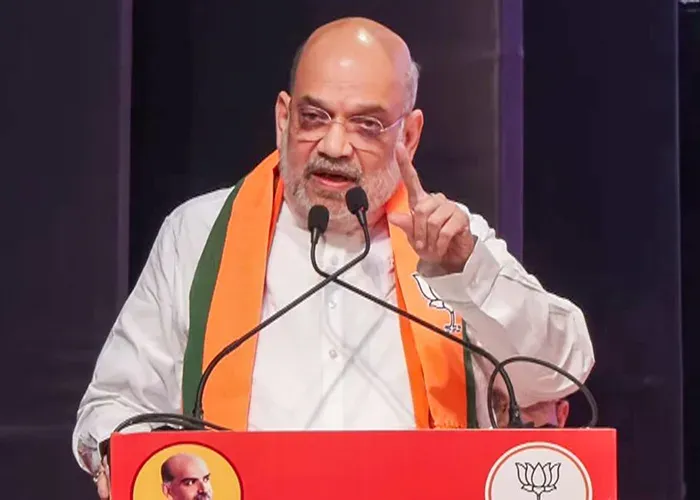
Amit Shah delivered the keynote at the RAW Rameshwar Nath Kao Memorial Lecture in New Delhi on 15 May 2025 .
India's declared goal is a Drug-Free India by 2047 , backed by a zero-tolerance policy on narcotics entry and transit.
Shah called for a unified global legal framework : common definitions of controlled substances, standardised trafficking penalties, extradition protocols, and real-time intelligence sharing.
India repatriated more than 40 transnational criminals in the last two years with support from partner nations.
Shah warned that without joint global action now, the harm caused by narcotics could become irreversible within 10 years .
Diplomats and high commissioners from more than 40 countries attended the event and were directly called upon to join India's anti-narcotics push.
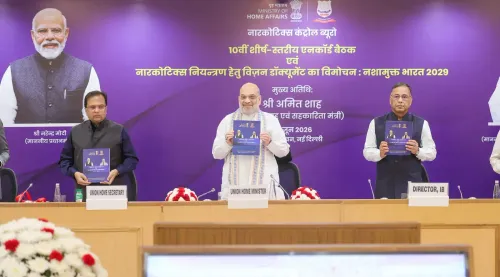
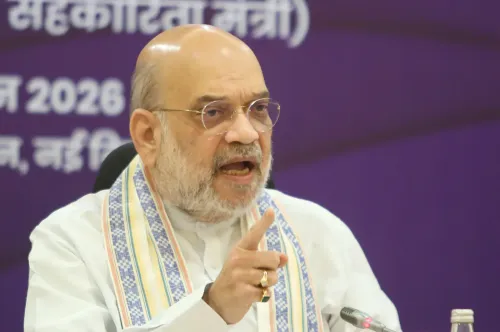
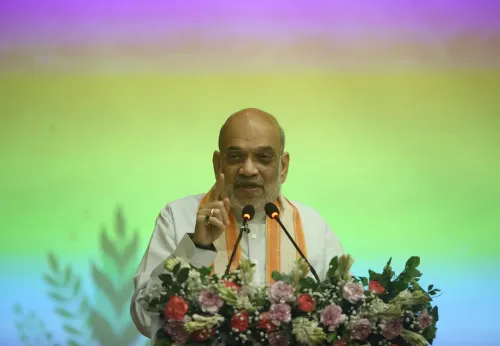
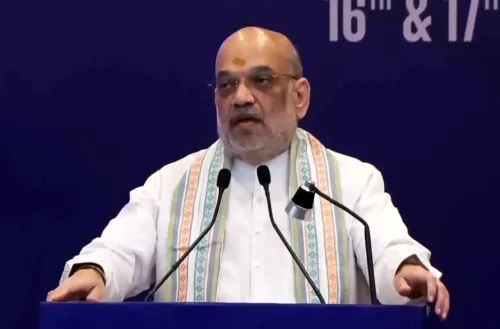
Union Home Minister Amit Shah on Friday, 15 May called for a unified global front against narcotics trafficking, delivering the keynote address at the Research and Analysis Wing (RAW)'s annual Rameshwar Nath Kao Memorial Lecture in New Delhi. Speaking on the theme 'Narcotics: A Borderless Threat, A Collective Responsibility', Shah warned that without coordinated international action, the world risks reaching a point of no return within a decade.
India's Zero-Tolerance Stance
Shah reaffirmed that under Prime Minister Narendra Modi's leadership, India has set a national goal of achieving a Drug-Free India by 2047. He stated that Indian security agencies have prepared a detailed roadmap to dismantle drug syndicates, and that the country's policy of 'zero tolerance' means not one gram of narcotics will be permitted to enter India or transit through its territory. He described drug trafficking as far more than a law-and-order challenge, stressing its lasting damage to society and future generations.
The Case for a Common Global Legal Framework
Shah argued that inconsistencies in national drug laws are being actively exploited by cartels. He called for a unified international legal framework covering a common definition of controlled substances, standardised penalties for trafficking, extradition protocols for drug kingpins, and real-time intelligence sharing. Without high-degree global alignment on these pillars, he said, enforcement efforts will remain fragmented and cartels will continue to exploit policy gaps across the world's 250,000 kilometres of international borders.
Narco-Terror and the Hidden Economy
The Home Minister highlighted a dimension that often goes unnoticed in public discourse: the direct link between drug money and terrorism. He noted that while awareness exists around narcotics funding terrorist networks and fuelling parallel economies, the permanent physiological damage caused by drug abuse to individual users receives far less attention. Shah stated that the world must simultaneously confront both narco-networks and narco-terror states, urging that this battle must rise above geopolitical differences and narrow national interests.
India's Extradition Record and the Call to Diplomats
Shah disclosed that over the last two years, India has successfully repatriated more than 40 transnational criminals with the support of friendly nations — a figure he cited as evidence of what bilateral cooperation can achieve. He directly addressed the ambassadors, high commissioners, and diplomats from more than 40 countries present at the event, urging them to join India's anti-narcotics efforts and treat the war on drugs as a matter of national security, public health, and preventing narco-states from emerging as alternative power centres.
About the Kao Memorial Lecture
The RAW annual lecture series was established in 2007 to honour the agency's founder, Rameshwar Nath Kao. This year's event was attended by members of the Kao family, former RAW secretaries, and senior officials from India's other security agencies, alongside the diplomatic community. The choice of narcotics as the theme signals a deliberate effort by the Indian government to internationalise its counter-narcotics agenda at the highest diplomatic levels.
Point of View
Not a routine policy speech — India is positioning itself as the convener of a multilateral counter-narcotics coalition at a moment when traditional Western leadership on this front is fractured. The ten-year irreversibility warning is a pressure tactic aimed squarely at fence-sitting nations. Yet the harder question is whether India's own enforcement record — particularly on precursor chemical controls and domestic rehabilitation infrastructure — is robust enough to anchor the credibility that such a leadership role demands. Calling out narco-terror states without naming them also leaves the framework diplomatically convenient but operationally vague.
NationPress
21 Sept 2026
Frequently Asked Questions
What did Amit Shah say at the RAW Kao Memorial Lecture on narcotics?
Home Minister Amit Shah called for a unified global war against narcotics at the RAW Rameshwar Nath Kao Memorial Lecture on 15 May 2025 in New Delhi. He urged nations to adopt a common legal framework covering definitions of controlled substances, standardised penalties, extradition of drug kingpins, and real-time intelligence sharing.
What is India's Drug-Free India 2047 goal?
Drug-Free India 2047 is a national objective set under Prime Minister Narendra Modi's leadership, aiming to eradicate drug abuse and trafficking from the country by the centenary of Indian independence. Shah stated that Indian security agencies have prepared a roadmap to dismantle drug syndicates in pursuit of this goal.
How many transnational criminals has India repatriated recently?
According to Shah, India successfully brought back more than 40 transnational criminals over the last two years with support from friendly nations. He acknowledged that more needed to be done and called for deeper international cooperation.
Why does Amit Shah say drug trafficking is a national security issue?
Shah argued that drug trafficking funds terrorist networks, fuels parallel economies, and risks enabling narco-states to emerge as alternative power centres — making it a direct threat to national security, not just a public health or law-enforcement matter. He also flagged the permanent physical damage drug abuse causes to individuals.
What is the RAW Rameshwar Nath Kao Memorial Lecture?
It is an annual lecture series organised by the Research and Analysis Wing (RAW), India's external intelligence agency, established in 2007 to honour its founder Rameshwar Nath Kao. The event brings together senior officials, diplomats, and security experts to address strategic national and global challenges.