Amit Shah credits Modi govt's 12 years for India's global rise
Synopsis
Union Home Minister Amit Shah on June 19, 2026, highlighted 12 years of the Modi government's foreign policy record, citing ₹70 lakh crore in FDI, ₹17 lakh crore in GCC trade, preferential US market access worth ₹2,850 lakh crore, G20 consensus, and partnerships with 160 nations under the 'India First' doctrine.
Key Takeaways
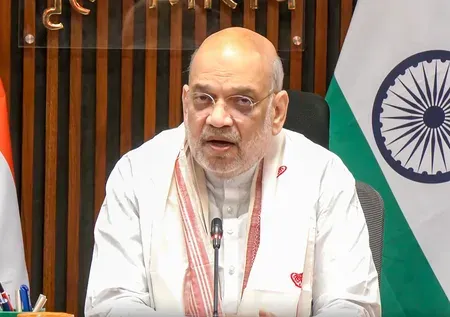
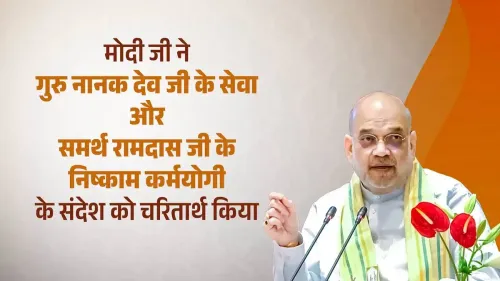
Union Home Minister Amit Shah posted on June 19, 2026 , marking 12 years of the Modi government's foreign policy under the hashtag #12YearsOfIndiaFirst .
India reportedly received ₹70 lakh crore in foreign direct investment over this period, according to Shah's post.
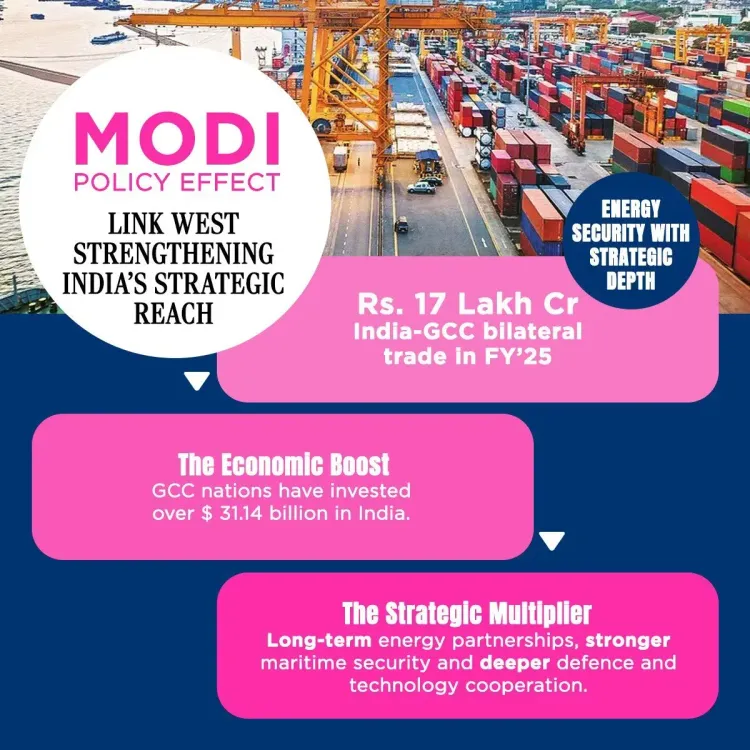
Bilateral trade with the Gulf Cooperation Council (GCC) is cited at ₹17 lakh crore , reflecting the importance of the Gulf corridor for energy and remittances.
Preferential access to the US market is valued at ₹2,850 lakh crore , underscoring India's deepening economic ties with its largest trading partner.
India secured a 100% consensus declaration at the G20 New Delhi Summit in September 2023 during its presidency.
Training and capacity-building partnerships have been established with 160 nations , reflecting India's growing role as a development partner for the Global South.
Union Home Minister Amit Shah on Friday, June 19, 2026, highlighted what he described as a transformative shift in India's global standing over 12 years of the Modi government, pointing to a range of diplomatic and economic achievements anchored in the principles of 'India First' and Vasudhaiva Kutumbakam (the world is one family).
Context
Posting under the hashtag #12YearsOfIndiaFirst, Shah stated that India has 'risen as a trusted friend of the world' and that 'a new doctrine of diplomacy is shaping partnerships that advance global good and our national interests.' The post frames Prime Minister Narendra Modi's tenure — beginning in May 2014 — as a decisive turning point in how India is perceived and engaged internationally.
The claims span foreign direct investment, bilateral trade, market access, multilateral consensus, and development partnerships, positioning India not merely as a recipient of global attention but as an active architect of international outcomes.
Policy Backdrop
Shah cited ₹70 lakh crore in foreign direct investment received over this period and ₹17 lakh crore in bilateral trade with the Gulf Cooperation Council (GCC) — a bloc of six Arab states that remains one of India's most critical energy and remittance corridors. He also referenced preferential access worth ₹2,850 lakh crore to the United States market, India's largest trading partner, where defence and technology cooperation has deepened markedly since 2014.
The post further points to the G20 New Delhi Summit of September 2023, where India, as the rotating G20 president from December 2022, secured a consensus declaration without dissent — a diplomatic feat that drew wide international attention. Shah also cited partnerships with 160 nations for training and capacity building as evidence of India's expanding convening power.
These claims align with the broader foreign policy lineage of the Modi era, which has combined 'Neighbourhood First' and 'Act East' frameworks with plurilateral engagements through platforms such as the Quad and the Shanghai Cooperation Organisation, blending normative framing drawn from ancient Indian philosophy with hard economic metrics.
Stakeholders and Impact
The figures cited, if borne out, would carry significant implications for FDI investors, GCC exporters, and the broader community of India's diplomatic partners. Increased FDI flows and expanded trade corridors with the GCC directly affect millions of Indian workers in the Gulf and domestic industries dependent on energy imports and remittance inflows.
The reference to preferential US market access is particularly consequential for Indian exporters in sectors ranging from pharmaceuticals and textiles to information technology. Training and capacity-building partnerships with 160 nations reflect an ambition to convert India's development experience into soft power across the Global South.
What's Next
The post arrives as the #12YearsOfIndiaFirst campaign marks the anniversary of the Modi government, making it part of a broader political communication exercise by the Bharatiya Janata Party (BJP). Diplomatic watchers will be tracking the pace of bilateral trade agreement negotiations with the United States and the European Union, as well as follow-through on commitments made during India's G20 presidency. Whether the momentum of the New Delhi Declaration translates into binding agreements and measurable trade gains will be a key test of the doctrine Shah describes.
Point of View
Timed to the 12-year anniversary of the Modi government and designed to convert foreign policy metrics into electoral capital. By invoking Vasudhaiva Kutumbakam alongside hard numbers — FDI, GCC trade, US market access — the BJP is seeking to frame India's international ascent as an ideological achievement, not merely an economic one. The emphasis on 160 training partnerships signals a deliberate bid to lead the narrative on India's Global South credentials at a moment when that space is increasingly contested. Whether these figures survive independent scrutiny will determine how durable the narrative proves beyond the anniversary cycle.
NationPress
24 Sept 2026
Frequently Asked Questions
What did Amit Shah say about India's foreign policy under the Modi government?
Amit Shah stated that India has risen as a 'trusted friend of the world' in 12 years of the Modi government, citing ₹70 lakh crore in FDI, ₹17 lakh crore in GCC trade, preferential US market access worth ₹2,850 lakh crore, a consensus G20 declaration, and partnerships with 160 nations.
What is Vasudhaiva Kutumbakam and why did Amit Shah mention it?
'Vasudhaiva Kutumbakam' is a Sanskrit phrase meaning 'the world is one family.' Shah invoked it as the philosophical principle underpinning the Modi government's foreign policy doctrine, framing India's global partnerships as rooted in ancient Indian values rather than purely strategic interests.
What was India's role at the G20 New Delhi Summit?
India held the G20 presidency from December 2022 to November 2023 and hosted the leaders' summit in New Delhi in September 2023, where it secured a consensus declaration — meaning all member nations agreed to the final text without dissent, which was widely regarded as a significant diplomatic achievement.
How much FDI did India receive under the Modi government according to Amit Shah?
According to Amit Shah's post, India received ₹70 lakh crore in foreign direct investment over 12 years of the Modi government. This figure has not been independently verified by NationPress.
What is the significance of India's trade with GCC countries?
The Gulf Cooperation Council (GCC) — comprising six Arab states — is one of India's most important economic partners, serving as a major source of energy imports and a destination for millions of Indian workers whose remittances support domestic consumption. Shah cited bilateral trade of ₹17 lakh crore with the GCC over the 12-year period.