Amit Shah Targets AAP Govt Over Punjab Scams, Broken Promises
Synopsis
Union Home Minister Amit Shah posted a bilingual Hindi-Punjabi attack on Punjab CM Bhagwant Mann's AAP government on September 30, 2026, alleging sector-wide corruption from Smart City projects to panchayat funds and demanding answers on 25 lakh jobs and 16 medical college promises.
Key Takeaways
Union Home Minister Amit Shah posted a bilingual Hindi-Punjabi attack on Punjab CM Bhagwant Mann 's AAP government on September 30, 2026 .
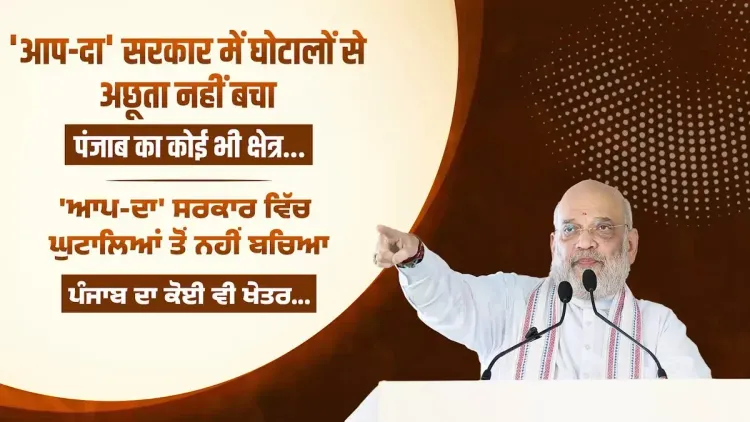
Shah alleged that no sector in Punjab — from Smart City projects to panchayat funds — has been spared from scams under AAP rule.
He specifically demanded accountability on two key pre-2022 election promises: 25 lakh jobs and 16 medical colleges .
The attack uses the wordplay 'Aap-da' (AAP + disaster) to frame the AAP government as a governance failure.
AAP won Punjab in March 2022 on an anti-corruption platform, making corruption allegations a direct challenge to its founding political identity.
As of the post's publication, the Punjab government had not issued a public response to the specific allegations.
Not a single sector in Punjab has escaped scandal under the Aam Aadmi Party government — that is the blunt charge Union Home Minister Amit Shah levelled against Chief Minister Bhagwant Mann on Wednesday, September 30, 2026, in a bilingual Hindi-Punjabi post that has reignited the BJP's offensive on AAP's governance record.
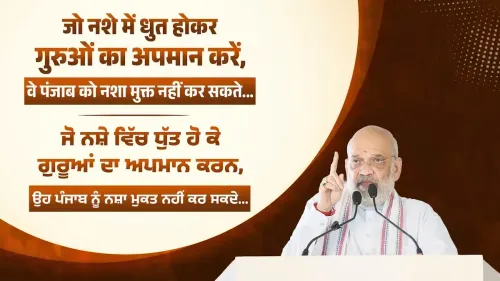
Shah's post, written in both Hindi and Punjabi for maximum reach inside the state, deployed the now-familiar wordplay 'Aap-da' — a fusion of 'AAP' and the Hindi word for disaster — to frame his critique before firing two pointed questions at the Chief Minister: what happened to the promise of 25 lakh jobs, and what happened to the promise of 16 medical colleges?
Smart Cities to Panchayat Funds: The Charges Shah Has Listed
The post moves from the sweeping to the specific. In Punjabi, Shah writes: 'ਸਮਾਰਟ ਸਿਟੀ ਤੋਂ ਲੈ ਕੇ ਪੰਚਾਇਤ ਫੰਡ ਤੱਕ, ਪੰਜਾਬ ਦਾ ਕੋਈ ਵੀ ਖੇਤਰ ਘੁਟਾਲਿਆਂ ਤੋਂ ਨਹੀਂ ਬਚਿਆ' — 'From Smart City to panchayat funds, not a single sector in Punjab has been spared from scams.' The range of the allegation is deliberate: Smart City projects are high-profile urban schemes, while panchayat funds reach the most granular level of rural governance. Together they map every tier of public spending.
The two broken-promise questions carry their own political charge. 25 lakh jobs and 16 medical colleges were among the most visible pre-election commitments the AAP made to Punjab voters ahead of its 2022 landslide. By invoking them four-plus years into the government's term, Shah is effectively putting a public audit demand on the record.
The BJP's Punjab Playbook and AAP's Anti-Corruption Origin
The attack lands with a particular edge because the Aam Aadmi Party swept Punjab in March 2022 on an explicitly anti-corruption platform, routing both the Congress and the BJP-Akali combine with a historic mandate. Shah's framing — that the party which campaigned against corruption has itself presided over sector-wide graft — is a direct attempt to collapse that founding narrative.
BJP leaders at the national level have periodically trained their fire on AAP-governed states, treating Delhi and Punjab as twin test cases for the party's governance claims. Posts of this kind, sharp and bilingual and timed for regional audiences, are a familiar instrument in that campaign. The Punjab government has not, as of this post, issued a formal public response to the specific allegations.
What Bhagwant Mann's Government Will Need to Answer
The political pressure created by Shah's post is straightforward: it puts the onus on the Bhagwant Mann administration to produce a public account of job-creation figures and the status of the medical college pipeline. For Punjab's youth and for the panchayat bodies that depend on state fund flows, those are not abstract political questions — they are the difference between a manifesto that delivered and one that didn't.
Whether official data from Chandigarh follows, or whether the exchange remains a social-media volley, will determine how much traction the charges get on the ground. But one thing is clear: with the BJP using a Home Minister's platform to put these questions in both Hindi and Punjabi, the pressure is meant to travel all the way to the village level.
Point of View
Covering both urban and rural fund flows, and anchored in two quantifiable manifesto promises that can be fact-checked. It fits squarely into the BJP's sustained effort to reframe the AAP narrative in Punjab from reformist disruptor to failed incumbent. The timing, over four years into the government's term, is when such attacks land hardest: voters are close enough to the original promises to remember them but far enough in to judge delivery. If the Punjab government does not respond with concrete data on jobs and medical colleges, the silence itself becomes part of the BJP's argument.
NationPress
1 Oct 2026
Frequently Asked Questions
What did Amit Shah say about Punjab's AAP government?
On September 30, 2026, Amit Shah alleged that not a single sector in Punjab — from Smart City projects to panchayat funds — has been spared from scams under the AAP government, and demanded CM Bhagwant Mann answer what happened to promises of 25 lakh jobs and 16 medical colleges.
What were AAP's election promises in Punjab in 2022?
Among the AAP's major pre-election commitments in Punjab ahead of the 2022 assembly elections were the creation of 25 lakh jobs and the establishment of 16 medical colleges across the state.
What does 'Aap-da' mean in Amit Shah's post?
'Aap-da' is a political wordplay combining 'AAP' (Aam Aadmi Party) and the Hindi word 'aapda' meaning disaster, used by BJP leaders to describe the AAP's governance record as a calamity for the state.
When did AAP come to power in Punjab?
The Aam Aadmi Party won the Punjab state assembly elections in March 2022 with a historic majority, with Bhagwant Mann taking charge as Chief Minister on an anti-corruption platform.
Has the Punjab government responded to Amit Shah's allegations?
As of the time of Shah's post on September 30, 2026, no formal public response from the Bhagwant Mann government to the specific allegations had been reported.