Amit Shah: Mechanism to fast-track action on fugitive drug lords
Synopsis
Union Home Minister Amit Shah on 26 June 2026 announced that an effective mechanism will be built within a state to intensify action against fugitive drug traffickers and gangsters abroad, using Red Corner Notices, extradition proceedings, and the CBI.
Key Takeaways
Union Home Minister Amit Shah announced on 26 June 2026 a dedicated state-level mechanism to pursue fugitive drug traffickers and gangsters hiding abroad.
The mechanism will leverage Red Corner Notices issued through Interpol , bilateral extradition treaties, and the CBI to fast-track action.
India has been an Interpol member since 1949 and has used Red Corner Notices increasingly against organised crime figures since the 2000s.
The Narcotics Control Bureau (NCB) , established in 1986 , and the NDPS Act, 1985 form the existing legal backbone for drug enforcement that this mechanism will build upon.
State police forces are expected to gain streamlined access to CBI channels, reducing procedural delays in extradition and fugitive tracking.
If successful, the model could serve as a replicable template for centre-state cooperation in transnational crime across multiple states.
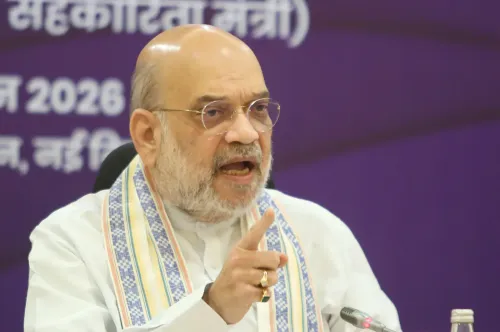
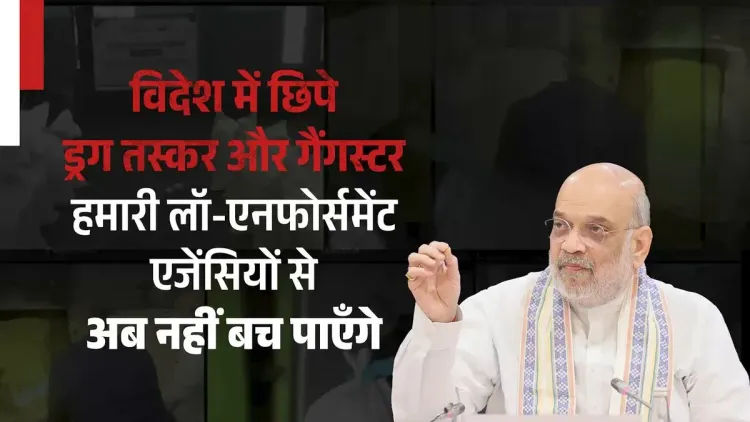
Union Home Minister Amit Shah on Friday, 26 June 2026, announced that an effective mechanism will be developed within a state to intensify action against drug traffickers and gangsters hiding abroad — through Red Corner Notices, extradition proceedings, and the CBI.
Shah posted on X: 'विदेश में छिपे ड्रग तस्करों और गैंगस्टरों के खिलाफ रेड कॉर्नर नोटिस, प्रत्यर्पण और CBI के माध्यम से कार्रवाई तेज करने के लिए राज्य में विकसित होगा एक प्रभावी तंत्र।' [Translation: 'An effective mechanism will be developed in the state to intensify action against drug traffickers and gangsters hiding abroad through Red Corner Notices, extradition, and the CBI.']
Context
The announcement signals a coordinated push by the Ministry of Home Affairs to close legal and operational gaps that allow transnational criminals to evade Indian law from foreign soil. Fugitive gangsters and narcotics networks with cross-border linkages have been a persistent challenge for state police forces, which often lack the international reach required to pursue such suspects independently. The proposed mechanism is designed to bridge that gap by bringing CBI and Interpol tools to bear at the state level.
Policy Backdrop
India has been an Interpol member since 1949 and uses Red Corner Notices — international alerts issued to locate and provisionally arrest wanted persons pending extradition — as a primary tool against fugitives abroad. The Narcotic Drugs and Psychotropic Substances (NDPS) Act, 1985 provides the foundational legal regime for drug enforcement, while India's expanding network of bilateral extradition treaties has been used with increasing frequency against economic offenders and organised crime figures since the 2000s. The Narcotics Control Bureau (NCB), established in 1986, coordinates drug law enforcement and international cooperation at the central level.
The Ministry of Home Affairs has, since the mid-2010s, held regular review meetings with CBI and state police to track fugitives and synchronise intelligence. Shah's statement extends this framework by proposing a dedicated, institutionalised mechanism at the state level — a step beyond ad hoc coordination.
Stakeholders and Impact
State police forces stand to gain direct access to CBI channels for filing extradition requests and triggering Red Corner Notices, reducing procedural delays that have historically allowed fugitives to entrench themselves in foreign jurisdictions. Drug trafficking networks and gangster syndicates operating from countries with which India has extradition arrangements would face a more systematic and faster legal pursuit. Civil society groups and victim communities in states severely affected by drug abuse are likely to view the move as a concrete administrative commitment rather than a policy statement alone.
What's Next
Attention will now turn to implementation: whether the concerned state government, in coordination with the Ministry of Home Affairs and CBI, issues formal standard operating procedures or inter-agency orders to operationalise the mechanism. Subsequent months may also see updates on specific extradition requests filed or joint operations launched under this framework. If the model proves effective, it could be replicated across other states with documented cross-border criminal linkages, shaping a new template for centre-state cooperation in fugitive tracking.
Point of View
State-embedded mechanism. The explicit mention of Red Corner Notices, extradition, and CBI in a single framework signals an intent to remove the procedural friction that has historically allowed fugitives to operate with impunity from abroad. This fits a broader pattern under the current Home Ministry of using international legal instruments more aggressively alongside domestic policing upgrades. The political salience is also clear: drug trafficking and gangsterism with foreign linkages have become defining law-and-order issues in several states, making this announcement a visible governance signal ahead of continued security-focused policy messaging.
NationPress
25 Sept 2026
Frequently Asked Questions
What is a Red Corner Notice and how does India use it against fugitives?
A Red Corner Notice is an international alert issued by Interpol to locate and provisionally arrest a wanted person pending extradition. India, an Interpol member since 1949, uses these notices against drug traffickers, gangsters, and economic offenders who flee abroad.
What role does CBI play in extraditing criminals from foreign countries?
The CBI, India's premier central investigating agency, coordinates with the Ministry of External Affairs and foreign counterparts to file and pursue extradition requests. It handles complex criminal cases and assists state police in accessing international legal channels they cannot directly approach.
What did Amit Shah announce about drug traffickers hiding abroad?
Union Home Minister Amit Shah announced on 26 June 2026 that an effective mechanism will be developed within a state to intensify action against drug traffickers and gangsters hiding abroad, using Red Corner Notices, extradition proceedings, and the CBI.
What is India's legal framework for tackling drug trafficking?
India's primary law is the Narcotic Drugs and Psychotropic Substances (NDPS) Act, 1985. The Narcotics Control Bureau, set up in 1986, coordinates enforcement and international cooperation, while bilateral extradition treaties provide the legal basis for bringing fugitives back from foreign jurisdictions.
How will the new state-level mechanism differ from existing anti-drug efforts?
The proposed mechanism aims to institutionalise coordination between state police forces and the CBI for filing extradition requests and triggering Red Corner Notices, reducing the ad hoc delays that have historically allowed fugitives to remain abroad for extended periods.