Amit Shah: Modi Era a golden age for tribal pride
Synopsis
Home Minister Amit Shah on 24 May 2026 declared the Modi Era a golden age for tribal pride, citing the election of India's first tribal President Droupadi Murmu and the appointment of tribal Chief Ministers in BJP-governed states as landmark achievements.
Key Takeaways
Amit Shah on 24 May 2026 called the Modi Era the 'golden age of tribal pride' in a post on X.
Droupadi Murmu , elected President in July 2022 , is India's first head of state from a Scheduled Tribe community.
The BJP appointed a tribal leader as Chief Minister of Chhattisgarh following its election victory in late 2023 .
The government institutionalised Janjatiya Gaurav Divas on 15 November since 2021 to mark tribal heritage nationally.
States such as Jharkhand , Odisha , Madhya Pradesh , and Chhattisgarh remain central to the BJP's tribal outreach strategy.
The statement aligns with the BJP's sustained messaging to 10.45 crore tribal citizens ahead of future state assembly elections.
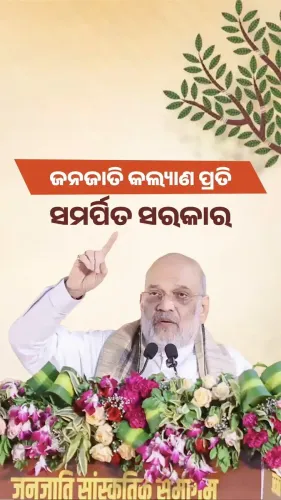
Union Home Minister Amit Shah on Sunday, 24 May 2026 hailed the Modi government as a transformative period for India's tribal communities, pointing to the elevation of tribal leaders to the country's highest constitutional offices as evidence of unprecedented political inclusion.
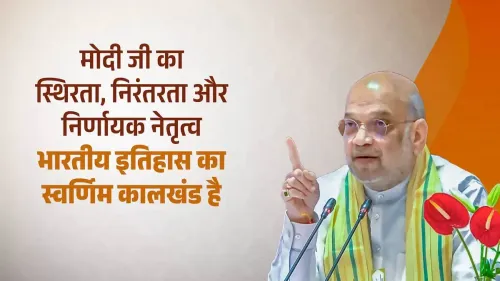
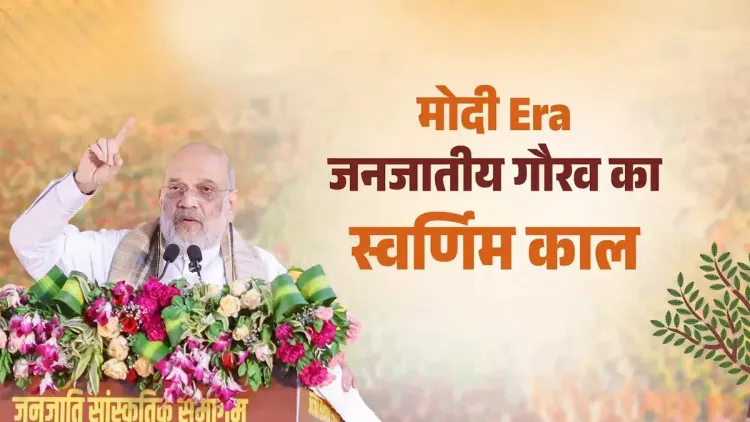
Posting on X, Shah wrote: 'पहली आदिवासी राष्ट्रपति से लेकर राज्यों में आदिवासी मुख्यमंत्री तक, मोदी Era जनजातीय गौरव का स्वर्णिम काल है' — translated: 'From the first tribal President to tribal Chief Ministers in the states, the Modi Era is the golden age of tribal pride.'
Context
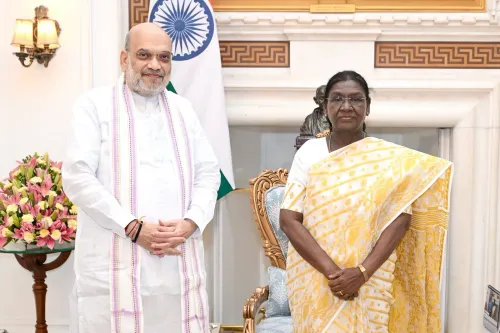
The most prominent milestone Shah references is the election of Droupadi Murmu as India's 15th President in July 2022 — the first person from a Scheduled Tribe community to hold the office. Murmu, from the Santhal community of Odisha, was the NDA's presidential candidate and won with a decisive majority in the Electoral College. Her election was widely described by the ruling alliance as a historic moment for the country's 10.45 crore tribal citizens.
Shah's reference to tribal Chief Ministers points to appointments made by the BJP in states with significant Adivasi populations. In Chhattisgarh, following the party's return to power in late 2023, a tribal leader was installed as Chief Minister — a move the party framed as recognition of the state's substantial Scheduled Tribe electorate.
Policy Backdrop
The BJP government's outreach to tribal communities since 2014 has included the expansion of welfare provisions under the Scheduled Tribes constitutional framework, dedicated budgetary allocations for tribal development, and the creation of a separate Ministry of Tribal Affairs with an expanded mandate. The government has also observed 15 November — the birth anniversary of freedom fighter Birsa Munda — as Janjatiya Gaurav Divas (Tribal Pride Day) since 2021, institutionalising the celebration of tribal heritage at the national level.
Constitutional recognition of Scheduled Tribe communities and the expansion of reservation provisions have been consistent policy planks. States such as Jharkhand, Odisha, Madhya Pradesh, and Chhattisgarh — home to large tribal populations — have been central to the BJP's electoral and governance strategy in this period.
Stakeholders and Impact
Adivasi communities across central and eastern India represent a significant and politically mobilisable constituency. Tribal voters have historically been courted by multiple parties, and high-profile appointments at the presidential and chief ministerial level carry both symbolic and electoral weight. Civil society organisations working on tribal land rights, forest rights, and livelihood issues will watch whether the political narrative of inclusion is matched by administrative outcomes on the ground.
For the BJP, Shah's statement reinforces a core messaging pillar ahead of state assembly cycles in tribal-belt states. The framing of the Modi Era as a 'golden age' positions the party as the principal vehicle for tribal political advancement — a claim opposition parties in these states are likely to contest.
What's Next
Upcoming state assembly elections in constituencies with dense tribal populations will test whether the BJP's narrative of representation translates into electoral consolidation. Activists and policy watchers will also monitor new notifications under tribal development schemes and any further appointments of tribal leaders to prominent positions as the party seeks to deepen this outreach.
Point of View
Long considered a contested space between regional parties and the Congress, is now a front on which the BJP is confident enough to play offence. Whether governance outcomes in areas of tribal land rights and forest entitlements keep pace with the political symbolism will determine how durable this narrative proves.
NationPress
9 Oct 2026
Frequently Asked Questions
Who is India's first tribal President?
Droupadi Murmu , from the Santhal community of Odisha , became India's first tribal President when she was elected in July 2022 as the NDA 's candidate.
What did Amit Shah say about tribal communities in the Modi Era?
Amit Shah on 24 May 2026 posted on X that the Modi Era is the 'golden age of tribal pride,' pointing to the first tribal President and tribal Chief Ministers in BJP-governed states as proof of historic inclusion.
Which state got a tribal Chief Minister under BJP?
Chhattisgarh received a tribal Chief Minister after the BJP won the state assembly election in late 2023 , as part of the party's outreach to the state's significant Scheduled Tribe population.
What is Janjatiya Gaurav Divas?
Janjatiya Gaurav Divas (Tribal Pride Day) is observed on 15 November — the birth anniversary of freedom fighter Birsa Munda — and was institutionalised by the Modi government from 2021 to celebrate tribal heritage nationally.
How many tribal citizens are there in India?
India has approximately 10.45 crore citizens classified as Scheduled Tribes , making them a significant demographic and electoral constituency, particularly in states like Chhattisgarh , Jharkhand , Odisha , and Madhya Pradesh .