Amit Shah on women's 33% quota: Opposition cannot block us
Synopsis
Amit Shah used Constitution Day to say the Opposition cannot block women's 33% quota. The law has existed since 2023, but it is still tied to delimitation. An enabling amendment failed in April 2026, and the next attempt comes when Parliament reconvenes on 30 November.
Key Takeaways
Home Minister Amit Shah said on 26 November 2026 that women will definitely get 33% reservation in Parliament and state Assemblies.
Shah accused the Congress and other Opposition parties of blocking the required constitutional amendments, and challenged Rahul Gandhi directly.
The quota comes from the Nari Shakti Vandan Adhiniyam , the 106th Constitutional Amendment Act, 2023 .
The Centre has linked rollout to a fresh delimitation exercise and seat expansion.
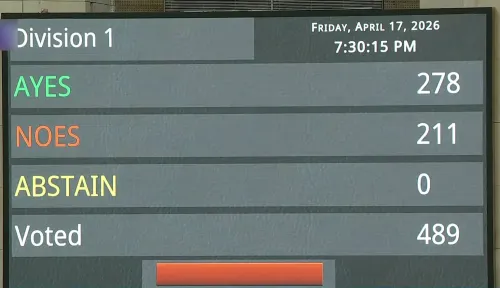
An enabling bill failed to get a two-thirds majority in April 2026 .
The Opposition wants the quota implemented immediately and alleges the delimitation link is meant to favour the ruling party.
Parliament reconvenes on 30 November 2026 , and the government plans to push the pending bills again.
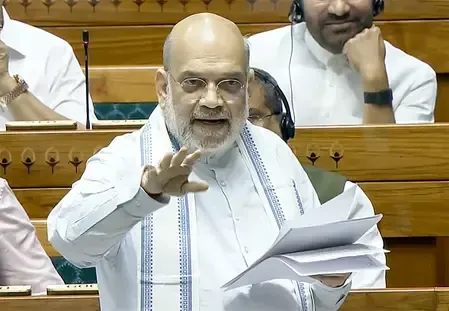
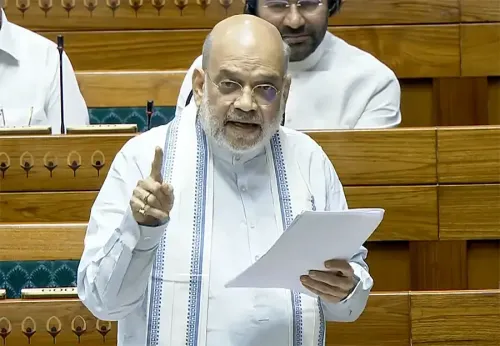
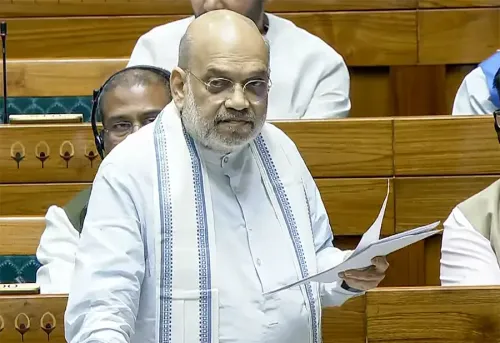
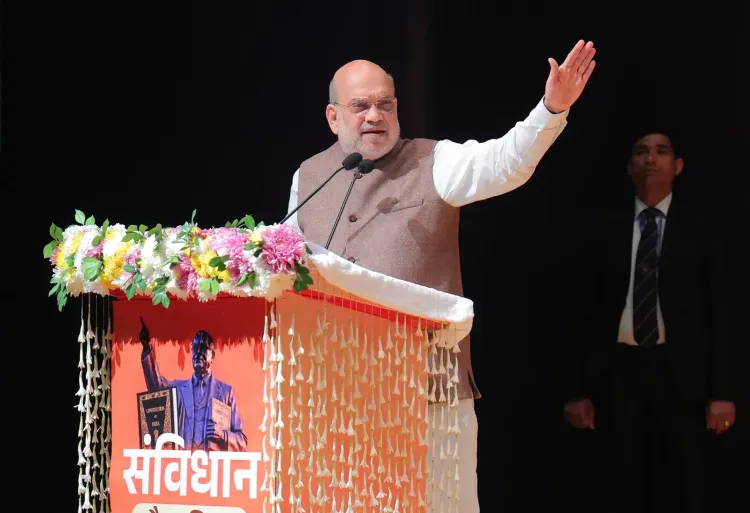
Union Home Minister Amit Shah on Thursday, 26 November 2026, said women in India will definitely get 33 per cent reservation in Parliament and State Legislative Assemblies. Speaking at a Constitution Day event in New Delhi, he accused the Indian National Congress and other Opposition parties of obstructing the constitutional amendments needed to put the quota into effect.
His remarks come four days before Parliament reconvenes on 30 November 2026, when the government is expected to make a fresh push for the pending bills linked to the quota's rollout.
Shah's Challenge to the Opposition
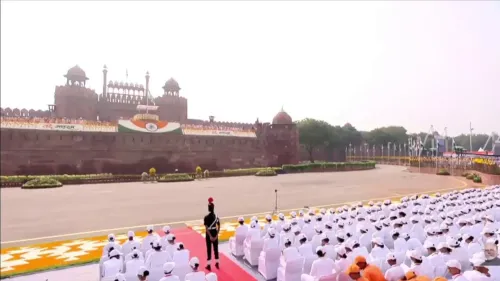
Shah was addressing a Samvidhan Gaurav Diwas gathering held to mark Constitution Day. He said the Bharatiya Janata Party (BJP), under Prime Minister Narendra Modi, remains firmly committed to implementing the measure despite political resistance.
The Home Minister also directly challenged Congress leader Rahul Gandhi over the legislative deadlock. He said it is the firm resolve of the BJP and Modi to ensure that Indian women receive their rightful one-third share of seats. He added that the Opposition would not succeed in blocking the government's path.
The Law at the Centre of the Dispute
The dispute concerns the Nari Shakti Vandan Adhiniyam, enacted as the 106th Constitutional Amendment Act, 2023. It was originally introduced as the 128th Amendment Bill.
The law reserves one-third of all seats for women in the Lok Sabha, State Legislative Assemblies and the Delhi Legislative Assembly. However, the Centre has tied its actual rollout to a fresh delimitation exercise and an expansion of seats. That condition has kept the quota on paper more than three years after the law was passed.
The government's earlier attempt to pass an enabling constitutional amendment bill stalled in April 2026. The measure failed to secure the mandatory two-thirds majority in Parliament.
What the Opposition Argues
The Congress-led Opposition rejects the government's approach. It argues that the 33 per cent reservation can and should be implemented immediately, without waiting for delimitation.
Opposition leaders have also alleged that linking the women's quota to redrawn constituencies is a political strategy. In their view, it is designed to reshape electoral boundaries in the ruling party's favour. Both sides therefore say they support the quota, but they disagree sharply on how and when it should take effect.
Why the Timing Matters
Notably, Shah chose Constitution Day to make his remarks. The day marks the adoption of India's Constitution, which makes it a pointed backdrop for a debate over constitutional amendments.
The coming session will be a key test. Constitutional amendments need a two-thirds majority of members present and voting in both Houses. After the April setback, the government needs either Opposition support or enough floor numbers to get the pending bills through.
The issue directly affects women's political representation across the Lok Sabha and state legislatures. It also reaches into the politically sensitive question of how constituencies will be redrawn.
What Comes Next
With Parliament set to reconvene on 30 November 2026, the government is preparing to bring the quota-related bills back to the floor. The session will show whether the two sides can resolve the deadlock. If they cannot, the promised reservation for women will stay out of reach for some time yet.
Point of View
But they are really fighting over delimitation, not reservation. The government links the two, while the Opposition calls that link a gerrymander in waiting. Either way, women's representation has become a bargaining chip in a much larger fight over the electoral map. Three years after a law Parliament called historic, not one reserved seat exists. The April defeat shows the government cannot pass this alone, so the real test of commitment is whether either side will separate the quota from the boundary question.
NationPress
27 Nov 2026
Frequently Asked Questions
What did Amit Shah say about women's reservation on Constitution Day 2026?
Amit Shah said women in India will definitely receive 33% reservation in Parliament and State Legislative Assemblies. He accused the Congress and other Opposition parties of obstructing the constitutional amendments needed to implement it.
What is the Nari Shakti Vandan Adhiniyam?
It is the 106th Constitutional Amendment Act, 2023, which reserves one-third of seats for women in the Lok Sabha, State Legislative Assemblies and the Delhi Legislative Assembly. It was originally introduced as the 128th Amendment Bill.
Why has the 33% women's quota not been implemented yet?
The Centre has linked its rollout to a fresh delimitation exercise and an expansion of seats. An earlier enabling constitutional amendment bill failed to get the required two-thirds majority in Parliament in April 2026.
Why is the Opposition against linking the quota to delimitation?
The Congress-led Opposition argues the 33% reservation can be implemented immediately, without waiting for delimitation. Its leaders allege that tying the quota to redrawn constituencies is a strategy to reshape electoral boundaries in the ruling party's favour.
When will Parliament take up the women's quota bills again?
Parliament is scheduled to reconvene on 30 November 2026. The government is preparing to push again for passage of the pending bills tied to the quota's rollout.