Amit Shah orders border awareness camps to fight drugs, arms on India-Bangladesh frontier

Synopsis
Amit Shah's Agartala review wasn't a routine border briefing — it was a structural reset. By pulling Patwaris, Sarpanches, GST officers, and CBDT into a unified border grid alongside the BSF, Shah is signalling that India's response to cross-border drug and arms flows in Tripura will be fought as much through local intelligence and financial surveillance as through fencing.
Key Takeaways
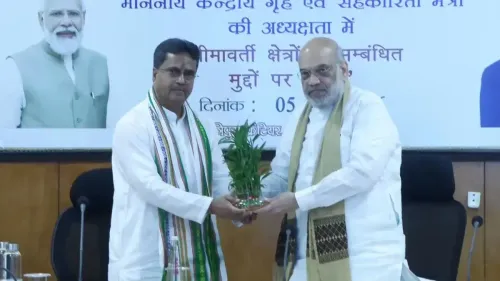
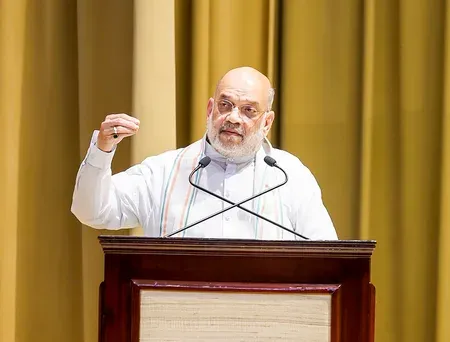
Union Home Minister Amit Shah chaired a border security meeting at BSF Tripura Frontier HQ, Shalbagan , near Agartala on Friday, 6 June 2025 .
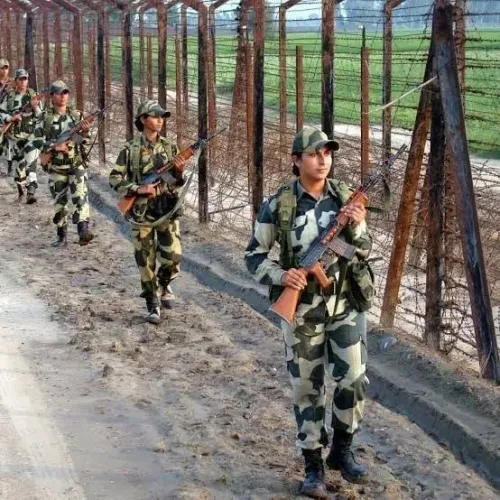
He directed awareness and training camps for communities along the India-Bangladesh border to counter narcotics trafficking and illegal arms movement .
The Ministry of Home Affairs' CCTV model is to be implemented in Tripura first , with all BSF cameras linked to district administration.
CBDT has been directed to survey fake currency circulation; land records of the last five years in border areas are to be reviewed.
The meeting was attended by Tripura CM Manik Saha , senior state officials, and district heads from all eight border districts .
Shah called for a 'ruthless approach' against the entire drug trafficking chain , including financiers and facilitators.
Union Home Minister Amit Shah has directed authorities to organise awareness and training camps for communities living along the India-Bangladesh border, targeting the escalating threats of narcotics trafficking and illegal arms movement, officials confirmed on Saturday, 7 June 2025. The directive emerged from a high-level border security review held at the BSF Tripura Frontier headquarters, Shalbagan, near Agartala.
Key Directives from the Agartala Meeting
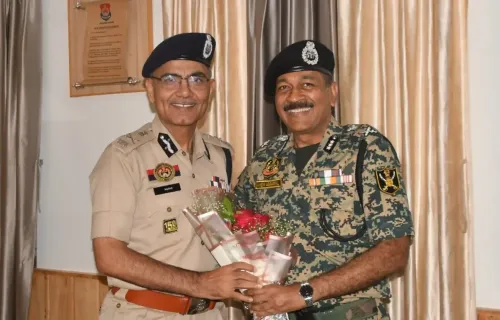
Shah chaired the meeting on Friday at the BSF Tripura Frontier headquarter, Shalbagan, which was attended by Tripura Chief Minister Manik Saha, State Chief Secretary J.K. Sinha, State Director General of Police Anurag, District Magistrates, and Superintendents of Police from all eight border districts of the state. The Home Minister underscored that border security is not an isolated duty but a collective territorial responsibility.
He instructed that the training camps must ensure the presence of Patwaris (grassroots-level government revenue officials), local police, and Border Security Force (BSF) personnel. The emphasis was on building a multi-tier security grid that integrates local administration with modern surveillance infrastructure.
CCTV Upgrade and Smart Surveillance Push
Shah directed that the Ministry of Home Affairs' CCTV model be implemented in Tripura as a priority, with every BSF camera upgraded and connected to the district administration network. The move signals a shift from purely physical fencing toward a smart border grid combining technology, grassroots governance, and security forces.
Notably, this is part of a broader national push to modernise India's border management architecture — a priority that has gained urgency given the volume of cross-border smuggling reported along the Tripura-Bangladesh frontier in recent years.
Financial Vigilance and Anti-Trafficking Measures
Beyond physical security, Shah called for sharp scrutiny of financial transactions in border districts, including monitoring of large property sales, construction activity, and suspicious money flows. He directed that Collectors and GST officials be trained for this purpose, and instructed the Central Board of Direct Taxes (CBDT) to conduct a survey on fake currency circulation in the region.
He also ordered a review of land records from the last five years in border areas, and called for a 'ruthless approach' against the entire chain of contributors to drug trafficking — not just couriers, but facilitators and financiers. Ensuring financial discipline in border districts, he said, is equally a state government responsibility.
The Broader Security Framework
The meeting underscored the Centre's intent to develop a foolproof security grid spanning District Magistrates, Superintendents of Police, Patwaris, Sarpanches, modern technologies, and the BSF. Shah stressed that the approach must go beyond fencing — encompassing total territorial defence through close coordination between central and state agencies.
This comes amid growing concerns over the India-Bangladesh border being exploited for narcotics and arms smuggling, with Tripura's porous frontier frequently cited in BSF operational reports. The Centre's focus on community-level participation reflects a recognition that surveillance alone cannot substitute for local intelligence and cooperation.
With guidelines expected to be operationalised through state machinery, the effectiveness of the camp model will depend on sustained coordination between the BSF, district administration, and village-level governance structures in the weeks ahead.
Point of View
Sarpanches, GST officers, and CBDT are now formally part of the border security architecture. That is an acknowledgement — rarely stated this explicitly — that cross-border crime in Tripura is as much a governance and financial problem as a physical one. The land-records review and fake-currency survey suggest intelligence pointing to money laundering and property-based hawala networks, not just courier-level smuggling. Whether state machinery, historically under-resourced in Tripura's border districts, can operationalise this multi-agency grid is the real question. Directives from high-level meetings have a poor conversion rate without dedicated follow-up mechanisms and accountability timelines.
NationPress
23 Sept 2026
Frequently Asked Questions
What did Amit Shah direct at the Tripura border security meeting?
Home Minister Amit Shah directed authorities to organise awareness and training camps for residents along the India-Bangladesh border in Tripura to counter narcotics trafficking and illegal arms movement. He also ordered a CCTV upgrade, financial surveillance measures, and a review of land records from the last five years in border areas.
Where was the border security meeting held and who attended?
The meeting was held on Friday, 6 June 2025, at the BSF Tripura Frontier headquarters in Shalbagan, near Agartala. It was attended by Tripura Chief Minister Manik Saha, Chief Secretary J.K. Sinha, DGP Anurag, and District Magistrates and Superintendents of Police from all eight border districts of Tripura.
What is the CCTV model Shah directed for Tripura?
Shah directed that the Ministry of Home Affairs' CCTV model be implemented in Tripura on a priority basis, with every BSF camera upgraded and integrated with the district administration network. The move is aimed at creating a technology-driven smart border grid alongside physical security measures.
Why has financial surveillance been included in Tripura's border security plan?
Shah called for monitoring of financial transactions, large property deals, and construction activity in border districts, and directed the CBDT to survey fake currency circulation. This reflects concerns that drug and arms trafficking networks are also supported by money laundering and financial irregularities in the border belt.
Who are the Patwaris and why are they being included in border security camps?
Patwaris are grassroots-level government revenue officials responsible for maintaining land and revenue records at the village level. Shah directed their inclusion in the border awareness camps because their local knowledge and access to land records make them key to detecting suspicious property transactions and identifying infiltration patterns along the frontier.