Amit Shah flags temple corridor push in Assam, Maharashtra under 'Vikas Bhi, Virasat Bhi'
Synopsis
Home Minister Amit Shah used a Kolhapur event to spotlight two major temple corridor projects — a ₹498 crore upgrade at Guwahati's Kamakhya Shakti Peeth and a ₹1,500 crore redevelopment at Kolhapur's Ambabai Mahalaxmi Temple — framing religious infrastructure as core to India's development identity. The scale, the AI-era amenities planned, and the two-state optics make this more than a heritage announcement.
Key Takeaways
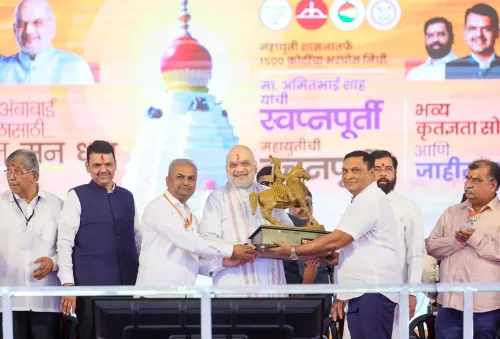
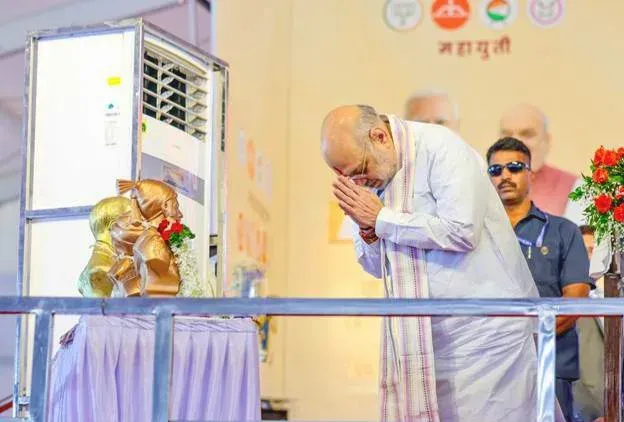
Home Minister Amit Shah addressed a public event in Kolhapur on Saturday, 20 June , highlighting temple corridor projects in Assam and Maharashtra.
The Maa Kamakhya Divyalok Pariyojana in Guwahati is a ₹498 crore project; open spaces will expand from 3,000 sq ft to nearly 1,00,000 sq ft , accommodating up to 10,000 pilgrims .
The project was stalled for two years due to legal issues; revised plans were cleared after studies by IIT Guwahati and NIH Roorkee .
The Ambabai Mahalaxmi Temple Corridor in Kolhapur will cost ₹1,500 crore and span over 28,000 square metres , with AI-based security and heritage infrastructure.
Nearly 41 temples in the Kolhapur complex vicinity will be preserved in consultation with the Archaeological Department .
Shah placed both projects within the Modi government's 'Vikas Bhi, Virasat Bhi' framework, alongside Kashi Vishwanath, Kedarnath, Badrinath, and Somnath.
Union Home Minister Amit Shah on Saturday highlighted the Centre's ongoing temple corridor projects at the Maa Kamakhya Temple Complex in Guwahati, Assam, and the Ambabai Mahalaxmi Temple in Kolhapur, Maharashtra, framing them as part of Prime Minister Narendra Modi's 'Vikas Bhi, Virasat Bhi' (Development as well as Heritage) philosophy. Shah made the remarks while addressing a public event in Kolhapur, situating both projects within a broader national push to modernise India's sacred sites without compromising their cultural integrity.
Kamakhya Temple Corridor: Key Details
The Maa Kamakhya Divyalok Pariyojana — commonly referred to as the Kamakhya Temple Corridor — is a ₹498 crore infrastructure upgrade project on the Nilachal Hills in Guwahati. The project had remained stalled for two years owing to legal challenges before construction finally commenced.
The upgrade will expand open spaces at the Shakti Peeth from the current 3,000 square feet to nearly 1,00,000 square feet across three levels, raising pilgrim holding capacity to 10,000 at a time. Existing narrow access paths — currently 8–10 feet wide — will be broadened to 27–30 feet. Additionally, six minor temples embedded in the hillside will be restored to their original form.
Notably, the project's original blueprint was revised following geophysical and hydrological impact assessments conducted jointly by IIT Guwahati and the National Institute of Hydrology (NIH), Roorkee. All major construction is confined to the downhill zone; no work will be carried out inside the main sanctum or the upper hill area.
Ambabai Mahalaxmi Temple Corridor: Scale and Scope
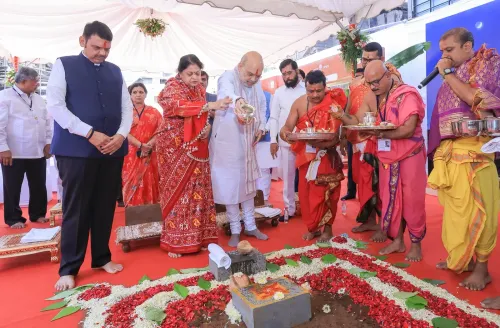
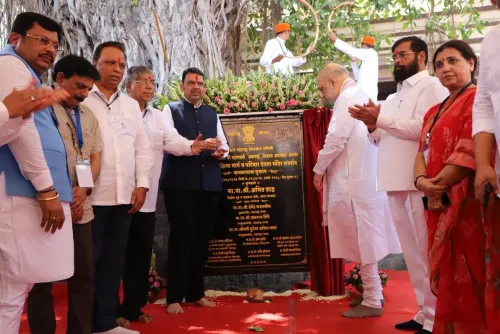
The Maharashtra government has initiated construction of the Ambabai Mahalaxmi Temple Corridor in the Karveer region of Kolhapur at a total outlay of ₹1,500 crore. The development will span more than 28,000 square metres of land.
The temple, reportedly established in the 7th century, is surrounded by nearly 41 smaller and larger shrines, whose preservation is being coordinated in consultation with the Archaeological Department, according to Shah. The redeveloped complex will feature AI-based security cameras, LED decorations, an outdoor gallery, heritage walkways, light and sound shows, a multipurpose hall, Annachhatra, a police station, and a heritage courtyard, alongside full pilgrim amenities.
'The temple complex will be equipped with modern facilities, including AI-based security cameras, LED decorations, an outdoor gallery, heritage walkways, light and sound shows, a multipurpose hall, Annachhatra, police station, and a heritage courtyard, along with complete pilgrim amenities,' Shah said.
He added that within six months of project completion, the Kolhapur site will be transformed into a 'fully developed spiritual destination.'
Broader Heritage Corridor Narrative
Shah also referenced other completed or ongoing heritage projects under the Modi government, including the Kashi Vishwanath Corridor, the reconstruction of Kedarnath Dham and Badrinath Dham, and the ongoing gold adornment of the Somnath Temple. The Kolhapur event appeared designed to reinforce a consistent government message: that religious and cultural infrastructure is as central to 'development' as roads or factories.
'The sum of ₹1,500 crore is not large because the development and glorification of such sacred places — where our history, faith, and culture reside — is a source of inspiration for all Indians,' Shah said.
Cultural and Political Significance
Shah argued that the Ambabai Mahalaxmi corridor would 'rekindle devotion among lakhs of devotees' while also preserving and promoting Kolhapur and Maharashtra's cultural heritage, 'especially inspiring the younger generation.' The remarks come as the ruling Bharatiya Janata Party (BJP) and its allies continue to position temple development as a governance priority ahead of upcoming electoral cycles. With the Kolhapur project in Maharashtra and the Guwahati project in Assam, the outreach spans two politically significant states. How quickly both corridors are delivered will be watched as closely as the announcements themselves.
Point of View
Virasat Bhi' framing is deliberate political architecture — it equates temple renovation with infrastructure delivery, making religious sentiment and development optics mutually reinforcing. What is less examined is execution: the Kamakhya corridor was stalled for two years before it moved, and the Ambabai project's six-month transformation promise is ambitious for a ₹1,500 crore construction in a heritage-sensitive zone. The BJP's two-state optics here — Assam and Maharashtra — are not incidental; both are electorally consequential. The real measure of 'Virasat' governance will be whether these corridors open on schedule and whether the 41 smaller temples in Kolhapur survive the redevelopment intact.
NationPress
19 Sept 2026
Frequently Asked Questions
What is the Maa Kamakhya Divyalok Pariyojana?
The Maa Kamakhya Divyalok Pariyojana is a ₹498 crore infrastructure upgrade project at the Kamakhya Temple on Nilachal Hills in Guwahati, Assam. It will expand open spaces from 3,000 sq ft to nearly 1,00,000 sq ft, widen access paths, and restore six minor hill temples, with a pilgrim holding capacity of up to 10,000.
Why was the Kamakhya Temple Corridor stalled?
The project was held up for two years due to legal challenges before construction could begin. The original plan was also revised following geophysical and hydrological impact studies by IIT Guwahati and the National Institute of Hydrology, Roorkee.
What is the Ambabai Mahalaxmi Temple Corridor in Kolhapur?
It is a ₹1,500 crore redevelopment project initiated by the Maharashtra government for the 7th-century Ambabai Mahalaxmi Temple in the Karveer region of Kolhapur. The project spans over 28,000 square metres and includes AI-based security cameras, heritage walkways, light and sound shows, and full pilgrim amenities.
How many temples will be preserved under the Kolhapur corridor project?
Nearly 41 smaller and larger temples in the vicinity of the Ambabai Mahalaxmi Temple will be preserved, in consultation with the Archaeological Department, according to Home Minister Amit Shah.
What is the 'Vikas Bhi, Virasat Bhi' concept Amit Shah referred to?
'Vikas Bhi, Virasat Bhi' — meaning 'Development as well as Heritage' — is a framework the Modi government uses to describe its policy of combining modern infrastructure development with the preservation and enhancement of India's cultural and religious heritage sites.