Why Have Shallot Prices Plummeted to Rs 10/kg in Perambalur?
Synopsis
In a troubling turn of events for farmers in Perambalur, shallot prices have dropped to an alarming Rs 10 per kg due to a surplus harvest. This has triggered calls for immediate government intervention to mitigate farmer distress and ensure fair pricing. Can the local administration step up to support these struggling growers?
Key Takeaways
Shallot prices have dropped to Rs 10/kg in Perambalur.
A surplus harvest has led to a market glut.
Farmers are demanding government intervention.
The GI tag for Chettikulam small onion has not resulted in better pricing.
Current yields are significantly higher than last year.
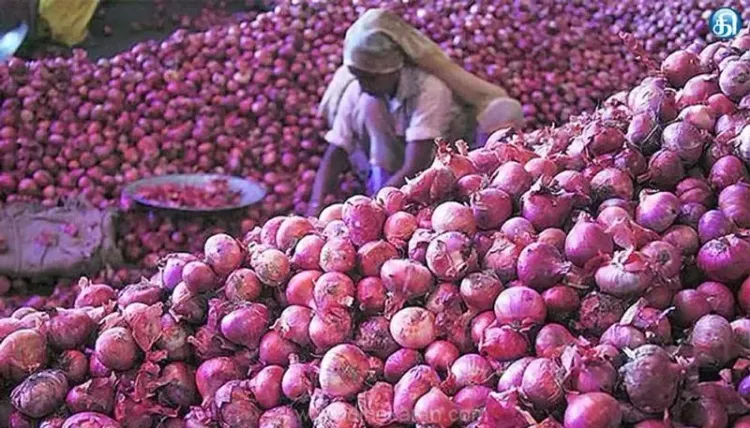
Chennai, Feb 2 (NationPress) A significant surplus in this season's harvest has led to a dramatic decrease in shallot prices in the district of Perambalur, leaving many farmers in distress as purchase rates have plummeted to as low as Rs 10 per kg, a stark contrast to the Rs 30-40 range seen during the same time last year.
Farmers report that the imbalance between supply and demand has forced them to sell their crops at “throwaway” prices or to store them, hoping for a rebound in prices.
The local agricultural community has called for immediate action from the district administration, asking for support in direct procurement and market assistance. Many are hopeful that the Chettikulam small onion, which received a Geographical Indication (GI) tag last year, would provide better pricing and institutional support, which has so far not materialized.
Shallot farming in Perambalur generally occurs in three cycles each year. In the current cycle, which began in September of last year, farmers cultivated the crop over nearly 5,000 hectares. Now at the peak of harvest, growers are reporting yields of approximately 100 sacks per acre, each weighing about 50 kg. This is a notable increase from last year’s average yield of about 60 sacks per acre across 4,500 hectares.
Though higher yields would typically be viewed positively, farmers argue that it has resulted in a market surplus.
Consequently, traders are offering procurement prices ranging between Rs 10 and Rs 28 per kg, varying by quality. In contrast, last year, farmers recall receiving Rs 30 to Rs 40 per kg for the same crop.
“Prices fluctuate each season, yet there is no effective marketing system to safeguard our interests,” lamented R. Karthik, a farmer from Karaiyur. “For years, we have struggled to recover our production costs. This year, my crop yield was good, but the price offered is devastatingly low. Traders purchase from us at low rates and resell the same shallots in the market for Rs 50 to Rs 60 per kg. We had hoped the GI tag would enhance our livelihoods, but those hopes have been dashed.”
Another farmer, M. Senthil from Siruvachur, noted that his cultivation costs ranged between Rs 60,000 and Rs 70,000 per acre. “At the current prices, selling now would result in losses. I won’t even recover my input expenses. I’m compelled to store the shallots for up to three months, anticipating an uptick in prices. Without prompt intervention, many may abandon shallot farming entirely,” he stated.
Farmers have expressed demands for direct government procurement, the elimination of middlemen, inclusion of traders from other districts, and the creation of storage and processing facilities.
In response to these issues, District Collector N. Mirunalini announced that a meeting will be organized with officials from the agriculture and marketing sectors to discuss measures for ensuring improved prices for shallot farmers.
Point of View
The plight of farmers in Perambalur highlights the urgent need for systemic reforms in agricultural marketing. The current situation underscores the volatility of crop prices and the necessity for government action to stabilize the market, reflecting a broader issue that resonates throughout the nation.
NationPress
23 Oct 2026
Frequently Asked Questions
What caused the drop in shallot prices in Perambalur?
The drop in shallot prices is primarily due to a surplus harvest this season, which has created an imbalance between supply and demand.
What are farmers in Perambalur asking for?
Farmers are urging the district administration to intervene with direct procurement, removal of middlemen, and establishment of better marketing systems.
How much did farmers earn for shallots last year?
Last year, farmers earned between Rs 30 to Rs 40 per kg for their shallots, significantly higher than the current prices.
What is the geographical indication tag and its significance?
The geographical indication (GI) tag indicates that the Chettikulam small onion is unique to the region, aiming to enhance marketability and pricing for farmers.
What is the expected yield for shallots in Perambalur?
Farmers are reporting yields of around 100 sacks per acre this season, which is an increase from the previous year's average.