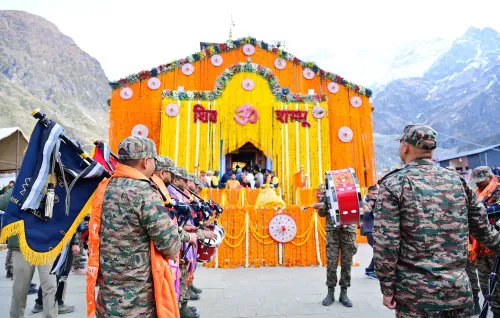
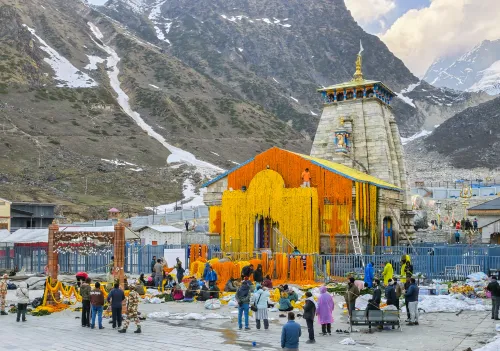
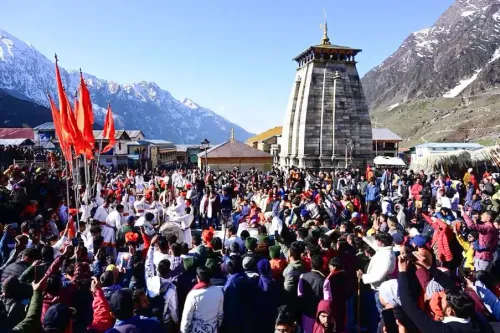
Char Dham Yatra: How Adi Shankaracharya Revived Badrinath & Kedarnath
Synopsis
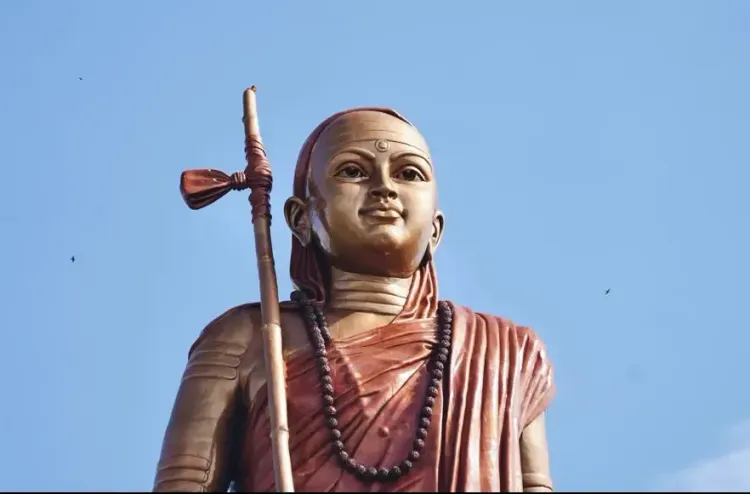
Over 1,200 years ago, Adi Shankaracharya didn't just rebuild temples — he engineered a spiritual network that united an entire civilisation. His revival of Badrinath and Kedarnath, and the establishment of four mathas across India's cardinal directions, laid the blueprint for the Char Dham Yatra that millions undertake today.
Key Takeaways
Adi Shankaracharya , the 8th-century philosopher, is credited with founding the Char Dham Yatra framework by designating four sacred pilgrimage sites across India's cardinal directions.
He established four mathas — Jyotirmath , Govardhana Math , Sharada Math , and Sringeri Math — which continue to function as active religious institutions today.
Shankaracharya reportedly discovered the idol of Lord Badrinath in Narad Kund and consecrated it, also introducing Nambudiri Brahmin priests from Kerala — a tradition maintained to this day.
He is believed to have rebuilt the Kedarnath temple and attained samadhi near the shrine at the age of 32 .
The Char Dham Yatra today covers Yamunotri , Gangotri , Kedarnath , and Badrinath , attracting hundreds of thousands of pilgrims annually seeking moksha.
Adi Shankaracharya, the 8th-century Indian philosopher and theologian, is widely credited with laying the spiritual and institutional foundation of the Char Dham Yatra — reviving sacred shrines like Badrinath and Kedarnath and unifying Hindu pilgrimage traditions across the Indian subcontinent. His legacy, rooted in both philosophical reform and physical restoration, continues to shape one of Hinduism's most revered pilgrimages to this day.
Shankaracharya's Vision: A Unified Spiritual Framework
The origins of the Char Dham Yatra are inseparable from Shankaracharya's sweeping vision of a spiritually cohesive India. He designated four major pilgrimage centres aligned with the four cardinal directions: Badrinath in the north, Puri in the east, Dwarka in the west, and Sringeri in the south. This geographic symmetry was deliberate — it encouraged devotees from every corner of the subcontinent to undertake a shared sacred journey, transcending regional and linguistic divides. Notably, this vision predates modern notions of national integration by over a millennium.
To institutionalise this framework, Shankaracharya established four mathas (monastic centres) to oversee each pilgrimage site: Jyotirmath near Badrinath, Govardhana Math in Puri, Sharada Math in Dwarka, and Sringeri Math in the south. These institutions remain active today, preserving ancient religious practices and philosophical teachings that date back over 1,200 years.
Revival of Badrinath: Discovery and Consecration
Among Shankaracharya's most celebrated contributions is the revival of the Badrinath shrine in Uttarakhand. According to traditional accounts, he discovered the idol of Lord Badrinath submerged in the Narad Kund — a sacred hot spring near the temple — and consecrated it in a newly established temple structure. He is also credited with systematising the temple's rituals and reportedly brought Nambudiri Brahmins from Kerala to serve as the shrine's principal priests, a custom that continues uninterrupted to this day. This cross-regional priestly tradition itself stands as a testament to his integrative spiritual philosophy.
Kedarnath: Restoration and the Attainment of Samadhi
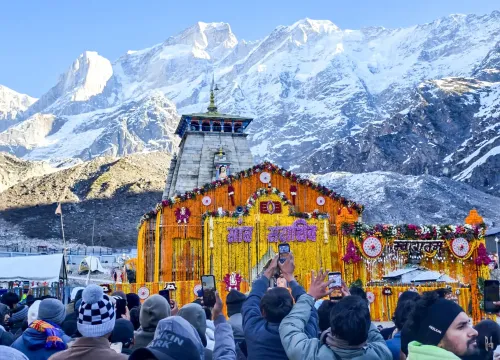
At Kedarnath, Shankaracharya is said to have rebuilt the ancient temple, restoring it as a pre-eminent centre of Shaivite worship in the Himalayas. The site carries an additional layer of spiritual gravity: it is widely believed that Shankaracharya attained samadhi — a state of meditative liberation — near the Kedarnath shrine at the age of 32, making the location one of extraordinary religious significance for millions of Hindus. This belief has elevated Kedarnath beyond a mere pilgrimage stop to a site of philosophical culmination.
This comes amid renewed national interest in the Char Dham Yatra, with the 2024 yatra season drawing record footfall and the Kedarnath corridor witnessing significant infrastructure development under the central government's pilgrimage modernisation drive.
Philosophical Legacy: Hymns, Texts, and Spiritual Significance
Shankaracharya's contributions were not limited to physical restoration. Through extensive travels across India, he composed numerous hymns, stotras, and philosophical treatises that reinforced the spiritual importance of these sacred sites. His Advaita Vedanta philosophy — which posits the non-duality of the individual soul and the universal consciousness — provided an intellectual backbone to the devotional practices associated with the Char Dham. His writings remain foundational texts in Hindu theological discourse.
The Char Dham Yatra Today: Devotion, Scale, and Significance
Today, the Char Dham Yatra — encompassing Yamunotri, Gangotri, Kedarnath, and Badrinath — attracts hundreds of thousands of pilgrims annually, seeking blessings, spiritual purification, and moksha (liberation). The traditional sequence begins at Yamunotri, proceeds to Gangotri, then Kedarnath, and concludes at Badrinath, each shrine set against the majestic backdrop of the Himalayan ranges. The yatra's enduring relevance, more than twelve centuries after Shankaracharya first envisioned it, underscores the profound and lasting impact of one philosopher's determination to unite a civilisation through faith. As pilgrimage infrastructure continues to expand, the spiritual ethos he established remains the yatra's most durable foundation.
Point of View
One philosopher engineered a pan-India pilgrimage network that functioned as both a spiritual and cultural unifier. What mainstream coverage often misses is the institutional genius behind the mathas: they were not just monasteries but governance structures for sacred sites, ensuring continuity across centuries. As modern India pours billions into pilgrimage infrastructure, it would do well to remember that the most enduring foundation Shankaracharya built was not of stone, but of philosophy.
NationPress
3 Oct 2026
Frequently Asked Questions
What is Adi Shankaracharya's connection to the Char Dham Yatra?
Adi Shankaracharya founded the Char Dham Yatra framework in the 8th century by designating four sacred pilgrimage sites — Badrinath, Puri, Dwarka, and Sringeri — at India's four cardinal directions to spiritually unify the subcontinent. He also established four mathas to institutionally oversee these sites.
How did Shankaracharya revive the Badrinath temple?
According to traditional accounts, Shankaracharya discovered the idol of Lord Badrinath submerged in Narad Kund and consecrated it in a newly built temple. He also introduced Nambudiri Brahmin priests from Kerala to serve at the shrine, a custom that continues today.
What is Shankaracharya's significance at Kedarnath?
Shankaracharya is credited with rebuilding the Kedarnath temple and restoring it as a major centre of Shaivite worship. He is also believed to have attained samadhi near the Kedarnath shrine at the age of 32, making the site spiritually significant beyond its role as a pilgrimage destination.
What are the four mathas established by Shankaracharya?
Shankaracharya established Jyotirmath near Badrinath, Govardhana Math in Puri, Sharada Math in Dwarka, and Sringeri Math in the south. These monastic institutions remain active today, preserving religious practices and philosophical teachings over 1,200 years old.
What is the traditional sequence of the Char Dham Yatra?
The traditional sequence of the Char Dham Yatra begins at Yamunotri, followed by Gangotri, then Kedarnath, and concludes at Badrinath. All four shrines are set in the Himalayan ranges of Uttarakhand and attract hundreds of thousands of pilgrims annually.