CM Dhami sets Char Dham mantra: safe yatra, smooth darshan, dialogue
Synopsis
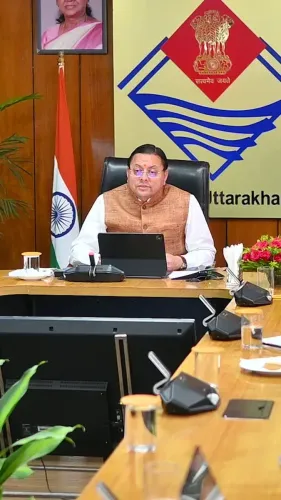
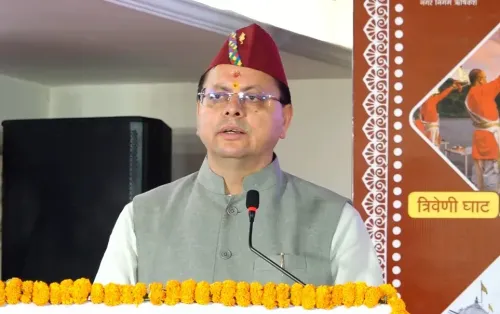
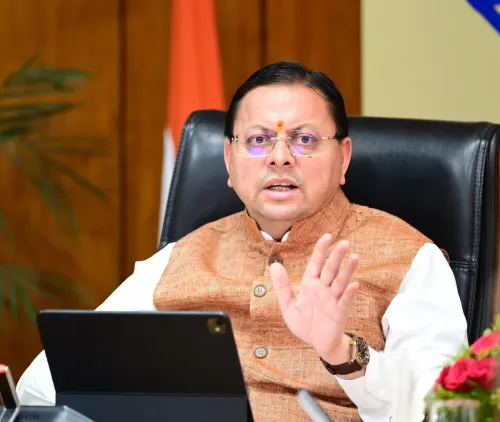
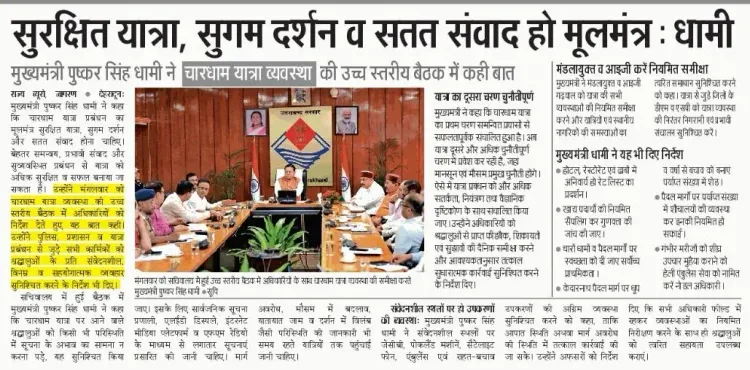
Uttarakhand Chief Minister Pushkar Singh Dhami has laid down a three-word mantra for Char Dham Yatra management — safe travel, smooth darshan and continuous dialogue. The Chief Minister's Office posted the directive as the state gears up for peak pilgrim movement to Yamunotri, Gangotri, Kedarnath and Badrinath across the Garhwal Himalayas.
Key Takeaways
CM Pushkar Singh Dhami's mantra for Char Dham management: safe travel, smooth darshan, continuous dialogue.
Directive posted by the Chief Minister's Office of Uttarakhand on 3 June 2026.
Targets coordination among district administrations, police, BRO, health teams and shrine boards.
Builds on post-2013 Kedarnath flood reforms including mandatory online pilgrim registration.
Aligns with the 2016 Char Dham Mahamarg Vikas Pariyojana for 889 km of all-weather roads.
Signals continued state focus on regulated, high-volume Himalayan pilgrimage tourism.
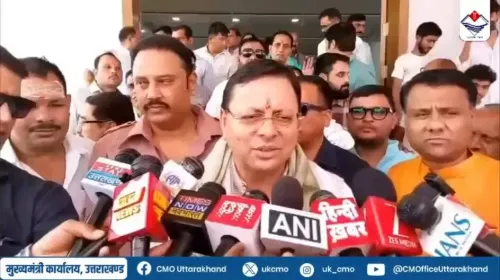
The Chief Minister's Office of Uttarakhand on 3 June 2026 posted a directive from Chief Minister Pushkar Singh Dhami outlining the guiding principle for this season's Char Dham Yatra management. The post distilled the state's approach into a three-part formula: secure travel, easy darshan and sustained communication among agencies and pilgrims.
Translated from Hindi, the post quotes the Chief Minister as saying, 'The core mantra of Char Dham Yatra management should be safe travel, smooth darshan and continuous dialogue.' The original phrase — 'सुरक्षित यात्रा, सुगम दर्शन और सतत संवाद' (safe travel, smooth darshan and continuous dialogue) — is being positioned as the operating philosophy for officials handling the pilgrimage circuit this year.
Context
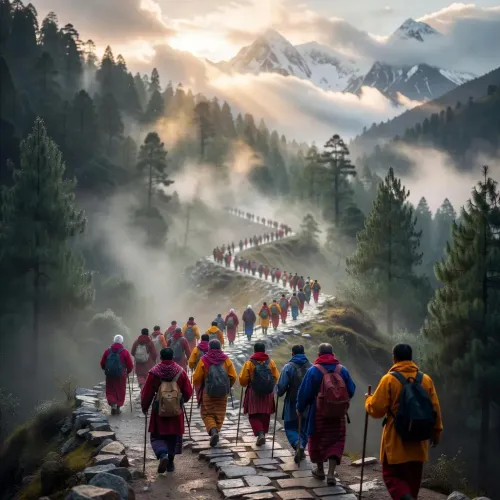
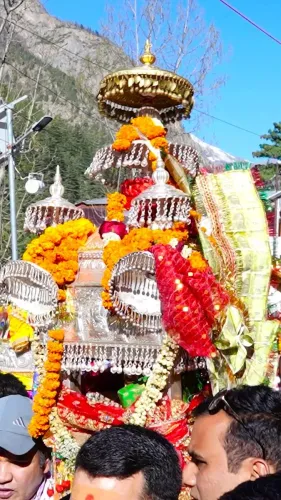
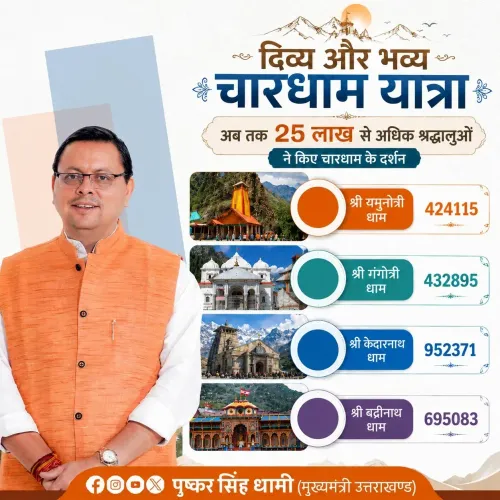
The Char Dham Yatra is the annual Hindu pilgrimage to Yamunotri, Gangotri, Kedarnath and Badrinath, set deep in the Garhwal Himalayas. The circuit draws lakhs of devotees every summer and is one of Uttarakhand's largest seasonal economic drivers, supporting transport operators, priests, hoteliers and porters across the upper Garhwal districts.
It is also one of India's most logistically demanding pilgrimages, run on narrow mountain roads vulnerable to landslides, cloudbursts and sudden weather shifts. The Chief Minister's emphasis on a single, easily communicated mantra appears aimed at standardising how field officials, police, health teams and shrine boards frame their decisions during peak footfall.
Policy backdrop
State management of the yatra has tightened steadily since the 2013 Kedarnath floods, after which Uttarakhand introduced mandatory online registration and daily capacity limits for pilgrims. That framework has since been expanded with biometric checks, health screening at base camps and weather-linked movement controls.
On infrastructure, the Char Dham Mahamarg Vikas Pariyojana, announced by the Centre in 2016, set out to build roughly 889 km of all-weather roads to the four shrines. Uttarakhand's 2021-22 tourism policy layered on safety audits, expanded helicopter services and real-time communication systems for high-altitude routes. The Chief Minister's latest formulation slots into that lineage, foregrounding coordination over fresh announcements.
Stakeholders and impact
The directive most directly affects district magistrates of Rudraprayag, Chamoli and Uttarkashi, the state police, the Border Roads Organisation, temple committees and the health department, all of whom share responsibility during the season. The framing of 'continuous dialogue' suggests sustained inter-agency briefings rather than one-time pre-season meetings.
For pilgrims, the emphasis on 'safe travel' typically translates into stricter enforcement of registration slots, vehicle checks and weather advisories. For tour operators and local residents along the route, smoother darshan management can mean predictable daily quotas — a long-standing point of negotiation between commercial operators and the administration.
What's next
Officials are expected to translate the mantra into operational reviews covering registration portal capacity, helicopter and medical service tenders, and coordination with the shrine boards of Badrinath-Kedarnath and the Gangotri and Yamunotri temple committees. Weather-linked movement protocols and landslide-response drills are likely to feature in the next round of inter-departmental meetings.
If the 'sustained dialogue' element is implemented consistently, it could reshape how mid-season disruptions — from road closures to sudden surges — are communicated to pilgrims already en route, a recurring pain point in past seasons.
Point of View
Every Uttarakhand government has been judged on how well it manages the Char Dham season, and Dhami is signalling that his administration will be measured on coordination outcomes rather than fresh schemes. The explicit mention of 'continuous dialogue' marks a shift from episodic pre-season planning to a more iterative model. Whether that translates into smoother on-ground experiences will depend on how rigorously district magistrates and temple committees are held to weekly review cycles.
NationPress
20 Oct 2026
Frequently Asked Questions
What is CM Pushkar Singh Dhami's mantra for Char Dham Yatra?
CM Pushkar Singh Dhami has said the core mantra of Char Dham Yatra management should be safe travel, smooth darshan and continuous dialogue. The directive was shared by the Chief Minister's Office of Uttarakhand on 3 June 2026.
Which four shrines make up the Char Dham Yatra in Uttarakhand?
The Char Dham Yatra covers Yamunotri, Gangotri, Kedarnath and Badrinath, all located in the Garhwal Himalayas of Uttarakhand. The pilgrimage runs primarily through Uttarkashi, Rudraprayag and Chamoli districts.
Is online registration mandatory for the Char Dham Yatra?
Yes, Uttarakhand has required online registration for Char Dham pilgrims since reforms introduced after the 2013 Kedarnath floods. The state also enforces daily capacity limits at each shrine.
What is the Char Dham Mahamarg Vikas Pariyojana?
It is a Central government project announced in 2016 to build around 889 km of all-weather roads connecting the four Char Dham shrines. The aim is to reduce travel time and improve access for pilgrims and local residents.
When does the Char Dham Yatra usually take place?
The Char Dham Yatra typically runs from late April or early May through October, aligned with the opening and closing of the shrine portals. Exact dates are announced each year by the respective temple committees.