Shekhawat cites 49.6 crore poverty exits in 12 years of Modi rule
Synopsis
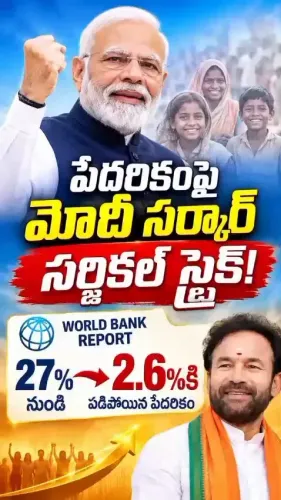
Union Minister Gajendra Singh Shekhawat on 3 November 2026 invoked NITI Aayog's Multidimensional Poverty Index data to claim 49.6 crore Indians have exited poverty over 12 years of Modi government, framing the figure as definitive evidence of 'Power to Empower' governance.
Key Takeaways
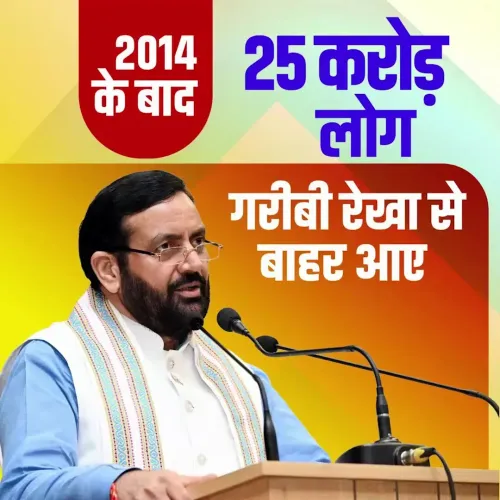
49.6 crore Indians are claimed to have exited poverty over the last 12 years under the Modi administration, according to Union Minister Gajendra Singh Shekhawat .
The figure is rooted in NITI Aayog's Multidimensional Poverty Index , which measures deprivation across nutrition, sanitation, housing, schooling, and other non-income indicators.
NITI Aayog published its first national MPI report in 2021 using National Family Health Survey data; subsequent updates have tracked accelerating poverty reduction.
The BJP has consistently used MPI data across ministerial communications to build a unified 'good governance' narrative tied to direct-benefit transfer schemes since 2014 .
The next NITI Aayog MPI update and any winter session parliamentary debate on poverty metrics will be closely watched for corroboration or challenge to this claim.
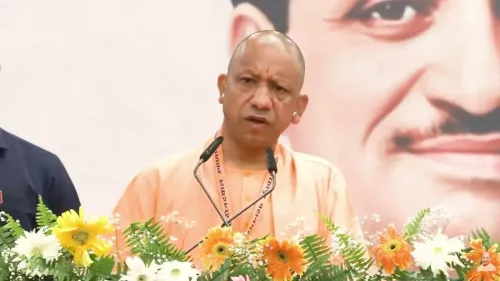
Half a billion Indians lifted out of poverty in a single generation — that is the sweeping claim Union Culture and Tourism Minister Gajendra Singh Shekhawat put before the country on Tuesday, 3 November 2026, invoking 49.6 crore poverty exits over the past 12 years as evidence of what he called 'Power to Empower.'
Posting on X, Shekhawat wrote: 'Beete 12 varshon mein 49.6 crore Bharatiya garibi se bahar aaye... yahi sushasan hai! Yahi Power to Empower hai' — 'In the last 12 years, 49.6 crore Indians have come out of poverty... this is good governance! This is Power to Empower.'
The MPI framework behind the number
The figure draws on India's Multidimensional Poverty Index (MPI), a framework adopted by NITI Aayog — the government's principal policy think tank — which measures poverty not just by income but across a basket of deprivations: nutrition, schooling, sanitation, clean cooking fuel, housing, and access to financial services. NITI Aayog published its first national MPI report in 2021, using data from the National Family Health Survey, and subsequent updates have tracked accelerating progress.
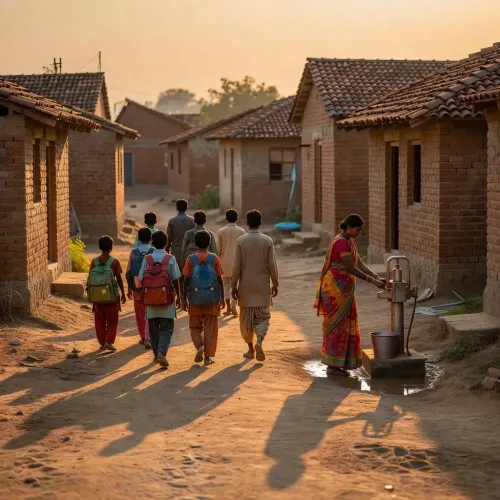
Unlike traditional income-based poverty lines, the MPI captures whether a household is simultaneously deprived on multiple fronts. When a family gets a pucca house, a gas cylinder, a bank account, and a toilet — each separately delivered through a targeted government scheme — they can exit multidimensional poverty even before their cash income crosses a threshold. That architecture of interlocking welfare delivery has been central to the speed of movement the index records.
Twelve years of direct-benefit architecture
The 12-year window Shekhawat cites maps squarely onto the tenure of Prime Minister Narendra Modi, whose administration from 2014 onwards built an interlocking stack of direct-benefit transfer schemes — PM Awas Yojana for housing, Ujjwala Yojana for cooking gas, Swachh Bharat Mission for sanitation, Jan Dhan Yojana for banking — each feeding into exactly the deprivation indicators the MPI tracks. The convergence was not accidental; policy architects explicitly designed the scheme basket to move households across multiple thresholds simultaneously.
Ministers across portfolios — health, rural development, finance — have deployed the same MPI data in public communications, making the poverty-exit narrative one of the most consistent threads in the ruling BJP's governance messaging. Shekhawat's post, from the Culture and Tourism ministry's corner, signals how deeply that framing has been internalised party-wide.
What the next MPI update will reveal
The next NITI Aayog MPI report, widely anticipated before the budget cycle, will test whether the pace of poverty exit has held or moderated as easier gains — households already close to the threshold — are exhausted. Analysts watching the data will also look at whether progress is uniform across states or concentrated in a handful of high-performing ones. Any parliamentary winter session discussion on poverty metrics could sharpen that scrutiny further.
For now, a senior Union Minister has put a nine-digit number on the scorecard — and the argument over what it means, and how it was counted, is very much alive.
Point of View
Striking headcount that is hard to dispute without engaging the methodology. By using the MPI framework — which NITI Aayog itself designed and publishes — the government insulates the claim from easy dismissal, since it invites debate on indicators rather than intent. The breadth of ministers across portfolios amplifying the same data point suggests a coordinated pre-election narrative push, with poverty reduction as the centrepiece of the 'double-engine government' pitch. The credibility of the number will ultimately rest on when the next NITI Aayog MPI update lands and whether its methodology survives independent scrutiny.
NationPress
3 Nov 2026
Frequently Asked Questions
What does the claim of 49.6 crore Indians exiting poverty mean?
It refers to the number of people who have moved out of 'multidimensional poverty' — a measure that counts deprivations in areas like nutrition, sanitation, housing, and schooling — not just income. The figure is drawn from India's Multidimensional Poverty Index tracked by NITI Aayog.
What is the Multidimensional Poverty Index used in India?
The Multidimensional Poverty Index (MPI) is a metric developed and published by NITI Aayog since 2021. It uses National Family Health Survey data to assess whether households are simultaneously deprived across multiple indicators including health, education, and living standards.
Which welfare schemes contributed to India's poverty reduction?
Schemes such as PM Awas Yojana (housing), Ujjwala Yojana (cooking gas), Swachh Bharat Mission (sanitation), and Jan Dhan Yojana (banking) have been cited as key drivers, as each addresses one or more of the deprivation indicators tracked by the MPI.
Why is the 49.6 crore poverty exit figure significant politically?
The figure represents one of the Modi government's most prominent welfare governance claims. Ministers across portfolios have invoked it as a measure of 'good governance,' and it forms a central plank of the BJP's electoral narrative ahead of upcoming votes.
When will the next NITI Aayog MPI report be released?
The timing of the next NITI Aayog MPI update has not been officially announced, but it is widely expected ahead of the union budget cycle. Parliamentary discussions on poverty metrics during the winter session could also bring fresh scrutiny to the data.