Shekhawat hails hydraulic chairs for elderly, divyang pilgrims at Har Ki Pauri
Synopsis
Union Culture and Tourism Minister Gajendra Singh Shekhawat has praised the installation of hydraulic chairs for elderly and differently-abled pilgrims at Haridwar's Har Ki Pauri ghat, calling it a model of service-driven cultural development that honours the faith and dignity of every devotee.
Key Takeaways
Union Culture and Tourism Minister Gajendra Singh Shekhawat highlighted hydraulic chairs for elderly and divyang pilgrims at Har Ki Pauri, Haridwar on 7 July 2026 .
The minister framed the initiative as a 'living example of the spirit of seva,' arguing development must honour devotees' faith and dignity.
The facility aligns with the Accessible India Campaign (Sugamya Bharat Abhiyan) , launched in 2015 to retrofit public and tourist sites for persons with disabilities.
Har Ki Pauri attracts millions of pilgrims annually and serves as the central venue during the Kumbh Mela .
The move signals growing policy emphasis on barrier-free access at India's major religious and pilgrimage sites.
Similar accessibility installations at other Kumbh and tirtha sites are expected to be prioritised in upcoming budget cycles.
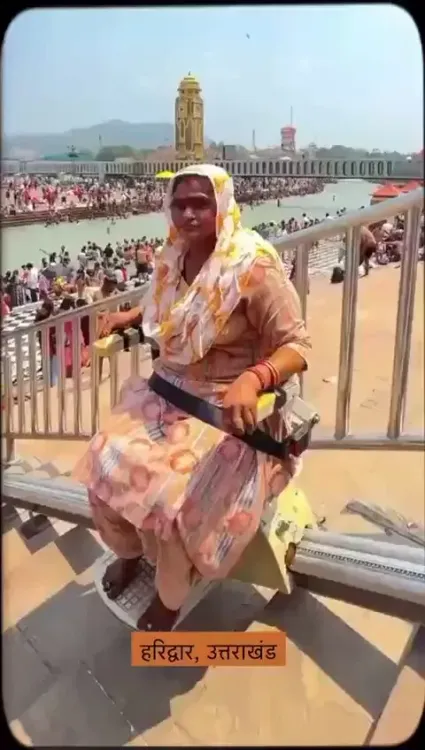
Union Culture and Tourism Minister Gajendra Singh Shekhawat on Tuesday, 7 July 2026, praised the introduction of hydraulic chairs for elderly and differently-abled pilgrims at Har Ki Pauri, the iconic ghat in Haridwar, calling it a living example of service-driven development. The minister's post, shared on X, framed the initiative as proof that true progress lies not merely in erecting new structures but in building systems that honour the faith and dignity of every devotee.
Context
In his post, Shekhawat wrote — translated from Hindi — 'Seva aur sanskriti ka sundar sangam' ('A beautiful confluence of service and culture'), arguing that development must respect the aspirations and dignity of every devotee. He specifically highlighted the hydraulic chair arrangement at Har Ki Pauri as a 'living example of the spirit of seva.' The minister added: 'When service, sensitivity, and culture walk together, only then does every step of faith truly become easy.'
Har Ki Pauri is among India's most sacred ghats, situated on the banks of the Ganga in Haridwar, Uttarakhand. It draws millions of pilgrims annually for the evening Ganga aarti and ritual bathing, and serves as the central venue during the Kumbh Mela — one of the largest religious gatherings on earth. The steep stone steps and dense crowds at the ghat have historically posed significant challenges for senior citizens and persons with disabilities.
Policy Backdrop
The hydraulic chair facility aligns with the Accessible India Campaign (Sugamya Bharat Abhiyan), launched in 2015, which mandates retrofitting public spaces, tourist sites, and religious locations to ensure barrier-free access for persons with disabilities. The campaign has progressively extended its scope to include major pilgrimage sites, recognising the large proportion of elderly and divyang visitors they attract.
Successive central governments have paired tourism development schemes with directives on barrier-free access at ghats and temples, particularly in the run-up to large pilgrimages. Shekhawat's ministry has in recent years positioned cultural tourism and religious heritage as twin pillars of India's soft-power and domestic tourism strategy, with accessibility increasingly cited as a non-negotiable component of site upgrades.
Stakeholders and Impact
The primary beneficiaries are elderly pilgrims and divyang (differently-abled) devotees who previously faced physical barriers in accessing the water's edge at Har Ki Pauri. Hydraulic chairs — motorised or mechanically assisted seating that can be lowered toward the ghat steps — allow such visitors to participate in ritual bathing and aarti without depending entirely on manual assistance.
Disability-rights advocates and pilgrim-welfare groups have long called for such infrastructure at major tirthas. The initiative, if replicated at other high-footfall ghats and temples, could significantly expand the accessibility of India's religious tourism circuit, which sees hundreds of millions of domestic visits each year.
What's Next
The spotlight on Har Ki Pauri's hydraulic chairs is likely to prompt calls for similar installations at other Kumbh Mela venues and major pilgrimage sites across Uttarakhand, Uttar Pradesh, and beyond. With the next major Kumbh cycle drawing closer, the Culture and Tourism Ministry's focus on accessibility infrastructure at sacred sites is expected to intensify, potentially finding expression in upcoming budget allocations and site-development plans under the PRASHAD (Pilgrimage Rejuvenation and Spiritual, Heritage Augmentation Drive) scheme. The minister's public endorsement signals that barrier-free access at religious sites is now a stated policy priority, not an afterthought.
Point of View
Samvedanshilta, aur sanskriti' (service, sensitivity, and culture) in a single breath, the minister frames infrastructure investment at pilgrimage sites as both a moral and civilisational duty, not merely a policy deliverable. This positions the Culture Ministry squarely within the broader 'Viksit Bharat' arc, where heritage and inclusion are presented as complementary rather than competing goals. The spotlight on Har Ki Pauri also reads as a signal ahead of upcoming Kumbh preparations, where accessibility at ghats will be a visible test of the government's inclusive-tourism commitments.
NationPress
7 Jul 2026
Frequently Asked Questions
What are hydraulic chairs at Har Ki Pauri Haridwar?
Hydraulic chairs at Har Ki Pauri are mechanically assisted seating devices that help elderly and differently-abled pilgrims reach the ghat steps and water's edge without depending on manual support, enabling them to participate in ritual bathing and the Ganga aarti.
What did Gajendra Singh Shekhawat say about Haridwar accessibility?
Union Culture and Tourism Minister Gajendra Singh Shekhawat praised the hydraulic chair facility at Har Ki Pauri as a 'living example of the spirit of seva,' saying true development means building systems that honour the faith and dignity of every devotee.
What is the Accessible India Campaign and how does it relate to pilgrimage sites?
The Accessible India Campaign, or Sugamya Bharat Abhiyan, was launched in 2015 to retrofit public spaces, tourist destinations, and religious sites to ensure barrier-free access for persons with disabilities, and it has progressively been extended to major pilgrimage ghats and temples.
Which ministry is responsible for accessibility at religious tourism sites in India?
The Union Ministry of Culture and Tourism, currently headed by Gajendra Singh Shekhawat, oversees policy on religious tourism infrastructure, including accessibility mandates at pilgrimage sites under schemes such as PRASHAD.
Will other pilgrimage sites in India get similar accessibility features?
The Culture and Tourism Ministry's focus on barrier-free access is expected to expand to other major Kumbh Mela venues and tirtha sites, with further installations likely to be reflected in upcoming budget cycles and site-development plans.