Shekhawat Highlights India's Manufacturing Rise
Synopsis
Union Minister Gajendra Singh Shekhawat highlighted India's manufacturing transformation on 20 July 2026, citing a rise from 2 to 300+ mobile units since 2014, with Apple suppliers Foxconn and Tata Electronics, Samsung, and Micron all expanding Indian production under Make in India and PLI frameworks.
Key Takeaways
India had only 2 mobile phone manufacturing units in 2014 ; the number has since grown to over 300 , according to Minister Shekhawat's post.
Apple suppliers Foxconn and Tata Electronics are assembling iPhones in India; Samsung is scaling production and Micron is manufacturing semiconductors.
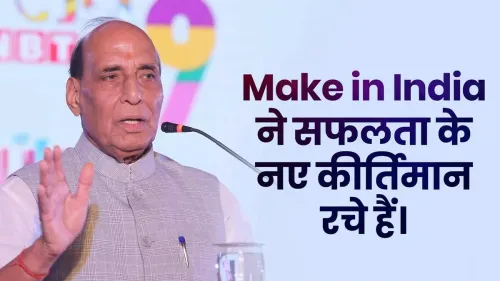
The Make in India programme (launched September 2014 ) and the PLI scheme for electronics (notified 2020 ) underpin this industrial expansion.
The India Semiconductor Mission (approved 2021 ) targets chip design, packaging and fabrication, with Micron's facility in Sanand, Gujarat as a flagship project.
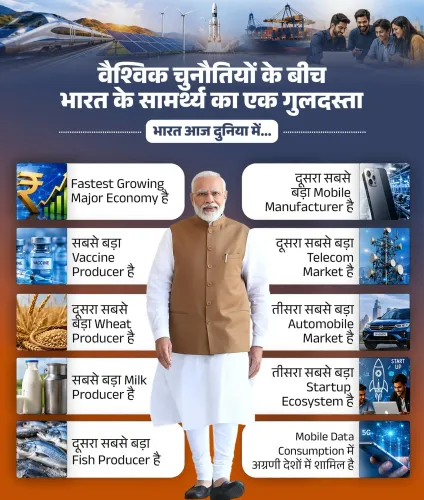
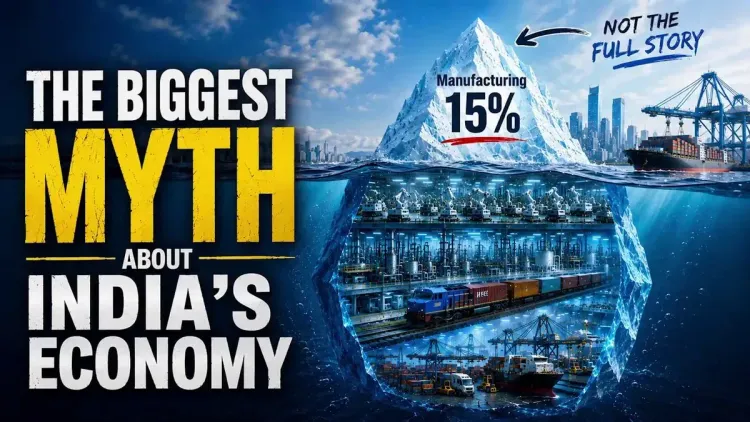
Shekhawat extended the argument beyond phones to trains, defence systems, medicines, solar modules, automobiles and toys, framing India as a broad-based manufacturing power.
The minister directly rebutted critics, saying those 'spreading confusion based on incomplete information' should examine these data points.
Union Culture and Tourism Minister Gajendra Singh Shekhawat on Monday, 20 July 2026, cited India's rapid expansion in mobile phone manufacturing — from just two units in 2014 to over 300 today — as evidence of the country's emergence as a global manufacturing destination, pushing back at critics he accused of spreading 'confusion based on incomplete information.'
Context
In his post, Shekhawat wrote: '2014 में भारत में सिर्फ 2 मोबाइल फोन मैन्युफैक्चरिंग यूनिट थीं। आज यह संख्या बढ़कर 300+ हो चुकी है' ('In 2014, India had only 2 mobile phone manufacturing units. Today that number has grown to 300+.'). He named Foxconn and Tata Electronics as Apple suppliers assembling iPhones in India, Samsung as scaling up production, and Micron as manufacturing semiconductors on Indian soil.
The minister broadened his argument beyond electronics, listing trains, defence systems, medicines, solar modules, automobile components, and children's toys as sectors where India is strengthening its manufacturing capability. 'The country that was once dependent on imports has today become a trusted manufacturing destination for companies across the world,' he stated.
Policy Backdrop
The trajectory Shekhawat describes is rooted in a series of central government initiatives. The Make in India programme, launched in September 2014, set the strategic direction by easing foreign direct investment norms and promoting domestic value addition. The Production Linked Incentive (PLI) scheme for mobile phones and electronics, notified in 2020, provided scale-linked financial incentives to attract large manufacturers.
The India Semiconductor Mission, approved in 2021, extended the same logic to chip design, packaging, and fabrication — a segment where Micron Technology announced an assembly and test facility in Sanand, Gujarat. Together, these schemes represent a deliberate attempt to replicate across multiple sectors the supply-chain diversification that global multinationals began seeking beyond East Asia.
Stakeholders and Impact
The beneficiaries of this shift span domestic and global players. Tata Electronics, an Indian conglomerate, has entered iPhone assembly — a segment that was previously concentrated in China — while Foxconn, the Taiwanese contract manufacturer, has established production facilities in India. Samsung has expanded capacity at its Noida plant, making it one of the world's largest mobile phone factories by output.
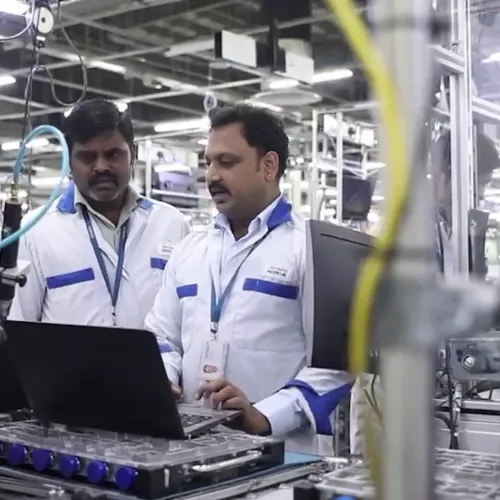
For Indian workers and ancillary industries, the multiplication of manufacturing units signals job creation and the development of a deeper component ecosystem. Global supply chains, meanwhile, gain a geographically diversified production base that reduces concentration risk.
What's Next
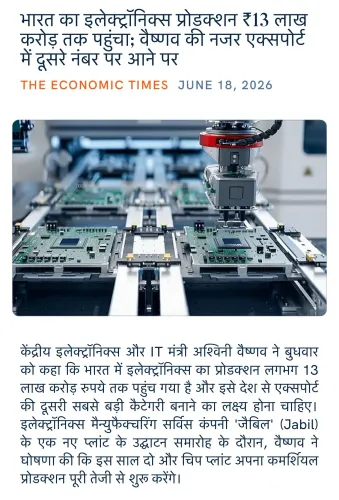
Shekhawat's post arrives as the government tracks quarterly electronics production and export statistics released by the Ministry of Electronics and IT. Analysts and industry bodies will watch for further PLI scheme extensions, new semiconductor project ground-breakings, and export data that would validate the scale of domestic value addition. The minister's implicit message — that India is now a 'new force in global manufacturing and innovation' — sets a benchmark against which upcoming production and export figures will be measured.
Point of View
Foxconn, and Micron, the BJP is shifting the debate from policy intent to corporate action, a harder target for opposition critics. The breadth of sectors cited — from semiconductors to toys — suggests a deliberate effort to frame Make in India not as a single-sector success but as a systemic economic transformation. Whether export data and domestic value-addition figures ultimately validate that framing will determine the political durability of this messaging.
NationPress
21 Jul 2026
Frequently Asked Questions
How many mobile phone manufacturing units does India have in 2026?
According to Union Minister Gajendra Singh Shekhawat's post on 20 July 2026, India now has more than 300 mobile phone manufacturing units, up from just 2 in 2014.
Is Apple making iPhones in India?
Yes. Apple suppliers Foxconn and Tata Electronics are assembling iPhones in India, as part of a broader supply-chain diversification strategy supported by India's PLI scheme for electronics.
What is the Make in India programme?
Make in India is a central government initiative launched in September 2014 to promote domestic manufacturing, attract foreign investment, and reduce India's dependence on imports across sectors including electronics, defence, and pharmaceuticals.
What is Micron doing in India?
US semiconductor firm Micron Technology announced an assembly and test facility in Sanand, Gujarat, under the India Semiconductor Mission approved in 2021, making it one of the first major chip-related manufacturing investments in the country.
What is the PLI scheme for mobile phones?
The Production Linked Incentive scheme for mobile phones and electronics, notified in 2020, provides scale-linked financial incentives to large manufacturers producing in India, and has been credited with attracting global firms such as Samsung and Apple's supply chain partners.