Shekhawat Highlights India's Solar Power Growth
Synopsis
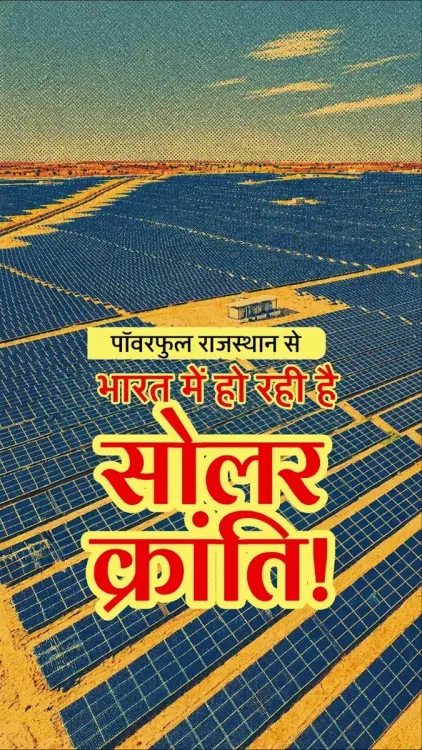
Union Culture and Tourism Minister Gajendra Singh Shekhawat posted on X on 5 July 2026, sharing a video celebrating India's solar energy growth. The post echoes the government's long-running narrative of solar leadership, rooted in the Jawaharlal Nehru National Solar Mission and the International Solar Alliance, as India eyes fresh climate commitments ahead of COP31.
Key Takeaways
Union Minister Gajendra Singh Shekhawat posted on 5 July 2026 highlighting India's solar energy expansion.
India's solar mission, launched in 2010 , originally targeted 20 GW of capacity by 2022 before targets were revised upward.
At the 2015 Paris COP , India pledged 40 percent non-fossil fuel installed capacity by 2030 .
The International Solar Alliance , co-founded by India and France in 2015, now has over a hundred member nations.
Rajasthan , Shekhawat's home state, hosts some of India's largest utility-scale solar parks.
Next Union Budget allocations and revised targets ahead of COP31 are key milestones to watch.
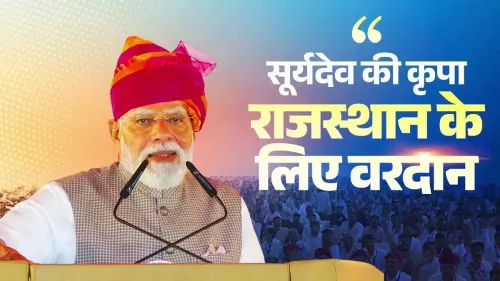
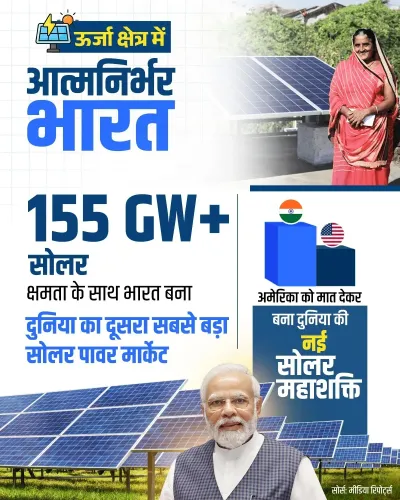
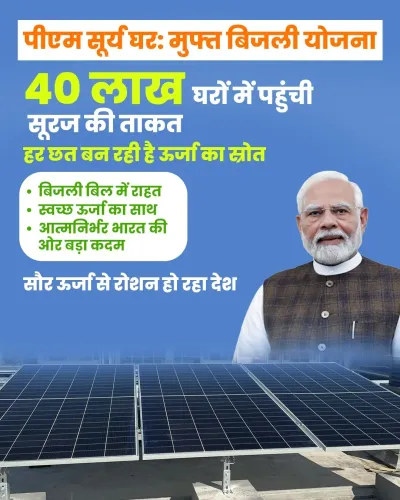
Union Culture and Tourism Minister Gajendra Singh Shekhawat on Sunday, 5 July 2026, shared a video on X celebrating India's expanding solar energy capacity, writing 'Surya ki shakti se samridh ho raha Bharat' — 'India is being enriched by the power of the sun.'
Context
The post, brief but pointed, arrives as India's renewable energy sector continues its rapid scale-up. Shekhawat, who represents the Jodhpur constituency in Rajasthan — a state that hosts several of the country's largest solar parks — has consistently amplified the ruling dispensation's messaging on clean energy. The accompanying video underscores the visual and symbolic weight the government places on solar as a development narrative.
India's solar story has been decades in the making. The Jawaharlal Nehru National Solar Mission, launched in 2010, initially set a target of 20 GW of grid-connected solar capacity by 2022, a figure that was subsequently revised sharply upward as technology costs fell and political ambition grew.
Policy Backdrop
At the 2015 Paris COP, India committed to sourcing 40 percent of its installed electricity capacity from non-fossil fuel sources by 2030. Prime Minister Narendra Modi co-founded the International Solar Alliance (ISA) alongside France in the same year, positioning India as a multilateral champion of solar deployment across the Global South.
The ISA, a treaty-based intergovernmental organisation, now counts more than a hundred member nations and has become a flagship of India's climate diplomacy. Successive Union Budgets have channelled funds into central schemes, state-level solar parks, rooftop programmes, and the PM-KUSUM initiative that brings solar irrigation to farmers — broadening the stakeholder base well beyond large utilities.
Stakeholders and Impact
Solar developers, both domestic and international, have been primary beneficiaries of the policy push, with competitive auctions driving down tariffs to among the lowest in the world. Farmers represent another critical constituency: solar-powered pumps reduce diesel dependence and free agricultural households from erratic grid supply.
Rajasthan itself is central to this story. The state's vast arid tracts have attracted some of India's largest utility-scale solar installations, making Shekhawat's constituency a living backdrop to the message he amplified on Sunday. The minister's post, while ceremonial in tone, reflects the government's sustained effort to keep solar energy visible in public discourse ahead of upcoming global climate negotiations.
What's Next
Observers will watch the next Union Budget for fresh allocations to solar schemes and any upward revision of India's installed-capacity targets. With COP31 on the horizon, the government is expected to sharpen its renewable energy commitments as part of its updated Nationally Determined Contribution. Posts like Shekhawat's signal that the political class intends to keep solar at the centre of India's development and climate identity in the months ahead.
Point of View
Linking constituency identity to national ambition. The timing, ahead of anticipated COP31 commitments, suggests the government is warming up its communications machinery on renewables. The broader arc is one of India seeking to convert solar capacity into diplomatic currency, and posts like this are part of that sustained effort.
NationPress
5 Jul 2026
Frequently Asked Questions
What did Gajendra Singh Shekhawat post about solar energy?
On 5 July 2026, Shekhawat shared a video on X with the caption meaning 'India is being enriched by the power of the sun,' celebrating the country's growing solar energy capacity.
What is India's solar energy target?
India committed at the 2015 Paris COP to sourcing 40 percent of its installed electricity capacity from non-fossil fuel sources by 2030, building on the Jawaharlal Nehru National Solar Mission launched in 2010.
What is the International Solar Alliance?
The International Solar Alliance is a treaty-based intergovernmental organisation co-founded by India and France in 2015 to accelerate solar energy deployment, particularly across developing nations, and now counts over a hundred member countries.
Why is Rajasthan important for India's solar energy plans?
Rajasthan's vast arid landscape makes it ideal for large-scale solar installations, and the state hosts some of India's biggest solar parks, making it central to the country's renewable energy capacity build-out.
What should we watch next on India's solar policy?
Key milestones include the next Union Budget's allocations for solar schemes and any revised capacity targets India announces ahead of COP31 as part of its updated Nationally Determined Contribution.