Muharram procession in Srinagar draws hundreds of Shia mourners
Synopsis
For the third straight year, Srinagar's Muharram procession returned to the streets — a tradition banned during the militancy years of the 1990s. Hundreds marched from Guru Bazar to Dalgate without incident, marking both a religious observance and a quiet signal of the Valley's shifting security reality.
Key Takeaways
Hundreds of Shia Muslim mourners participated in the Muharram procession in Srinagar on 24 June .
The procession ran from Guru Bazar through Budshah Chowk and Maulana Azad Road to Dalgate .
Authorities deployed security personnel, medical camps, and special traffic arrangements; no untoward incident was reported.
This is the third consecutive year the procession has been permitted, after being banned during the militancy years of the 1990s .
The event commemorates the Battle of Karbala (680 CE) and the martyrdom of Imam Hussain , observed by both Shia and Sunni Muslims.
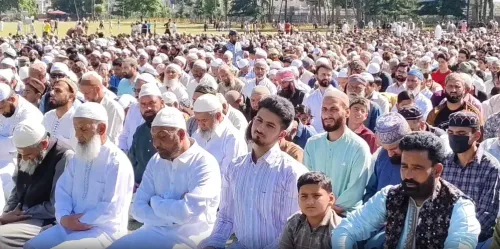
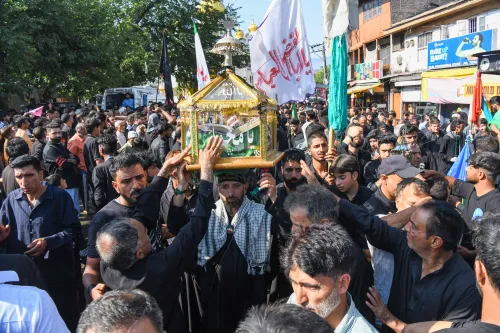
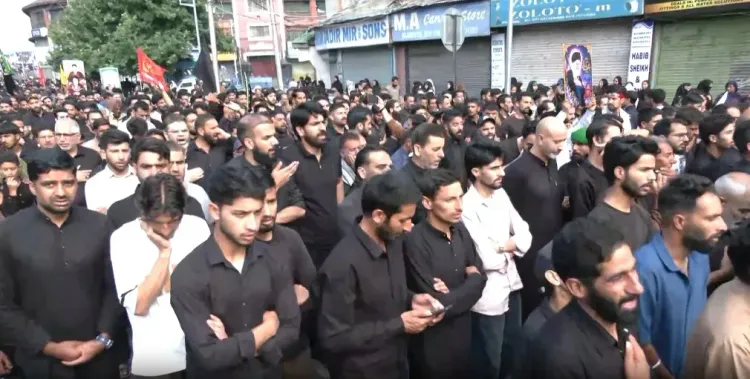
Hundreds of Shia Muslim mourners took to the streets of Srinagar on Wednesday, 24 June to participate in the annual Muharram procession in Jammu and Kashmir, as authorities deployed elaborate security and traffic arrangements to ensure a peaceful observance. The procession, one of the largest religious gatherings in the Valley in recent years, passed off without incident.
Route and Proceedings
The procession began at Guru Bazar and wound its way through Budshah Chowk and Maulana Azad Road before culminating at the Dalgate area. Mourners dressed in black beat their chests and murmured elegies in remembrance of the Martyrs of Karbala, particularly Imam Hussain, the grandson of the Prophet of Islam. Black flags lined the procession route as volunteers operated refreshment stalls offering water and cold drinks to participants.
Security and Administrative Arrangements
Senior civil and police officials were present throughout the event. The traffic department put in place special route regulations, creating a traffic-free corridor for mourners and designating alternative routes for commuters. Dedicated parking was arranged at Batmaloo and other locations along the periphery. The medical department set up makeshift health camps at intervals along the route to attend to any emergencies. No untoward incident was reported during the procession.
Significance: A Tradition Revived
The Muharram procession in Srinagar carries particular historical weight. Authorities had banned such gatherings after militancy escalated in Kashmir in the 1990s, effectively suspending a centuries-old tradition for decades. With the overall security situation improving, the administration has permitted the procession for the third consecutive year, marking a gradual restoration of public religious observance in the region.
The Battle of Karbala: Historical Context
The procession commemorates the Battle of Karbala, fought on 10 October 680 CE — the 10th of Muharram, 61 AH — on the plains near the Euphrates River in present-day Iraq. According to Shia tradition, Imam Hussain travelled to Kufa at the invitation of its people, accompanied by his family and supporters. The army of Umayyad Caliph Yazid surrounded them at Karbala, denying water even to children during the siege. Imam Hussain refused to surrender and was martyred alongside his companions. While Shia Muslims observe formal mourning rituals during Muharram, the commemoration of Imam Hussain's martyrdom holds significance for both Shia and Sunni Muslims.
The peaceful conduct of this year's procession is being seen as a marker of the Valley's evolving security landscape, with authorities signalling continued support for the event in coming years.
Point of View
Not one-off events, signal genuine change. What mainstream coverage underplays is the administrative complexity involved — traffic rerouting, medical deployment, senior official presence — all for a single procession. That investment of state machinery reflects a deliberate policy choice, not just tolerance. The real question going forward is whether this restoration of religious public life extends consistently across communities and occasions, or remains selective.
NationPress
24 Jun 2026
Frequently Asked Questions
Where did the Muharram procession in Srinagar take place on 24 June?
The procession began at Guru Bazar and passed through Budshah Chowk and Maulana Azad Road before concluding at the Dalgate area of Srinagar, Jammu and Kashmir.
Why was the Muharram procession banned in Kashmir for so many years?
Authorities suspended Muharram processions in Srinagar after militancy intensified in Kashmir during the 1990s, citing security concerns. The ban remained in effect for decades until the security situation improved sufficiently to allow resumption.
Is this the first time the Muharram procession has been held in Srinagar in recent years?
No. This is the third consecutive year that authorities have permitted the procession, reflecting a gradual restoration of the tradition following the improvement in the overall security environment in the Valley.
What is the significance of Muharram and the Battle of Karbala?
Muharram commemorates the Battle of Karbala, fought on 10 October 680 CE, in which Imam Hussain — the grandson of the Prophet Muhammad — was martyred by the army of Umayyad Caliph Yazid near the Euphrates River in present-day Iraq. While Shia Muslims observe formal mourning rituals, the martyrdom of Imam Hussain is commemorated by both Shia and Sunni Muslims.
Were there any security incidents during the Srinagar Muharram procession?
No untoward incident was reported. Senior civil and police officials were present throughout, and the procession moved with what witnesses described as absolute discipline.