Giriraj Singh highlights Modi govt push for textile growth
Synopsis
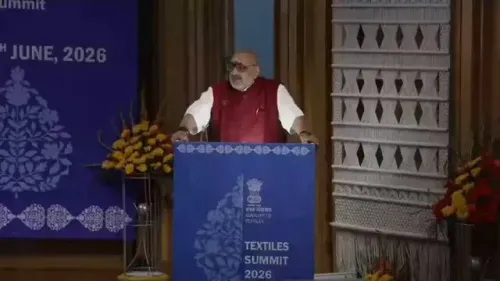
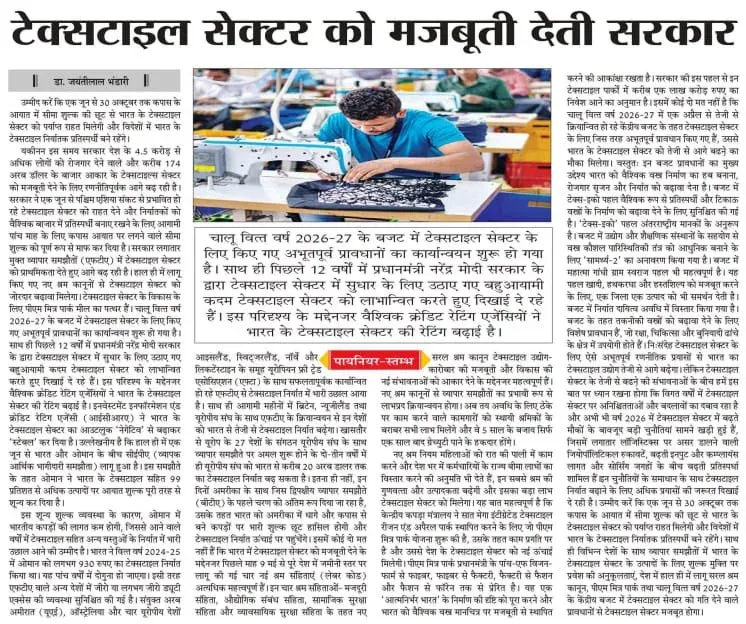
Union Textiles Minister Giriraj Singh on 24 June 2026 credited PM Modi's clear policy, strong resolve and far-sighted leadership for giving India's textile sector new momentum, citing rising investment, modern infrastructure, and export promotion as pillars of the industry's growing global presence.
Key Takeaways
Union Textiles Minister Giriraj Singh on 24 June 2026 credited the Modi government's policies for boosting India's textile sector.
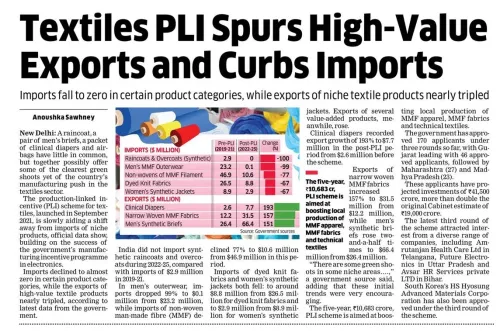
The PLI Scheme for Textiles , approved in September 2021 with an outlay of over Rs 10,000 crore , is a centrepiece of the current textile policy push.
The minister linked sectoral growth to the Viksit Bharat 2047 vision of making India a developed economy by the centenary of independence.
Key policy pillars include investment in modern infrastructure , technological innovation , export promotion , and a shift toward man-made fibres and technical textiles .
Primary beneficiaries include textile exporters , MSME manufacturers , and weavers and artisans across major producing states.
Upcoming Union Budget allocations and a possible new National Textile Policy are the next milestones to watch.
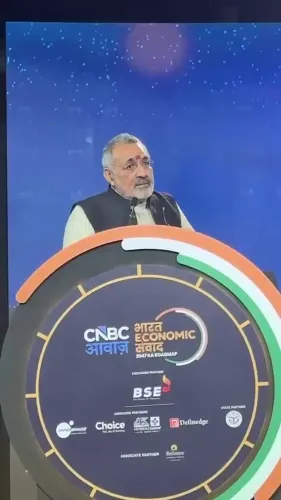
Union Textiles Minister Giriraj Singh on Wednesday, 24 June 2026, credited the Narendra Modi government's policy framework for giving fresh momentum and direction to India's textile sector, citing rising investment, modern infrastructure, technological innovation, and export promotion schemes as key drivers of the industry's global ascent.
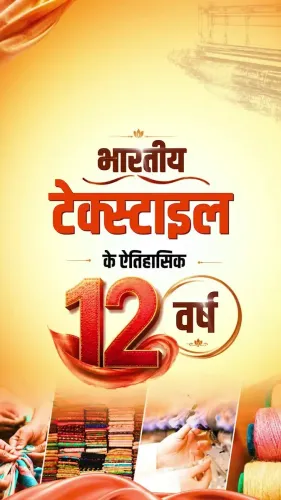
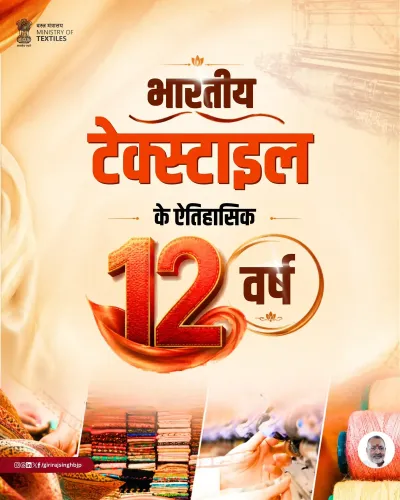
Posting on X, the minister wrote: 'आदरणीय प्रधानमंत्री श्री नरेन्द्र मोदी जी की सरकार की स्पष्ट नीति, मजबूत संकल्प और दूरदर्शी नेतृत्व ने भारत के टेक्सटाइल क्षेत्र को नई गति और नई दिशा दी है' ['The clear policy, strong resolve and far-sighted leadership of Hon'ble Prime Minister Shri Narendra Modi Ji's government has given new momentum and new direction to India's textile sector']. He added that India is consolidating its identity in the global textile market and that the sector is emerging as a significant force in building a Viksit Bharat [Developed India].
Context
The minister's remarks frame the textile sector as central to the government's long-term economic vision, anchored in the Viksit Bharat 2047 goal of transforming India into a developed economy by the centenary of independence. The post comes amid sustained policy attention to an industry that employs tens of millions of workers across spinning, weaving, garmenting, and handicrafts.
Textiles have historically been treated as a strategic, employment-intensive sector by successive governments. The current administration has sought to accelerate its modernisation by shifting emphasis from cotton-dominated production toward man-made fibres and technical textiles, while simultaneously promoting exports and skilling.
Policy Backdrop
The cornerstone of recent textile policy is the Production Linked Incentive (PLI) Scheme for Textiles, approved in September 2021 with an outlay exceeding Rs 10,000 crore, designed to attract large-scale investment in man-made fibre apparel and technical textiles manufacturing. The scheme is part of a broader PLI architecture rolled out across sectors to strengthen domestic manufacturing capability.
Earlier, under the Atmanirbhar Bharat package announced in May 2020, the government introduced additional support for textile exporters and handloom weavers. These measures sit alongside the decade-old Make in India campaign, which has consistently positioned textiles as a priority segment for foreign and domestic investment attraction.
Policy has also integrated Integrated Textile Parks, dedicated skilling programmes, and technology upgradation funds to modernise the production base and raise value addition across the supply chain.
Stakeholders and Impact
The primary beneficiaries of the policy push include textile exporters, MSME manufacturers, and weavers and artisans engaged across the handloom, powerloom, and garment segments. A stronger global market position translates into more stable demand, better price realisation, and employment security for millions of workers concentrated in states such as Gujarat, Tamil Nadu, Maharashtra, Uttar Pradesh, and West Bengal.
For MSME units, access to technology parks and export incentives under the current framework can reduce the cost of modernisation — a persistent barrier that has historically limited their competitiveness against lower-cost manufacturing hubs in Bangladesh, Vietnam, and Cambodia.
What's Next
Attention will now turn to upcoming Union Budget allocations for textile schemes, any mid-term review of PLI disbursements, and parliamentary deliberations around a possible new National Textile Policy that could consolidate and update the existing regulatory and incentive landscape. The minister's emphasis on export promotion and technological innovation signals that these themes are likely to feature prominently in the government's near-term legislative and budgetary agenda.
As India seeks to expand its share of the global textile and apparel trade — a market valued in hundreds of billions of dollars — the sector's performance will serve as a key indicator of how effectively the Viksit Bharat 2047 manufacturing vision is translating into on-the-ground economic outcomes.
Point of View
Framing economic modernisation as an outcome of the current leadership's vision rather than structural continuity. By foregrounding investment, infrastructure, and export promotion in a single message, the minister signals that textiles will remain a visible plank in the government's manufacturing credibility ahead of potential budgetary decisions. The emphasis on global market positioning also reflects an implicit acknowledgement of competitive pressure from Southeast Asian rivals, suggesting the government is preparing the ground for further incentive announcements. Neutral observers will watch whether PLI disbursement data and export figures corroborate the optimistic tone.
NationPress
24 Jun 2026
Frequently Asked Questions
What has the Modi government done for India's textile sector?
The Modi government has introduced the Production Linked Incentive Scheme for Textiles with an outlay of over Rs 10,000 crore, launched Integrated Textile Parks, provided support for handloom weavers under the Atmanirbhar Bharat package, and promoted export incentives as part of the Make in India initiative.
What is the PLI Scheme for Textiles?
The Production Linked Incentive Scheme for Textiles was approved in September 2021 with an outlay exceeding Rs 10,000 crore. It is designed to attract investment in man-made fibre apparel and technical textiles manufacturing and boost India's export competitiveness.
What is Viksit Bharat 2047?
Viksit Bharat 2047 is the Indian government's official vision to transform India into a fully developed economy by 2047, the centenary of independence. The textile sector is positioned as one of the key drivers of this goal.
Who is Giriraj Singh?
Giriraj Singh is a senior BJP leader and Lok Sabha MP from Begusarai, Bihar, currently serving as Union Minister of Textiles in the Narendra Modi government.
How is India competing in the global textile market?
India is competing through a combination of PLI incentives, technology upgradation, export promotion schemes, and a strategic shift toward man-made fibres and technical textiles, aiming to gain market share from rivals such as Bangladesh, Vietnam, and Cambodia.