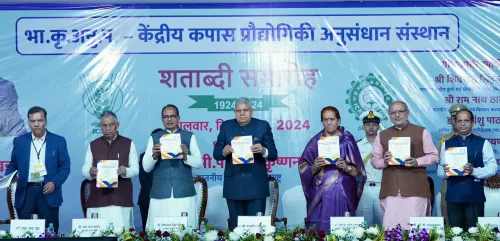
Climate change and crop cultivation in focus at Shimla symposium on Oct 22-23
Synopsis
As climate change disrupts cropping seasons, pathogen behaviour, and yield stability across India, scientists from over a dozen states are converging on Shimla for a two-day national symposium at ICAR-CPRI on 22-23 October — with a rare farmer-industry-researcher-policy interface at its core, aimed at fast-tracking climate-resilient agriculture solutions to the field.
Key Takeaways
ICAR-CPRI, Shimla will host a national symposium on climate change and crop cultivation on 22-23 October 2026 .
Themes include climate-induced plant diseases, genome editing, biological control, integrated disease management, and disease-resistant crop varieties.
Scientists and researchers from more than 10 states including Himachal Pradesh, Punjab, Assam, and Tamil Nadu are expected to participate.
ICAR-CPRI Director Brajesh Singh emphasised the need for science-driven, climate-responsive plant health strategies for Indian farmers.
A farmer-industry-researcher-policy interface will seek to bridge the gap between scientific innovation and practical field application.
Outcomes are expected to inform policy recommendations for state agriculture ministries and the Centre.
The ICAR-Central Potato Research Institute (ICAR-CPRI) in Shimla, Himachal Pradesh, will host a two-day national symposium on 22-23 October 2026 dedicated to understanding how climate change is reshaping crop cultivation and what science-based strategies can help Indian agriculture adapt. The event brings together eminent scientists, agricultural experts, academicians, researchers, students, and industry representatives from across the country.
Why This Symposium Matters
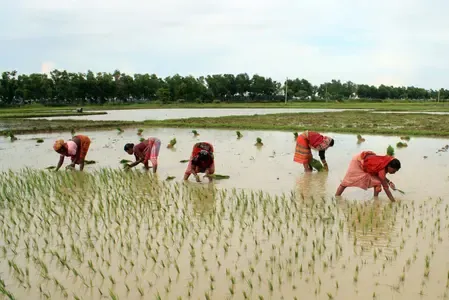
Climate change is no longer a distant threat for Indian farmers — it is already altering field conditions through rising temperatures, erratic rainfall, prolonged dry spells, and extreme weather events. These shifts are changing the behaviour of crop pathogens, accelerating the spread of plant diseases, and undermining yield stability across diverse agroclimatic zones. Safeguarding agricultural productivity under these conditions has emerged as one of the most pressing challenges for Indian agriculture.
The symposium positions itself as a national platform to consolidate scientific responses to these accelerating pressures, with a particular focus on long-term food security.
Scientific Programme and Key Themes
The two-day agenda will feature keynote addresses, invited lectures, technical sessions, and oral and poster presentations, along with scientific award sessions. Core discussion themes include climate-induced plant diseases, the changing epidemiology of crop pathogens, molecular diagnostics, genomics, genome editing, biological control, integrated disease management, disease-resistant crop varieties, and next-generation sustainable crop protection technologies.
Special emphasis will be placed on how temperature fluctuations, moisture stress, shifting rainfall patterns, and extreme weather events affect crop growth, disease development, yield stability, and cultivation practices — areas where field data from diverse Indian states is expected to enrich the deliberations.
What the Organisers Said
ICAR-CPRI Director Brajesh Singh said climate change is emerging as a critical challenge for crop cultivation, with its effects extending from crop growth and development to pest and disease outbreaks and overall farm productivity. He highlighted the importance of developing science-driven, climate-responsive plant health strategies that can help farmers adapt to changing agroclimatic conditions.
Organising Secretary Santosh Watpade confirmed that delegates from ICAR institutes, agricultural and horticultural universities, IITs, research organisations, and leading agribusiness companies will participate. Scientists and researchers from Himachal Pradesh, Punjab, Haryana, Uttar Pradesh, Uttarakhand, Assam, West Bengal, Chhattisgarh, Meghalaya, Tamil Nadu, and several other states are expected to contribute regional perspectives on climate-related challenges affecting diverse cropping systems.
Bridging Research and the Field
A major highlight of the symposium will be a farmer-industry-researcher-policy interface designed to bridge the gap between scientific innovations and their practical application on farmers' fields. The platform aims to facilitate dialogue among researchers, policymakers, agribusiness representatives, and farming communities to accelerate technology adoption, strengthen institutional partnerships, and develop affordable, scalable solutions for climate-resilient agriculture.
This comes amid growing concern that laboratory breakthroughs in areas such as genome editing and biological control are not reaching smallholder farmers quickly enough, leaving them exposed to climate-driven crop losses without adequate tools or support.
Expected Outcomes
The symposium is expected to generate a stronger scientific consensus on the impacts of climate change on crop cultivation and support the development of adaptive, affordable, and sustainable plant health solutions. Findings are likely to feed into policy recommendations for the agriculture ministries of participating states and the Centre.
With agricultural scientists converging on Shimla from over a dozen states, the event signals a broadening national urgency around climate-proofing India's farming systems ahead of increasingly unpredictable growing seasons.
Point of View
But the real measure of its worth will be whether the farmer-policy interface produces binding commitments rather than another round of conference proceedings. India's agricultural research system has long struggled with the last-mile problem — translating genomics and genome-editing breakthroughs into affordable, accessible tools for smallholders. With climate disruption compressing the window for adaptation, the gap between laboratory insight and field reality is no longer just a bureaucratic inefficiency; it is a food-security risk. The diversity of participating states is a strength, but only if regional data actually reshapes national policy rather than being absorbed into generic recommendations.
NationPress
21 Oct 2026
Frequently Asked Questions
What is the national symposium being held at ICAR-CPRI Shimla?
It is a two-day national symposium on climate change and its impact on crop cultivation, hosted by the ICAR-Central Potato Research Institute in Shimla on 22-23 October 2026. The event brings together scientists, researchers, policymakers, industry representatives, and farming communities from across India to deliberate on climate-resilient agriculture strategies.
Why is climate change a concern for Indian crop cultivation?
Rising temperatures, erratic rainfall, prolonged dry spells, and extreme weather events are altering crop-growing conditions, accelerating the spread of plant pathogens, and increasing vulnerability to emerging diseases. These shifts are undermining yield stability and pose a long-term threat to India's food security.
Who will participate in the Shimla agriculture symposium?
Delegates will include scientists from ICAR institutes, agricultural and horticultural universities, IITs, and leading agribusiness companies. Researchers from Himachal Pradesh, Punjab, Haryana, Uttar Pradesh, Uttarakhand, Assam, West Bengal, Chhattisgarh, Meghalaya, Tamil Nadu, and several other states are expected to attend.
What key scientific topics will the symposium cover?
Sessions will address climate-induced plant diseases, changing epidemiology of crop pathogens, molecular diagnostics, genomics, genome editing, biological control, integrated disease management, disease-resistant crop varieties, and next-generation sustainable crop protection technologies.
What is the farmer-industry-researcher-policy interface at the symposium?
It is a dedicated platform within the symposium designed to bridge the gap between scientific innovations and their practical application on farmers' fields. It will facilitate dialogue among researchers, policymakers, agribusiness representatives, and farming communities to accelerate technology adoption and develop affordable, scalable solutions for climate-resilient agriculture.