BRICS cities must share tech and expertise for urban growth: Eknath Shinde
Synopsis
At the BRICS Friendship Cities Conclave 2026 in Mumbai, Maharashtra Deputy CM Eknath Shinde made a pointed call for cross-border technology and knowledge sharing among BRICS cities — framing urbanisation not as a burden but as a global growth opportunity, and positioning Maharashtra as a ready partner for international urban cooperation.
Key Takeaways
Eknath Shinde , Maharashtra Deputy Chief Minister and Urban Development Minister, spoke as Chief Guest at the BRICS Friendship Cities Conclave 2026 in Mumbai on 11 August 2026 .
Shinde called on BRICS cities to share advanced technology, experiences and innovations to build sustainable, citizen-centric cities.
He cited common urban challenges — climate change, floods, pollution, affordable housing and traffic — as reasons for cross-border cooperation.
Maharashtra is pursuing metro expansion, digital governance, green infrastructure and climate-responsive planning across cities including Mumbai , Pune , Nagpur , Nashik , Thane and Chhatrapati Sambhajinagar .
Shinde flagged coastal climate risks for Mumbai, including rising sea levels and flood threats, and cited state action on flood control and coastal protection.
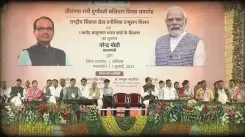
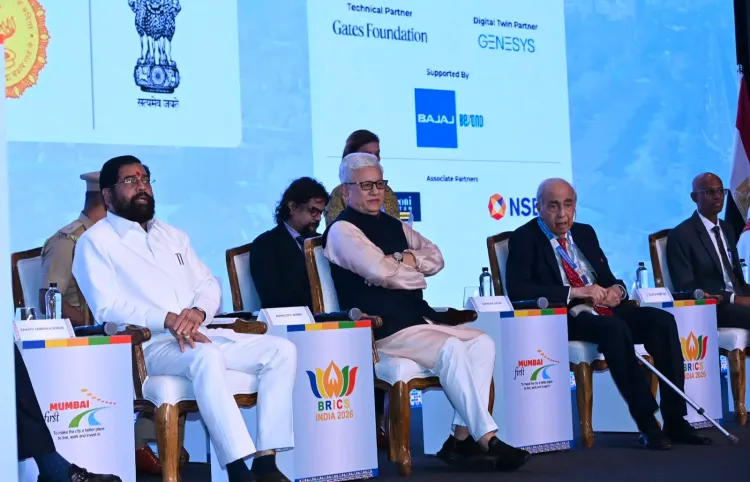
Maharashtra Deputy Chief Minister and Urban Development Minister Eknath Shinde on Tuesday, 11 August 2026, called on cities across BRICS nations to actively exchange advanced technology, knowledge and experiences to build citizen-centric, sustainable urban centres for the 21st century. Shinde made the appeal while speaking as Chief Guest at the BRICS Friendship Cities Conclave 2026, held in Mumbai.
Key Developments at the Conclave
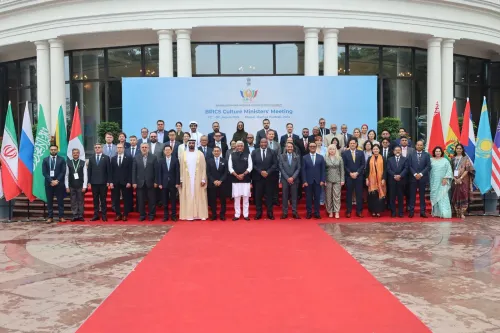
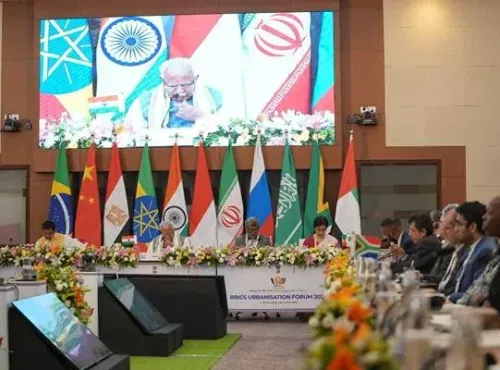
The conclave brought together representatives of cities from BRICS member countries, Mayors, urban planning experts and senior figures from the field of urban development. Deputy CM Shinde framed the event as an opportunity to redefine international urban partnerships through the pillars of resilience, innovation, cooperation and sustainability.
'Cities are not merely structures of brick and concrete; they are the growth engines of a country's economic progress,' Shinde said, echoing a theme that has gained traction in India's urbanisation policy discourse. He stressed that solutions to shared urban challenges must be sought beyond national boundaries.
What Shinde Said on Urbanisation
Invoking Prime Minister Narendra Modi's vision, Shinde argued that urbanisation must be treated not as a problem but as a major opportunity. He identified a cluster of common challenges confronting cities worldwide — rapid population growth, climate change, floods, heatwaves, traffic congestion, pollution, water management and the shortage of affordable housing — and said that cross-border cooperation was essential to address them.
'Ease of commuting for citizens, access to safe housing, clean air, better opportunities for children and firm administrative support during disasters are the true parameters of successful urban planning,' he said, setting out what he described as the real metrics of inclusive development.
Maharashtra's Urban Development Push
Shinde highlighted the state government's ongoing efforts across Maharashtra's major cities. From Mumbai to Nagpur, Pune to Nashik, and in cities including Thane and Chhatrapati Sambhajinagar, he said fresh momentum was being given to metro rail projects, roads, drainage, redevelopment, affordable housing, digital services, green infrastructure and disaster management.
He added that Maharashtra is pursuing sustainable urban development, strong infrastructure, digital governance and climate-responsive planning as integrated goals rather than isolated targets.
Climate Risk and Coastal Cities
Shinde drew particular attention to the climate vulnerability of coastal cities like Mumbai, noting that rising sea levels, flood risks and increasing temperatures threaten both citizen safety and economic stability. The state government is reportedly taking concrete steps in flood control, coastal protection, expansion of green cover, rainwater management, sustainable transport and technology-driven urban planning, he said.
Describing Mumbai as 'the capital of India's aspirations' — a city that values hard work, diversity and resilience — Shinde said hosting the BRICS conclave in such a global city was a matter of pride for Maharashtra.
The Road Ahead for BRICS Urban Cooperation
Shinde called on cities from BRICS nations to treat themselves as 'laboratories of innovation and engines of sustainable development,' and urged broader scope for international cooperation in urban development. He emphasised that true development must reach the last person in society and create opportunities for future generations — a benchmark, he argued, that goes well beyond skylines and tall buildings. The conclave is expected to produce a framework for ongoing city-to-city knowledge exchange among BRICS members.
Point of View
The state signals its ambition to be a node in global urban diplomacy — a role that could attract investment and technical partnerships. Yet the conclave's real test will be whether the 'friendship cities' framework produces binding knowledge-exchange commitments or remains a high-profile dialogue with no deliverables. India's urban infrastructure deficit is well-documented, and BRICS solidarity, however genuine, will not substitute for domestic fiscal reform in municipal finance — the unglamorous bottleneck that rarely features in conclave speeches.
NationPress
25 Sept 2026
Frequently Asked Questions
What is the BRICS Friendship Cities Conclave 2026?
The BRICS Friendship Cities Conclave 2026 is an international urban development forum held in Mumbai on 11 August 2026, bringing together city representatives, Mayors and urban planning experts from BRICS member nations to discuss technology sharing, sustainable development and city-to-city cooperation.
What did Eknath Shinde say at the BRICS conclave?
Maharashtra Deputy CM Eknath Shinde called on BRICS cities to share advanced technology, experiences and innovations to address common urban challenges such as climate change, floods, pollution and affordable housing. He also highlighted Maharashtra's own urban development initiatives and described Mumbai as a model of resilience.
Why does Shinde say BRICS countries need to share urban technology?
Shinde argued that cities worldwide face similar challenges — rapid urbanisation, climate risk, water management and housing shortages — that cannot be solved within national boundaries alone. He said mutual cooperation and knowledge exchange are essential to finding scalable solutions.
Which Maharashtra cities are part of the urban development push Shinde described?
Shinde cited Mumbai, Nagpur, Pune, Nashik, Thane and Chhatrapati Sambhajinagar as cities receiving new momentum in metro rail, roads, drainage, affordable housing, digital services, green infrastructure and disaster management.
How does climate change affect Mumbai's urban planning, according to Shinde?
Shinde noted that rising sea levels, flood risks and increasing temperatures threaten both citizen safety and Mumbai's economy. He said the Maharashtra government is taking steps in flood control, coastal protection, green cover expansion, rainwater management and sustainable transport to address these risks.