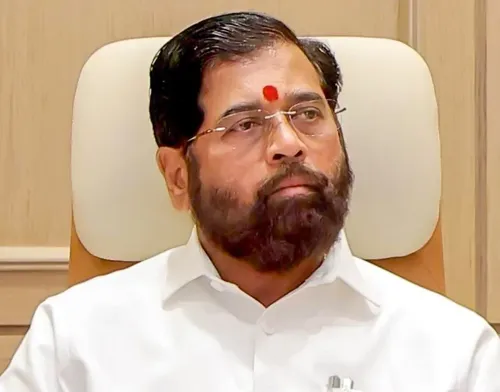
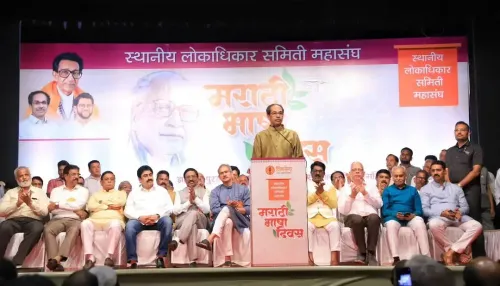
Dussehra 2026: Shinde vs Uddhav rallies in Mumbai — legacy battle peaks
Synopsis
Mumbai's Dussehra is no longer just a festival — it is Maharashtra's most watched political audit. With Uddhav Thackeray declaring 'regime change' at Shivaji Park and Eknath Shinde framing his Goregaon rally around drought relief, both factions are using Balasaheb Thackeray's legacy as a ballot weapon, and the crowd counts will shape alliance arithmetic for the next election.
Key Takeaways
Uddhav Thackeray is rallying at Shivaji Park , Dadar; Eknath Shinde at Nesco Center, Goregaon — both on 20 October .
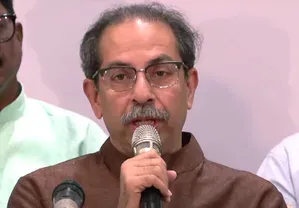
Thackeray declared at the Mumbai Press Club: 'We want to overthrow this regime achieved through vote theft.' Shinde has urged workers to skip the rally and instead assist drought-hit farming families across Maharashtra.
Both factions claim ideological succession to the late Balasaheb Thackeray , with the Shiv Sena name and bow-and-arrow symbol currently held by the Shinde faction.
Thackeray's camp is part of the opposition Maha Vikas Aghadi (MVA) ; Shinde governs as part of the Mahayuti coalition.
Crowd sizes and messaging will be closely watched as proxies for cadre loyalty ahead of Maharashtra's next assembly election.
Rival Shiv Sena factions led by Deputy Chief Minister Eknath Shinde and former Maharashtra Chief Minister Uddhav Thackeray are staging competing Dussehra rallies in Mumbai on Tuesday, 20 October, transforming the auspicious occasion of Vijayadashami into a high-stakes political confrontation over governance, party legacy, and electoral supremacy ahead of future assembly contests.
Two Venues, One Battle
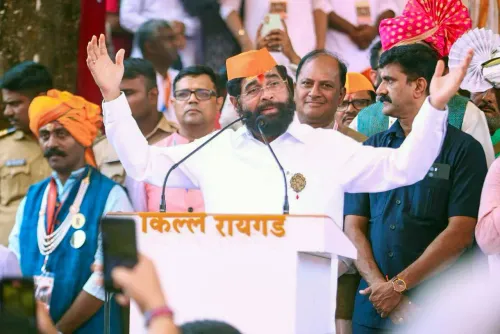
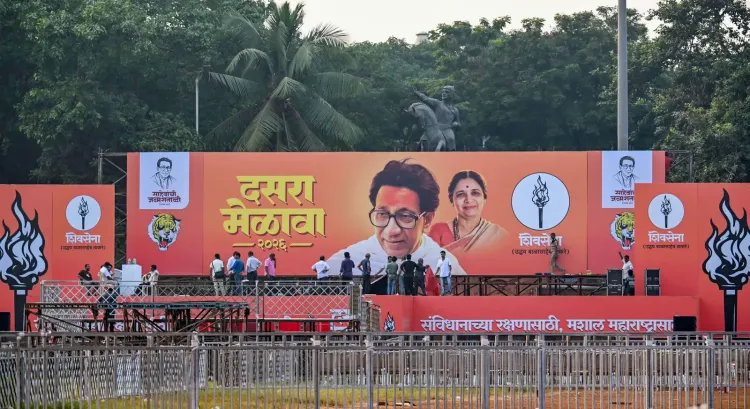
The Shiv Sena (UBT), loyal to Uddhav Thackeray, is holding its rally at the iconic Shivaji Park in Dadar — the same ground long associated with the late Balasaheb Thackeray's mass mobilisations. The Eknath Shinde-led Shiv Sena faction has assembled at the Nesco Center in Goregaon. Both camps have spent days plastering Mumbai with banners and releasing promotional teasers on social media, turning the city's political atmosphere into a charged contest of optics and numbers.
The annual Dussehra rally, a tradition originally established by Balasaheb Thackeray, has become the most visible flashpoint in the ongoing war over his political legacy since the dramatic Shiv Sena split of 2022. This year's edition, observers note, is less a festive gathering and more a rehearsal for future electoral dominance in Maharashtra.
What Uddhav Thackeray Is Expected to Say
Fresh off a combative address at the Mumbai Press Club on Saturday, Uddhav Thackeray declared: 'Yes, we want to overthrow this regime achieved through vote theft; we stand for regime change.' At Shivaji Park on Tuesday, Thackeray is expected to sharpen that attack, taking aim at the Bharatiya Janata Party (BJP), alleged irregularities in voter lists, the Special Investigation Report (SIR) process, the state's law and order situation — including a recent firing incident involving actor Tiger Shroff — and police action against protesting students.
Thackeray's faction remains aligned with the opposition Maha Vikas Aghadi (MVA), and Tuesday's rally is expected to reinforce that bloc's anti-establishment narrative ahead of any forthcoming electoral cycle.
Shinde's Counter-Narrative: Welfare Over Rhetoric
At the Nesco Center, Eknath Shinde is expected to highlight the Mahayuti government's developmental record and push back against Thackeray's governance allegations. Notably, amid severe drought conditions affecting large parts of Maharashtra, Shinde has urged party workers to forgo the travel to Mumbai and instead visit the homes of distressed farming families — framing his faction's Dussehra as one rooted in public welfare rather than political spectacle.
The optics are deliberate: Shinde's camp is attempting to contrast its ground-level relief work with what it characterises as Thackeray's opposition-first posturing. His faction holds power in the state coalition alongside the BJP and the Nationalist Congress Party (NCP) faction led by Ajit Pawar.
The Legacy Question at the Heart of It All
Both factions claim authentic ideological succession to Balasaheb Thackeray, and both hold legal recognition battles as backdrop. The Election Commission of India (ECI) had earlier awarded the original Shiv Sena name and the bow-and-arrow election symbol to the Shinde faction — a decision Thackeray's camp has contested vigorously.
This year's crowd sizes will be scrutinised as a proxy vote on grassroots loyalty, cadre discipline, and organisational reach — metrics that directly inform how each side negotiates future seat-sharing and alliance arrangements in Maharashtra's complex coalition politics.
What to Watch
With assembly elections in Maharashtra expected within the political horizon, both rallies serve as critical data points for alliance partners, swing voters, and floating cadres. The key question, as analysts note, is not merely who draws the larger crowd — but whose political message resonates beyond the marquee and into Maharashtra's districts.
Point of View
But because of what crowd size signals to alliance partners deciding seat shares. Both factions are fighting for the same ideological real estate: Balasaheb Thackeray's name, and yet the Shinde faction already holds the symbol and the name by ECI order, which makes Thackeray's task harder each cycle. Uddhav's 'regime change' framing is energising but risks being a Mumbai echo chamber in a state where drought-stressed rural voters may be more moved by Shinde's welfare optics than by constitutional grievances. The real test of Tuesday's rallies will not play out on social media — it will play out in district-level cadre retention numbers over the next six months.
NationPress
20 Oct 2026
Frequently Asked Questions
Why are there two Dussehra rallies in Mumbai in 2026?
Following the 2022 split in Shiv Sena , both the Uddhav Thackeray-led Shiv Sena (UBT) and the Eknath Shinde -led Shiv Sena have held separate Dussehra rallies each year to assert their claim to the party's legacy. The annual rally was originally a tradition established by the late Balasaheb Thackeray .
Where are the two Dussehra rallies being held?
Uddhav Thackeray's Shiv Sena (UBT) rally is taking place at Shivaji Park in Dadar, while Eknath Shinde's faction is holding its event at the Nesco Center in Goregaon , both on 20 October 2026 .
What is Uddhav Thackeray expected to say at the Dussehra rally?
Thackeray is expected to call for 'regime change', alleging vote theft and targeting the BJP, alleged voter list irregularities, the law and order situation, and police action against protesting students. He declared at the Mumbai Press Club on Saturday: 'We want to overthrow this regime achieved through vote theft.'
What is Eknath Shinde's message at his Dussehra rally?
Eknath Shinde is expected to highlight the Mahayuti government's development record and counter Thackeray's anti-establishment narrative. He also urged party workers to skip the Mumbai rally and instead assist drought-hit farming families in their districts.
Why do both factions claim Balasaheb Thackeray's legacy?
After the Shiv Sena split in 2022 , both factions have contested the ideological and legal ownership of the party's heritage. The Election Commission of India awarded the original Shiv Sena name and the bow-and-arrow symbol to the Shinde faction, but Thackeray's camp disputes the legitimacy of that ruling and continues to position itself as the authentic successor.