Shiv Sena's 35-year history of splits: From Bhujbal to Shinde
Synopsis
Shiv Sena's latest rebellion threat isn't an aberration — it's a pattern. From Chhagan Bhujbal's 17-MLA walkout in 1991 to Eknath Shinde's 2022 coup that stripped Uddhav Thackeray of the party's very name, the organisation has fractured in almost every decade. 'Operation Tiger' may be only the newest chapter in Maharashtra's most turbulent political story.
Key Takeaways
Shiv Sena was founded by Balasaheb Thackeray on 19 June 1966 in Mumbai.
Chhagan Bhujbal led the first major revolt in 1991 , walking out with 17 MLAs .
Raj Thackeray launched the Maharashtra Navnirman Sena (MNS) in 2006 after leaving the party; MNS won 13 Assembly seats in 2009.
Eknath Shinde's 2022 rebellion — backed by 40 MLAs — secured the official Shiv Sena name and bow-and-arrow symbol, forcing Uddhav Thackeray's faction to rebrand as Shiv Sena (UBT) .
Reports of 'Operation Tiger' suggest up to 6 of 9 Shiv Sena (UBT) Lok Sabha MPs may defect to the Shinde camp.
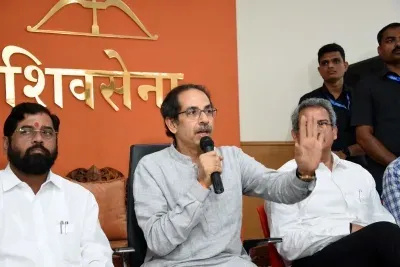
Shiv Sena (Uddhav Balasaheb Thackeray) faces fresh rebellion within its Lok Sabha ranks, with reports suggesting up to six of its nine MPs could defect to the Eknath Shinde camp in what is being called 'Operation Tiger'. Political observers note this is far from unprecedented — internal revolts have been a defining, recurring feature of the party since its founding.
Founded by Balasaheb Thackeray on 19 June 1966 on the twin pillars of Marathi identity and Hindutva politics, the Shiv Sena has weathered at least five major splits over three and a half decades. Almost every decade has produced a prominent leader breaking away — reshaping not just the party, but Maharashtra's broader political landscape each time.
The First Revolt: Chhagan Bhujbal, 1991
The first serious challenge to Balasaheb Thackeray's authority came in 1991, when senior Other Backward Classes (OBC) leader Chhagan Bhujbal rebelled against the party leadership. Disenchanted with his standing within the organisation, Bhujbal walked out with 17 MLAs and joined Sharad Pawar's camp. He subsequently served as a minister and Deputy Chief Minister in Congress-Nationalist Congress Party (NCP) governments. The episode marked the first major legislative revolt in the party's history.
Ganesh Naik and Narayan Rane Follow Suit
In 1999, Navi Mumbai strongman Ganesh Naik severed ties with the Shiv Sena and joined the newly formed NCP. Naik wielded considerable regional influence and remained a key NCP figure for nearly two decades before switching to the Bharatiya Janata Party (BJP) in 2019.
The next significant departure came in 2005 with the exit of former Maharashtra Chief Minister Narayan Rane. Growing friction with the emerging leadership of Uddhav Thackeray culminated in a bitter fallout and eventual expulsion. Rane joined the Congress, later floated the Maharashtra Swabhiman Paksha, and eventually aligned with the BJP, where he remains an influential figure in the Konkan region.
Raj Thackeray's Exit and the Birth of MNS
In 2006, what many regarded as the most emotionally charged split unfolded when Raj Thackeray, Balasaheb Thackeray's nephew, parted ways with the Shiv Sena. Citing marginalisation within the organisation and disagreements over Uddhav Thackeray's style of functioning, Raj launched the Maharashtra Navnirman Sena (MNS). The party made an impressive debut, winning 13 Assembly seats in 2009, but has since lost significant electoral ground and now holds only a limited presence in Maharashtra politics.
The 2022 Rupture: Eknath Shinde's Structural Split
Unlike earlier rebellions in which leaders left to join or form rival parties, Eknath Shinde's revolt in 2022 fundamentally altered the Shiv Sena itself. Leading a rebellion of 40 MLAs and a majority of the party's MPs, Shinde challenged Uddhav Thackeray's leadership and claimed to represent the party's original ideology. With support from the BJP, his faction not only split the organisation but also secured control of the official Shiv Sena name and its iconic bow and arrow symbol through legal and constitutional processes. Uddhav Thackeray's faction was compelled to operate under the Shiv Sena (UBT) banner — a significant symbolic and institutional loss.
Operation Tiger and What Comes Next
Amid speculation surrounding 'Operation Tiger', reports indicate that six of the nine Shiv Sena (UBT) Lok Sabha MPs could cross over to the Shinde camp. Should the defection materialise, it would represent the latest chapter in a long arc of internal revolts that have repeatedly redefined both the Shiv Sena and Maharashtra's political order. This comes amid a broader pattern of post-election realignments that have made the state one of India's most volatile political arenas.
Point of View
He took the house. If 'Operation Tiger' succeeds, it would signal that Shiv Sena (UBT) lacks the legislative critical mass to remain a credible opposition force, and that Maharashtra's political realignment post-2022 is still far from settled.
NationPress
24 Sept 2026
Frequently Asked Questions
When was Shiv Sena founded and by whom?
Shiv Sena was founded by Balasaheb Thackeray on 19 June 1966 in Mumbai, built on the twin pillars of Marathi identity and Hindutva politics. It grew into one of Maharashtra's dominant political forces over the following decades.
What was the first major split in Shiv Sena's history?
The first major split came in 1991 when senior OBC leader Chhagan Bhujbal walked out with 17 MLAs and joined Sharad Pawar's camp. Bhujbal later served as Deputy Chief Minister in Congress-NCP governments.
How did Eknath Shinde's 2022 rebellion differ from earlier defections?
Unlike previous splits where leaders simply left to join or form other parties, Shinde's rebellion — backed by 40 MLAs and a majority of the party's MPs — resulted in his faction legally securing the official Shiv Sena name and its bow-and-arrow symbol. This forced Uddhav Thackeray's group to operate under the Shiv Sena (UBT) banner.
What is 'Operation Tiger' in the context of Shiv Sena (UBT)?
Reports describe 'Operation Tiger' as an alleged effort to engineer defections among Shiv Sena (UBT)'s Lok Sabha MPs to the Eknath Shinde camp. According to reports, up to six of the party's nine Lok Sabha MPs could potentially switch sides.
What happened to Raj Thackeray after he left Shiv Sena?
Raj Thackeray founded the Maharashtra Navnirman Sena (MNS) in 2006 after citing marginalisation within Shiv Sena and differences with Uddhav Thackeray's leadership style. The MNS won 13 Assembly seats in 2009 but has since seen a significant decline in its electoral presence.