Shivraj approves MP moong procurement under Price Support Scheme
Synopsis
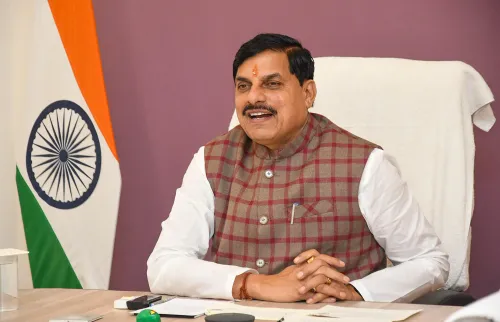
Union Agriculture Minister Shivraj Singh Chouhan announced on June 20, 2026, from Badi, Madhya Pradesh, that the Centre has approved the state's request to procure moong under the Price Support Scheme, allowing farmers to sell their green gram harvest at Minimum Support Price.
Key Takeaways
Union Agriculture Minister Shivraj Singh Chouhan announced central approval for moong procurement in Madhya Pradesh on June 20, 2026 .
The Madhya Pradesh government had formally requested the Government of India for permission to procure moong under the Price Support Scheme (PSS) .
The announcement was made from Badi , Madhya Pradesh, with Chouhan addressing farmers directly.
PSS procurement enables state agencies to buy moong from farmers at the declared Minimum Support Price (MSP) when market rates fall below it.
The scheme protects moong farmers from distress sales and has been a central tool for pulse price stabilisation since the 1980s .
The actual scale of procurement and number of farmers covered will depend on the deployment of purchase centres by state agencies.
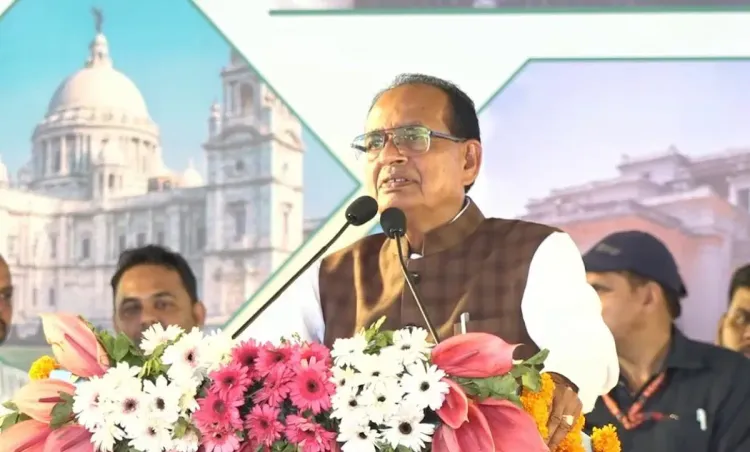
Union Agriculture Minister Shivraj Singh Chouhan on Saturday, June 20, 2026, announced that the Government of India has granted Madhya Pradesh approval to procure moong (green gram) under the central Price Support Scheme (PSS), enabling farmers in the state to sell their produce at government-assured prices. The announcement was made from Badi, a location in Madhya Pradesh, where Chouhan addressed farmers directly.
Posting on X in Hindi, the minister said: 'Mere kisan bhaiyon, aaj main aapke saath ek khushkhabri saajha kar raha hoon' ('My farmer brothers, today I am sharing a piece of good news with you'). He noted that the Madhya Pradesh government had formally requested central permission for moong procurement, and that the approval would be conveyed from the 'sacred land of Badi' on the same day so that farmers could sell their moong.
Context
Moong is a key kharif pulse crop in Madhya Pradesh, which is among the largest producing states in India. When open-market prices fall below the government-declared Minimum Support Price (MSP), farmers depend on state procurement agencies to buy their produce at assured rates. Without central approval, state agencies cannot operate PSS procurement, leaving growers exposed to market volatility.
The announcement from Badi signals that market prices for moong in the region are under pressure, prompting the state to seek the safety net of central procurement.
Policy Backdrop
The Price Support Scheme has been the primary instrument for pulse procurement since the 1980s, with the central government periodically updating operational guidelines. Under PSS, state governments submit procurement proposals to the Union Ministry of Agriculture, which evaluates them and issues approvals for specific quantities and timelines.
Such centre-state coordination on pulse procurement has become a recurring feature of India's agricultural calendar, particularly for moong, tur, and urad, where production surpluses can depress farm-gate prices sharply. Chouhan, who served as Chief Minister of Madhya Pradesh for four terms before moving to the Union Cabinet, is familiar with both sides of this approval process.
Stakeholders and Impact
The immediate beneficiaries are moong farmers of Madhya Pradesh who have harvested their crop and are seeking to sell. With PSS approval in place, state procurement agencies can set up purchase centres and buy directly from registered farmers at the declared MSP, protecting them from distress sales to private traders at lower prices.
The approval also relieves pressure on the Madhya Pradesh government, which faces political accountability for farmer welfare outcomes. Broader stakeholders include pulse traders and consumers, as government procurement can influence local supply and price dynamics in the short term.
What's Next
The operative question now is the speed and scale at which Madhya Pradesh's procurement agencies deploy purchase centres across moong-growing districts. Farmers will need to register and bring produce within the procurement window, which is typically time-bound. The volume of moong the central government has approved for procurement — and the number of farmers who ultimately benefit — will determine the scheme's real-world impact this season.
Observers will also watch whether similar approvals follow for other pulse-growing states facing comparable market conditions, as the centre-state PSS mechanism is designed to be responsive to regional harvest cycles.
Point of View
But the optics of granting it in person from a farming town rather than through a bureaucratic circular amplify its political dividend. More broadly, the episode reflects the Centre's continued reliance on MSP-linked procurement as the primary farmer-welfare instrument for pulses, even as questions persist about the reach and efficiency of such schemes at the last mile. The real test will be whether procurement agencies translate the approval into timely, accessible purchase operations before farmers are forced into distress sales.
NationPress
20 Jun 2026
Frequently Asked Questions
What is the Price Support Scheme for moong in India?
The Price Support Scheme (PSS) is a central government programme under which state agencies procure pulses, oilseeds, and copra directly from farmers at the declared Minimum Support Price when open-market rates fall below MSP. States must obtain central approval before activating PSS procurement.
Why did Madhya Pradesh seek central approval for moong procurement?
Madhya Pradesh requested central approval because open-market prices for moong were reportedly below the MSP, putting farmers at risk of distress sales. Under PSS rules, state agencies can only procure at MSP after the Union Ministry of Agriculture grants permission.
What did Shivraj Singh Chouhan announce on June 20, 2026?
Union Agriculture Minister Shivraj Singh Chouhan announced that the Government of India had approved Madhya Pradesh's request to procure moong under the Price Support Scheme, allowing state agencies to buy the crop from farmers at MSP.
Who benefits from the moong procurement approval for Madhya Pradesh?
Moong farmers in Madhya Pradesh are the direct beneficiaries. The approval allows them to sell their harvest to government procurement agencies at the Minimum Support Price instead of accepting lower rates from private traders.
Where was the moong procurement announcement made?
The announcement was made from Badi, a location in Madhya Pradesh, where Minister Chouhan addressed farmers in person on June 20, 2026.