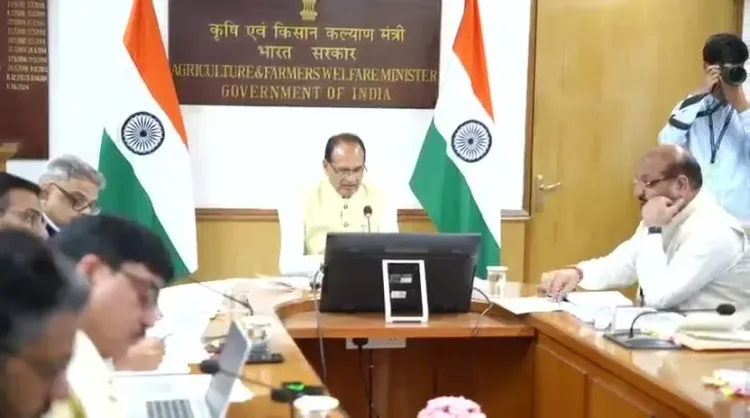
Shivraj Calls on KVK Scientists to Speed Up Agromet Advisories
Synopsis
Union Agriculture Minister Shivraj Singh Chouhan has urged scientists at Krishi Vigyan Kendras and agricultural meteorology units to deliver timely, clear Agromet Advisory Bulletins to farmers. The appeal, made during the Kharif 2026 sowing season, underscores the government's push to strengthen last-mile weather-based advisory services for small and marginal rain-fed cultivators.
Key Takeaways
Union Agriculture Minister Shivraj Singh Chouhan publicly urged KVK and agromet unit scientists on 23 June 2026 to deliver timely, clear crop advisories to farmers.
Agromet Advisory Bulletins are prepared jointly by IMD and state agricultural universities and disseminated through the KVK network.
The KVK network was established by ICAR in 1974 and now operates at the district level across India.
The Gramin Krishi Mausam Sewa (GKMS) scheme, scaled nationally from 2009 , underpins the weather-advisory pipeline the minister is seeking to strengthen.
The directive is aimed primarily at protecting small and marginal farmers dependent on rain-fed cultivation during the critical Kharif sowing season.
The government's approach prioritises integrating existing KVK and IMD infrastructure over building new advisory delivery systems.
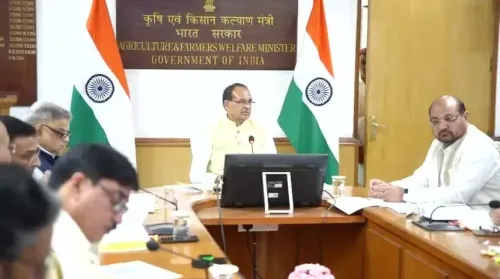
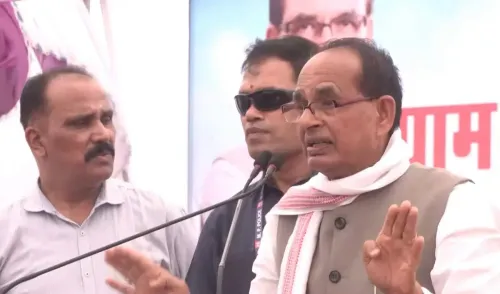
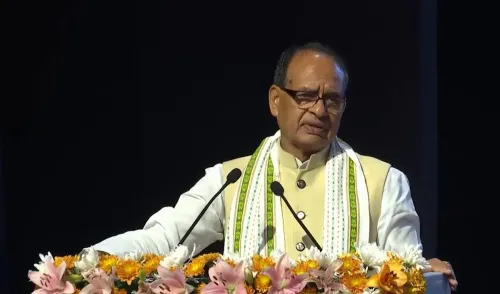
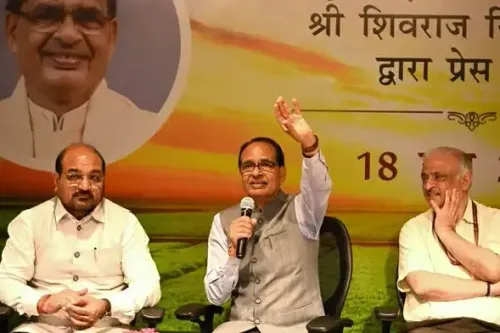
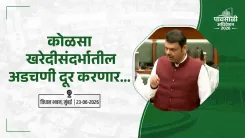
Union Agriculture Minister Shivraj Singh Chouhan on Tuesday, 23 June 2026 urged scientists at Krishi Vigyan Kendras (KVKs) and agricultural meteorology units to ensure that weather-based crop advisories reach farmers in a timely and clear manner through Agromet Advisory Bulletins.
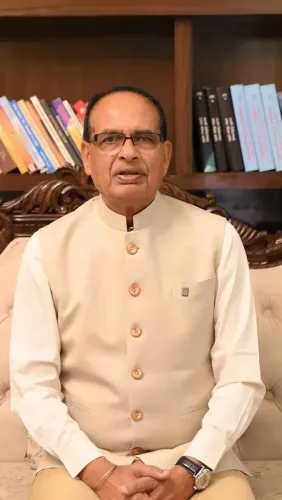
Posting on X, the minister said: 'मैं कृषि विज्ञान केंद्रों (KVK) और कृषि मौसम इकाइयों के वैज्ञानिकों से आग्रह करता हूँ कि एग्रोमेट एडवाइजरी बुलेटिनों के माध्यम से किसानों तक समय पर और स्पष्ट सलाह पहुंचाएं।' ('I urge scientists at Krishi Vigyan Kendras and agricultural meteorology units to deliver timely and clear advice to farmers through Agromet Advisory Bulletins.')
Context
The appeal comes during the critical Kharif 2026 sowing season, when millions of rain-fed cultivators across India make high-stakes decisions on crop selection, irrigation, and pest management based on monsoon patterns. Delayed or unclear advisories during this window can translate directly into crop losses for small and marginal farmers.
Chouhan, a former four-term Chief Minister of Madhya Pradesh with a long record in rural development, has consistently positioned farmer welfare at the centre of his ministerial agenda since taking charge of the Agriculture and Farmers Welfare portfolio.
Policy Backdrop
The KVK network was established by the Indian Council of Agricultural Research (ICAR) in 1974 as a district-level bridge between agricultural research institutions and farmers on the ground, delivering location-specific technology transfer, training, and extension services.
Weather-based crop advisories are prepared jointly by the India Meteorological Department (IMD) and state agricultural universities under the Gramin Krishi Mausam Sewa (GKMS) scheme, which was scaled up nationally from 2009 onward. These bulletins guide farmers on sowing windows, irrigation scheduling, and pest management based on district-level forecasts, integrating existing extension infrastructure rather than creating parallel delivery systems.
The minister's directive reinforces a deliberate policy choice: use the established KVK and IMD network rather than build new channels, keeping institutional overhead low while widening last-mile reach.
Stakeholders and Impact
The primary beneficiaries are small and marginal farmers who depend on rain-fed cultivation and have limited access to private agronomic advisory services. For this group, a well-timed bulletin on an approaching dry spell or pest outbreak can prevent significant input losses.
KVK scientists and agricultural meteorology unit staff are the operational link in this chain; the minister's public appeal signals that the ministry expects measurable improvement in the speed and clarity of bulletin dissemination, not merely their production. Mobile and digital dissemination channels are increasingly central to reaching farmers before conditions change on the ground.
What's Next
Attention will now turn to Kharif 2026 sowing progress reports and whether uptake of agromet bulletins shows measurable improvement across ICAR's nationwide KVK network. Any parliamentary review or ICAR-level audit of KVK staffing and mobile dissemination targets will be a key indicator of follow-through on the minister's public call to action.
As monsoon variability intensifies the pressure on rain-fed agriculture, the government's ability to convert meteorological data into farmer-level decisions in real time will increasingly define the effectiveness of India's agricultural extension system.
Point of View
Not data availability. Whether this translates into measurable improvement in bulletin uptake will depend on KVK staffing, mobile penetration in target districts, and ICAR's willingness to treat dissemination metrics as seriously as research outputs.
NationPress
23 Jun 2026
Frequently Asked Questions
What are Agromet Advisory Bulletins for farmers in India?
Agromet Advisory Bulletins are weather-based crop advisories jointly prepared by the India Meteorological Department and state agricultural universities, disseminated through Krishi Vigyan Kendras to guide farmers on sowing, irrigation, and pest management decisions.
What is a Krishi Vigyan Kendra (KVK)?
A Krishi Vigyan Kendra is a district-level farm science centre run by ICAR that provides location-specific technology transfer, training, and extension services to farmers; the network was established in 1974.
What is the Gramin Krishi Mausam Sewa scheme?
Gramin Krishi Mausam Sewa (GKMS) is an IMD-led scheme scaled nationally from 2009 that supplies district-level weather forecasts specifically for agricultural decision support, forming the backbone of India's agromet advisory system.
Why did Shivraj Singh Chouhan urge KVK scientists on agromet advisories?
The minister issued the appeal during the Kharif 2026 sowing season to ensure small and marginal rain-fed farmers receive timely, clear weather-based guidance that can prevent crop losses from monsoon variability.
How do KVK scientists deliver agromet advisories to farmers?
KVK scientists disseminate Agromet Advisory Bulletins through multiple channels including mobile messaging, community radio, and direct outreach, translating district-level IMD forecasts into actionable crop management advice.