Shivraj flags DBT leakage risk, unveils ring-fenced ration system
Synopsis
Union Agriculture Minister Shivraj Singh Chouhan has announced a system designed to ensure DBT transfers meant for food ration are spent only on ration, directly addressing the long-standing risk of welfare cash being diverted to other uses.
Key Takeaways
Shivraj Singh Chouhan flagged the core DBT-for-food dilemma on 14 August 2026 : cash transferred for ration could be spent on anything else.
A new system has been built to ring-fence ration subsidies so the money can only be used for food purchases.
Direct Benefit Transfer was first deployed for LPG via the PAHAL scheme in 2013 before gradual extension to food welfare.
Cash-for-ration pilots in Chandigarh and Puducherry from 2015 exposed diversion risks among food-insecure households.
The National Food Security Act, 2013 gives roughly two-thirds of Indians a legal right to subsidised grain through the PDS.
The precise technical design and rollout scale of the new mechanism have not yet been formally disclosed.
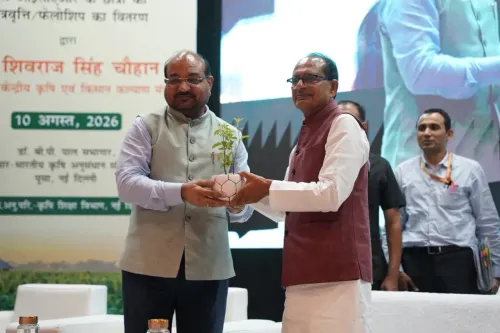
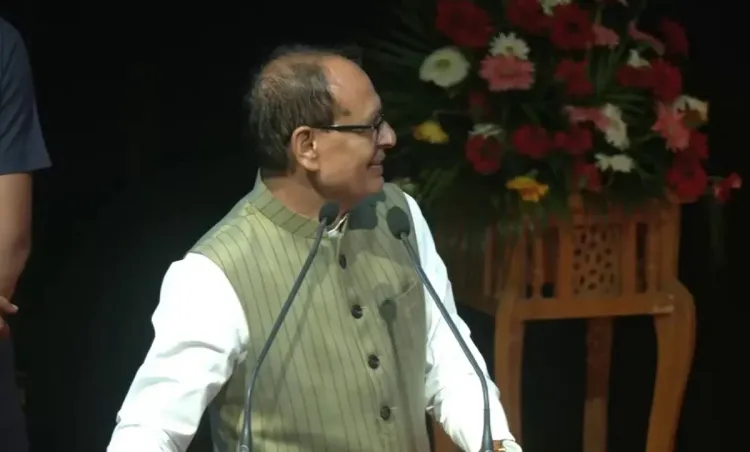
A long-standing fear at the heart of India's welfare architecture — that cash transferred for food would simply vanish into other spending — is now the stated target of a new mechanism, Union Agriculture Minister Shivraj Singh Chouhan said on Friday, 14 August 2026.
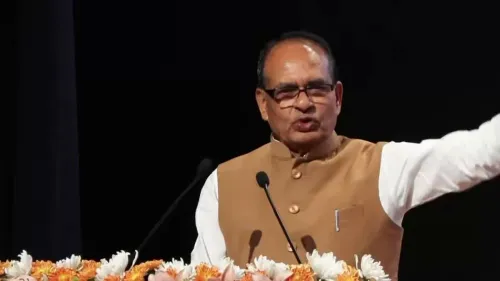
Speaking about the government's approach to food subsidy delivery, Chouhan said: 'After depositing money through DBT, there was always this worry — what if the money meant for ration goes somewhere else? So a system has been built to ensure that money given for ration is spent on ration, and ration alone.'
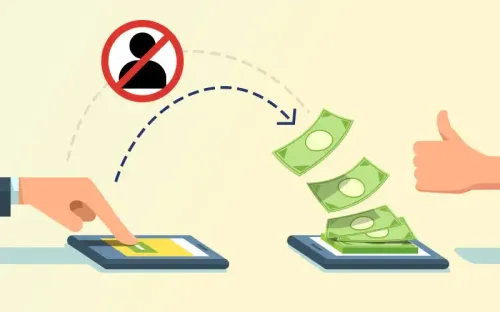
The old problem: cash in, groceries out — or not
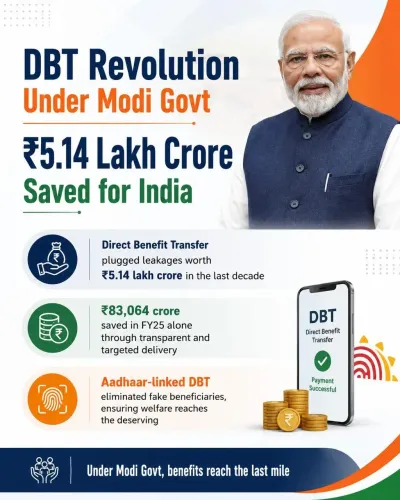
The anxiety Chouhan describes is not new. When the Direct Benefit Transfer framework was first rolled out — beginning with the PAHAL LPG subsidy scheme in 2013 — policymakers celebrated the elimination of middlemen. But food was always the harder case. Unlike cooking-gas credits, a cash transfer for grain carries no guarantee the money reaches a fair-price shop. Pilot cash-for-ration experiments in union territories such as Chandigarh and Puducherry, tested from 2015 onward, surfaced exactly this diversion risk among the most food-insecure households. The Public Distribution System, underpinned by the National Food Security Act of 2013, covers roughly two-thirds of India's population with a legal right to subsidised grain. Shifting even part of that entitlement to cash without a guardrail has always been politically and practically fraught.Ring-fencing the rupee: what the new system signals
Chouhan's remarks point to a restricted-use digital mechanism — money designated for ration that can only be redeemed at authorised outlets, not withdrawn as general cash. The architecture echoes models used in conditional cash transfers globally, where the transfer is technically liquid but functionally earmarked. Successive governments have already layered Aadhaar authentication and point-of-sale devices onto PDS shops to curb diversion; this appears to be the next step — locking the subsidy to its intended purpose at the transaction level itself. The minister did not announce a specific scheme name, rollout date, or coverage figure, and the precise technical contours of the system remain to be detailed in formal policy documents or parliamentary disclosures. If the mechanism scales, it could reframe a decade-old debate: India need not choose between the efficiency of cash transfers and the food-security guarantee of in-kind grain distribution. The rupee can, in principle, be both direct and directed. Whether the system delivers on that promise is the question every budget cycle — and every hungry household — will be watching.Point of View
But is attempting to engineer a mechanism that delivers both simultaneously. This sits within a broader BJP governance narrative of technology-led welfare — Aadhaar seeding, PoS authentication, and now transaction-level earmarking — each layer designed to close a specific leakage point. The political subtext is also clear: by publicly naming the diversion risk and claiming it has been solved, the minister pre-empts opposition critiques that cash transfers harm food-insecure households. The real test will come when the system's technical architecture and coverage are tabled before Parliament or audited by independent evaluators.
NationPress
14 Aug 2026
Frequently Asked Questions
What did Shivraj Singh Chouhan say about DBT and ration money?
Chouhan said that after transferring money through DBT, there was always a worry that the funds meant for ration might be spent elsewhere, so the government has built a system ensuring the money can only be used for purchasing ration.
What is Direct Benefit Transfer (DBT) in India?
DBT is a central government mechanism launched in 2013 that transfers subsidies and welfare payments directly into beneficiaries' bank accounts, cutting out middlemen and reducing leakages.
What is the risk of giving cash instead of grain under PDS?
When cash is transferred instead of in-kind grain, beneficiaries may spend it on non-food items, leaving food-insecure households without adequate nutrition — a risk documented in pilot programmes in Chandigarh and Puducherry .
What is the National Food Security Act and how does it relate to PDS?
The National Food Security Act of 2013 converted existing Public Distribution System entitlements into a legal right to subsidised food grains for roughly two-thirds of India's population .
Has India tested cash transfers for food subsidies before?
Yes. Pilot programmes replacing PDS grain with cash transfers were tested in union territories including Chandigarh and Puducherry from 2015 onward, but concerns about diversion limited their expansion.