Pralhad Joshi: Digital India Transforming PDS Delivery
Synopsis
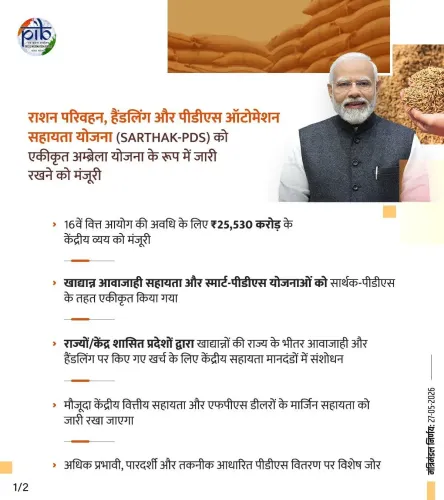
Union Consumer Affairs Minister Pralhad Joshi on June 18 highlighted how Digital India is transforming PDS delivery, pointing to 98.5% Aadhaar-authenticated transactions under PMGKAY, AI-driven verification, and e-POS integration as tools eliminating leakages and ensuring food grains reach rightful beneficiaries.
Key Takeaways
Union Consumer Affairs Minister Pralhad Joshi posted on June 18, 2026 crediting PM Modi 's Digital India vision for PDS reform.
The minister cited 98.5% Aadhaar-authenticated transactions under PMGKAY as a benchmark of progress.
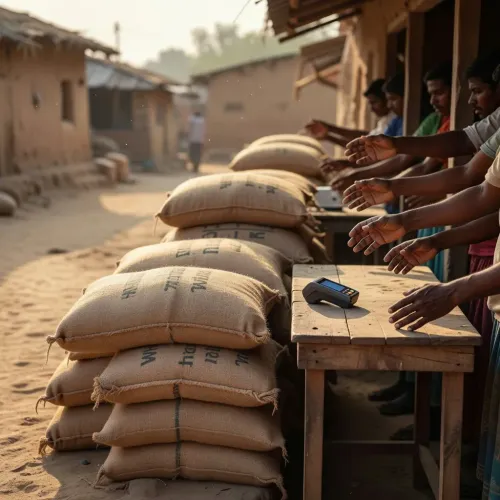
AI-driven verification and e-POS integration at fair price shops are being used to eliminate leakages in food grain distribution.
PMGKAY , originally launched in March 2020 as COVID relief, has been extended in phases and remains a central food security instrument. e-POS devices have been deployed at fair price shops since 2016 , enabling biometric-linked disbursement at the last mile.
The next key decision point is a potential PMGKAY extension beyond 2026 and independent audits of residual leakages post-digitisation.
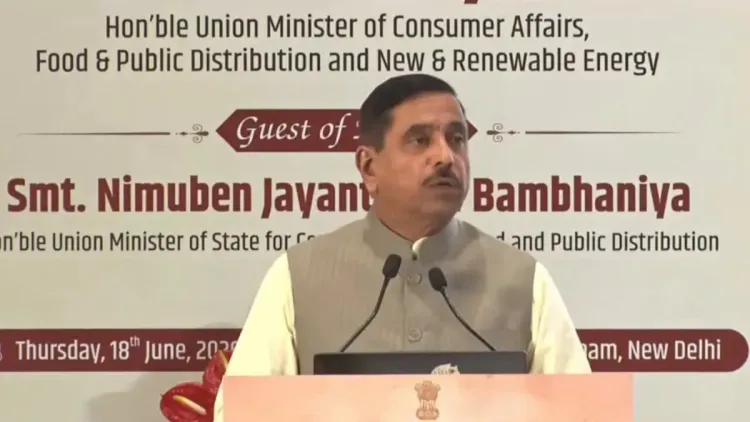
Union Consumer Affairs Minister Pralhad Joshi on Thursday, June 18, 2026 highlighted the role of technology in overhauling India's food welfare delivery, citing near-universal Aadhaar-based authentication and AI-driven verification as cornerstones of a reformed Public Distribution System.
Context
Joshi's post credits Prime Minister Narendra Modi's Digital India vision for driving the transformation of the Public Distribution System (PDS), the nationwide network that delivers subsidised food grains to hundreds of millions of beneficiaries under the National Food Security Act, 2013. He points to 98.5% Aadhaar-authenticated transactions under the Pradhan Mantri Garib Kalyan Anna Yojana (PMGKAY) as evidence of the gains made. The minister also flags AI-driven verification and electronic Point of Sale (e-POS) integration as active tools in tightening the delivery chain.
Policy Backdrop
The trajectory toward a technology-enabled PDS stretches back more than a decade. The Digital India programme, launched in July 2015, set the framework for integrating digital infrastructure into governance, including welfare delivery. Aadhaar seeding in PDS began with state-level pilots around 2014-15 and was scaled nationally through 2017-18, while e-POS devices were deployed at fair price shops from 2016 onwards to enable biometric-linked transactions at the point of disbursement.
PMGKAY itself was introduced in March 2020 as an emergency food relief measure during the COVID-19 pandemic, providing free rations over and above regular PDS entitlements. It has since been extended in successive phases, making it one of the largest food security interventions in the country's history. The scheme's near-universal Aadhaar authentication rate, as cited by the minister, reflects the cumulative investment in the so-called JAM trinity — Jan Dhan bank accounts, Aadhaar biometrics, and Mobile connectivity — that underpins direct benefit delivery across multiple central programmes.
Stakeholders and Impact
The primary beneficiaries of a leakage-free PDS are priority household ration card holders, typically among India's most economically vulnerable. Fair price shop dealers, who serve as the last-mile distribution point, are directly affected by e-POS mandates that require biometric confirmation before grain is released. State food and civil supplies departments bear operational responsibility for maintaining device infrastructure and data connectivity in rural and remote areas, where authentication failures have historically posed challenges.
The broader pattern of technology-enabled targeting has been applied across other flagship schemes, including MGNREGA wage payments and LPG subsidy transfers, suggesting a systemic shift in how the central government approaches fiscal efficiency in welfare spending. Reducing leakages — grain diverted before it reaches entitled households — has been a stated policy priority for successive administrations.
What's Next
Attention will now turn to whether PMGKAY receives a further extension beyond 2026 and what independent assessments — including any forthcoming parliamentary standing committee reviews or Comptroller and Auditor General (CAG) reports — say about residual leakages after the e-POS and Aadhaar rollout. Any move to formally incorporate AI-based verification tools into the PDS operational framework would also require regulatory and budgetary backing. Joshi's statement signals the government's intent to frame technology adoption not merely as administrative reform, but as a political commitment to welfare delivery under the Digital India umbrella.
Point of View
The minister frames PDS reform as a measurable achievement rather than a work in progress. This fits a broader pattern of the current administration using Digital India as a cross-scheme umbrella to signal governance efficiency, particularly on food security where leakage has historically been a point of political vulnerability. The forward reference to 'rightful beneficiaries' also subtly reinforces the exclusion-inclusion debate around Aadhaar-linked delivery, a fault line that opposition parties have used to challenge the programme's implementation record.
NationPress
18 Sept 2026
Frequently Asked Questions
What is PMGKAY and who benefits from it?
PMGKAY, or Pradhan Mantri Garib Kalyan Anna Yojana, is a central government scheme that provides free food grains to priority household ration card holders. It was first launched in March 2020 as COVID-19 relief and has since been extended in phases to continue supporting economically vulnerable families across India.
How is Aadhaar used in the Public Distribution System?
Aadhaar is used to authenticate beneficiaries at fair price shops through biometric verification on e-POS devices before food grains are released. This system, scaled nationally from around 2017-18, is designed to ensure that only entitled individuals receive their ration, reducing diversion and leakage.
What are e-POS devices in PDS fair price shops?
Electronic Point of Sale, or e-POS, devices are biometric-enabled machines installed at fair price shops since 2016. They require Aadhaar-linked fingerprint or iris authentication from beneficiaries at the time of grain collection, creating a digital transaction record for each disbursement.
What did Pralhad Joshi say about Digital India and PDS?
On June 18, 2026, Minister Pralhad Joshi stated that Digital India, guided by PM Modi's vision, is transforming the PDS through 98.5% Aadhaar-authenticated transactions under PMGKAY, AI-driven verification, and e-POS integration, all aimed at eliminating leakages and delivering benefits to rightful beneficiaries.
Will PMGKAY be extended beyond 2026?
No official announcement on a PMGKAY extension beyond 2026 has been made as of Joshi's June 18 post. The scheme has been renewed multiple times since its 2020 launch, and any further extension would require a fresh cabinet decision, likely informed by fiscal considerations and food security assessments.