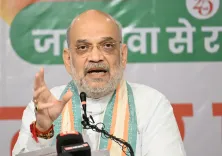
Shivraj Singh Chouhan: Fresh PMAY-G Survey to Cover All Eligible Families
Synopsis
Union Minister Shivraj Singh Chouhan has announced that a fresh re-survey of houses is under way under PMAY-G, with the stated goal of ensuring every eligible rural family is identified and receives a pucca house under the central scheme.
Key Takeaways
Union Minister Shivraj Singh Chouhan confirmed on June 15, 2026 that a fresh re-survey of houses is currently under way under PMAY-G .
The stated government goal is that every eligible family receives a pucca house under the scheme.
PMAY-G was launched in 2016 as a restructured successor to the Indira Awaas Yojana, targeting saturation of rural housing entitlements.
Periodic resurveys using tools like the Awaas+ app are the government's primary mechanism for correcting exclusion errors in beneficiary lists.
The Ministry of Rural Development , headed by Chouhan, is the nodal authority for fund allocation and state-level coordination of the scheme.
Updated beneficiary data from the current survey will determine the next round of house sanctions and fund flows to states.
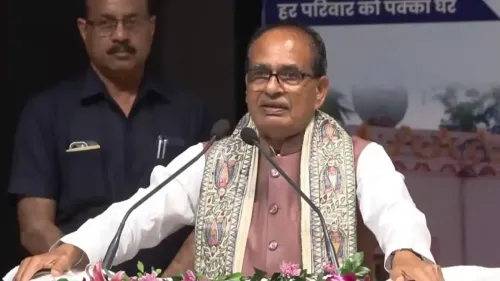
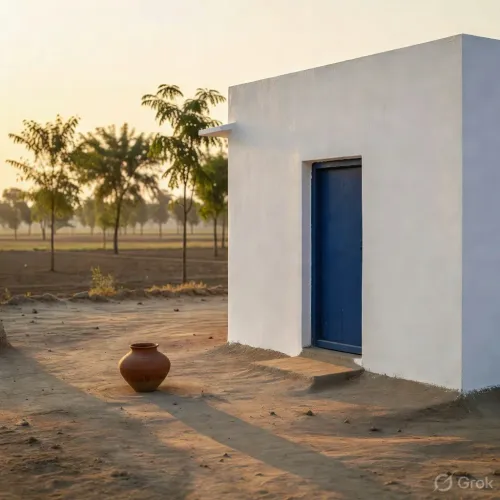
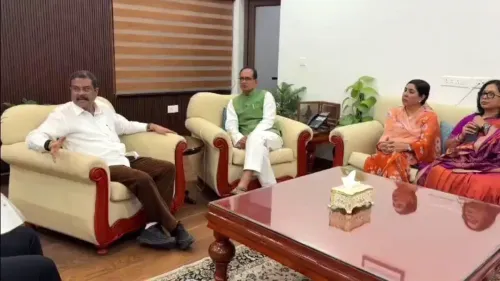
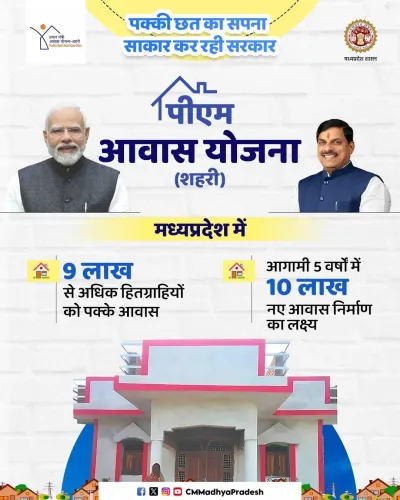
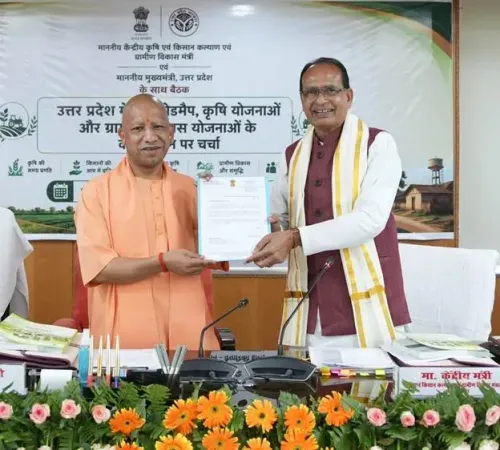
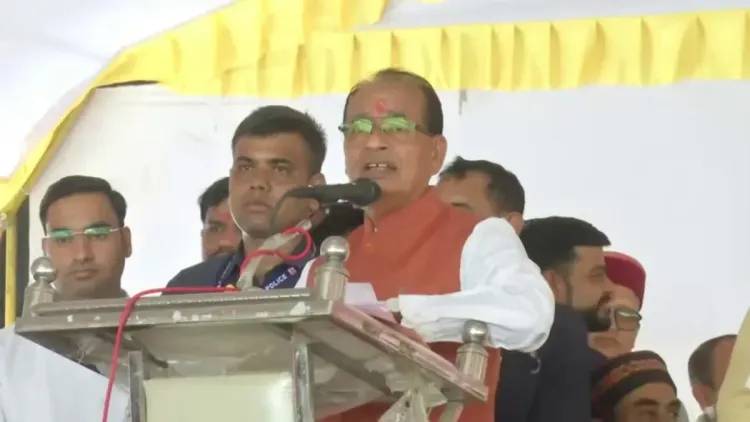
Union Agriculture Minister and Rural Development Minister Shivraj Singh Chouhan on Monday, June 15, 2026, announced that a fresh re-survey of houses is currently under way under the Pradhan Mantri Awas Yojana-Gramin (PMAY-G), reaffirming the government's commitment to ensuring every eligible family receives a pucca house.
Addressing citizens directly, Chouhan said in Hindi: 'Abhi makanon ka phir se survey chal raha hai. Hamara lakshya hai ki har paatr parivaar ko makaan mile' ('Brothers and sisters, a fresh survey of houses is currently under way. Our goal is that every eligible family gets a house.')
Context
PMAY-G, launched in 2016 as a restructured successor to the Indira Awaas Yojana, targets the provision of pucca houses to rural families living in kutcha and dilapidated dwellings. The scheme originally aimed at saturation — housing for all eligible rural households — by 2022, with the government subsequently extending targets to address residual demand.
Chouhan, who holds the Ministry of Rural Development portfolio in addition to Agriculture, has been the political face of the scheme's outreach since taking charge at the Centre. His post signals that the current survey phase is active and ongoing.
Policy Backdrop
Beneficiary identification under PMAY-G has historically relied on the Socio-Economic Caste Census (SECC) data, supplemented from 2018 onward by the Awaas+ app-driven verification drives designed to capture households excluded from earlier lists. These periodic resurveys are the government's primary tool for correcting exclusion errors — instances where genuinely poor families were left out of initial enumerations.
The Ministry of Rural Development serves as the nodal authority overseeing fund allocation, state-level coordination, and convergence of PMAY-G with complementary schemes such as Jal Jeevan Mission and Swachh Bharat Mission-Grameen. Updated beneficiary lists generated by such resurveys directly determine how central funds flow to states and union territories.
Stakeholders and Impact
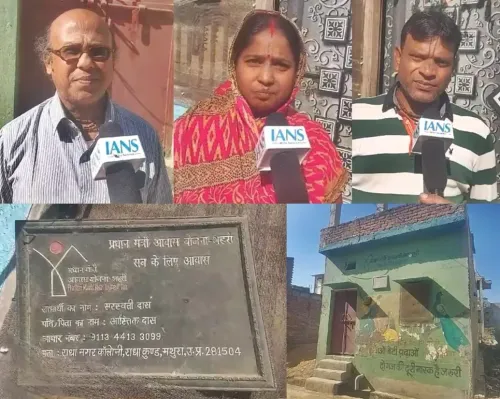
The primary beneficiaries are rural poor families — particularly those belonging to Scheduled Castes, Scheduled Tribes, and other economically weaker sections — who may have been missed in earlier rounds of enumeration. A fresh survey expands the window for such households to be formally identified and added to the waitlist for assistance.
State governments are key implementation partners; they are responsible for conducting ground-level surveys, uploading data on the AwaasSoft management information system, and disbursing instalments to beneficiaries. The minister's public communication also serves as a signal to state administrations to accelerate the survey process.
What's Next
The completion of the current re-survey is expected to yield an updated beneficiary list, which will determine the next round of house sanctions under PMAY-G. Observers will watch for any supplementary budget provisions or revised targets announced by the Ministry of Rural Development once the survey data is consolidated.
Chouhan's direct social-media outreach to citizens — framing the initiative in terms of entitlement ('every eligible family') — suggests the government intends to maintain political visibility around rural housing delivery as a flagship welfare commitment ahead of state electoral cycles.
Point of View
The minister is reinforcing the government's saturation narrative — the idea that no eligible household should be left out — which has been central to the scheme's political branding since 2016. The timing, ahead of potential state electoral cycles, underscores how rural housing has evolved from a welfare measure into a durable political asset. The real test, however, lies in whether the updated lists translate into timely sanctions and disbursements at the ground level.
NationPress
14 Sept 2026
Frequently Asked Questions
What is the PMAY-G re-survey that Shivraj Singh Chouhan announced?
The re-survey is a fresh enumeration of households under Pradhan Mantri Awas Yojana-Gramin (PMAY-G) to identify eligible families who may have been missed in earlier rounds, so they can be added to the beneficiary list and receive a pucca house.
Who is eligible for a house under PMAY-G?
Eligible beneficiaries under PMAY-G are rural poor families — particularly those from Scheduled Castes, Scheduled Tribes, and economically weaker sections — who live in kutcha or dilapidated dwellings and meet the scheme's socio-economic criteria.
What is the Awaas+ app used for in PMAY-G?
The Awaas+ app is a digital verification tool used since 2018 to identify and enrol households excluded from the original Socio-Economic Caste Census (SECC) beneficiary list, helping the government update and expand PMAY-G coverage.
What happens after the PMAY-G re-survey is completed?
After the re-survey, an updated beneficiary list is generated. The Ministry of Rural Development then uses this data to sanction new houses and disburse funds to states for construction assistance to newly identified eligible families.
What is Shivraj Singh Chouhan's role in PMAY-G?
Shivraj Singh Chouhan is the Union Minister for Rural Development, making him the political head of the Ministry of Rural Development , which is the nodal authority responsible for overseeing PMAY-G implementation, surveys, and fund allocation across India.